About Andrew Mernin

This author has not yet filled in any details.
So far Andrew Mernin has created 640 blog entries.

On Another Level

There can be no true independence in the home without mobility; and that includes mobility between floors and levels. Chairlifts / stairlifts are a common solution for people with mobility problems at home. But what about the many people in wheelchairs who cannot transfer on or off a conventional chairlift? Enter Southampton-based Level Access Lifts, an expert in solving such problems. Nick Dade, sales director at the firm, which supplies lifts throughout the UK, explains: “Everything we supply is designed to aid those people who are unable to transfer from a wheelchair and are designed to move you in your wheelchair between floors or split levels.
By |2024-07-04T17:48:12+01:0019 July 2019|Tech & industry|

Hitting the road to a better quality of life

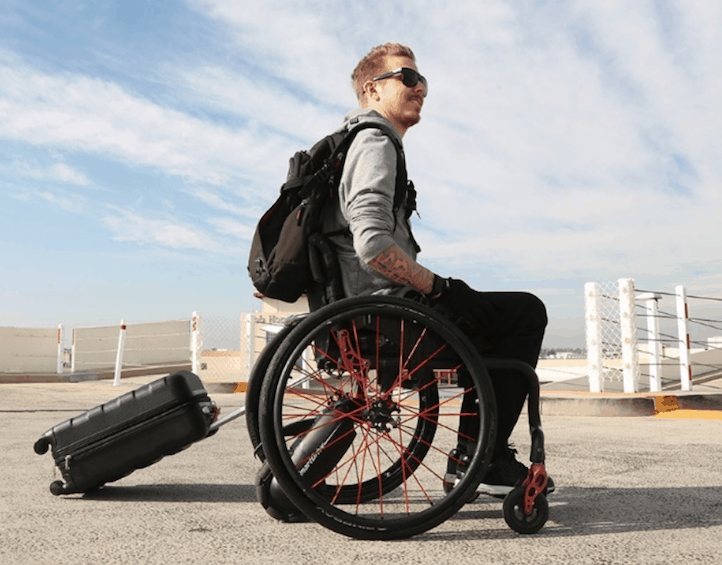
The use of Bluetooth, LED lights and phone charging points are no longer the sole domain of the executive car - these are the types of technology being installed into state-of-the-art mobility aids, to help people who rely on them to explore  the world. Major breakthroughs in accessibility in recent years have seen power wheelchairs, manual wheelchairs, power assists and seating and positioning products developed to help empower users, giving them  freedom to travel and discover new places and experiences. In addition to mobility and wellbeing, lifestyle is now a key feature in the development of new products going  to the market, with modern technology helping to redefine the traditional view  of wheelchairs.

By |2024-07-04T17:48:12+01:0019 July 2019|Tech & industry|

Shedding light on young brain injury survivor goals

The goals that children, young people and their families set in rehabilitation following an acquired brain injury (ABI) enable professionals to understand their priorities at different stages of recovery. The Children’s Trust (TCT) and Cambridge Centre for Paediatric Neuropsychological Rehabilitation (CCPNR), have recently published studies that explore the goals set in their different settings. By reviewing these goals and their different rehabilitation contexts, the services are learning about the individual and evolving needs of children and young people with ABI.

By |2024-07-04T17:48:12+01:0019 July 2019|Insight|

Enter stage left: A rising force in therapy

"Do I have to be a tree?” It’s a question Kathy Akers has come to expect when the subject of dramatherapy is raised - but she’s quick to clarify that the answer is ‘no’; well, not necessarily, anyway. “Dramatherapy can take many forms. We use all kinds of means of communication and creative processes to engage and allow people with a brain injury to express themselves. And if people want to be a tree, then that’s fine, but there is a very wide variety of other ways in which we work,” she explains.

By |2024-07-04T17:48:12+01:0019 July 2019|Therapy|

MPs invited to screen for brain injury.

Chris Bryant MP, a frequent advocate of brain injury awareness and chair of the all-party parliamentary group on acquired brain injury, hosted the event in which MPs were screened using the Brain Injury Screening Index (BISI), a tool provided by national charity The Disabilities Trust. The charity conducted research into male and female prison populations and found nearly half of males (HM Prison Leeds, 2014) and nearly two-thirds of female prisoners (Making the Link, 2019) screened positive for a history of brain injury. The cognitive problems associated with brain injuries can significantly impact engagement in rehabilitation programmes and contribute to reoffending. Despite this, there is no regular testing for brain injury conducted in adult prisons in the UK.

By |2024-07-04T17:48:12+01:0019 July 2019|News|

Childhood brain injury conference

The Children’s Trust event, ‘Building the future of childhood brain injury: where do we go from here?’, promises to take a visionary look at paediatric acquired brain injury and explore what the future may hold. Speakers at the conference, at the Royal Society of Medicine in London on 6 September, include Dr Charlie Fairhurst, consultant paediatric in neurodisability and head of children's neurosciences at Evelina London Children’s Hospital. Also speaking at the event is Professor Vicki Anderson, director of clinical sciences research at Murdoch Children's Research Institution in Melbourne, Australia.

By |2026-02-12T08:44:59+00:0019 July 2019|News, The Children's Trust|

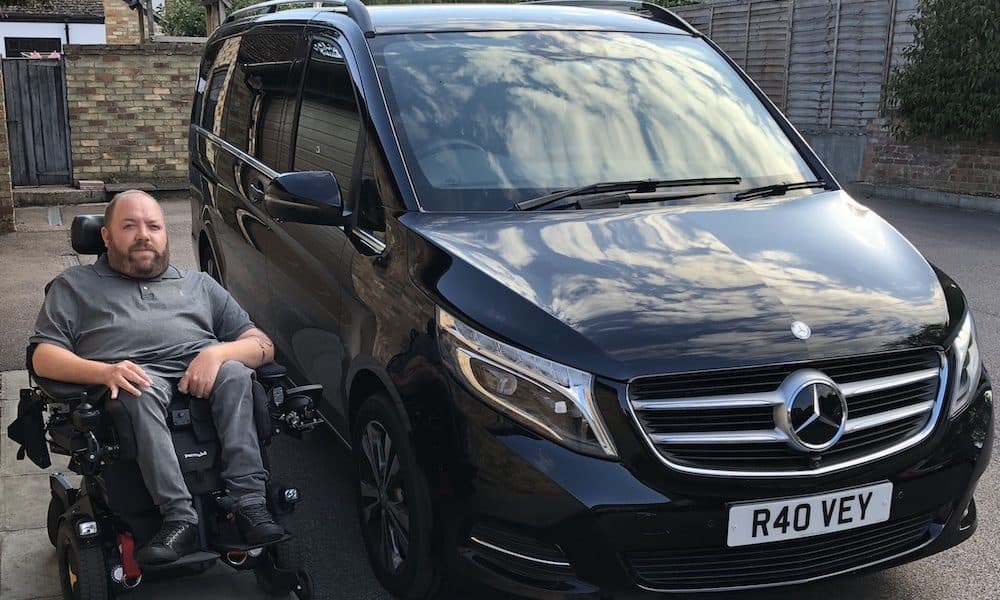
Ross enjoys landmark journey in Mercedes V-Class wheelchair accessible vehicle

Ross is an accessibility manager at Lloyds Banking Group, a job involving regular travel across the UK. A reliable car is therefore vital.

He says: “Prior to taking delivery of my Mercedes V-Class from Lewis Reed one of the UK’s leading wheelchair accessible vehicle converters I owned two Chrysler Grand Voyagers. "When the time came to look at changing my vehicle, I did some research on the Mercedes V-Class which I felt was the only comparable vehicle to my ageing Chrysler.
By |2024-07-04T17:48:13+01:0019 July 2019|News|

21st Century technology: A care provider’s guide

Robot pets

We have robot pet dogs and cats, and even a monkey and a horse. They respond to touch/voice commands, carry out movements and vocalise. They are primarily used to promote engagement by the patient, encourage pleasant feelings which helps set them in a good mood to participate in therapy, promote positive bonds with staff, and as a source of distraction should the patient start engaging in disruptive behaviours. For selected patients who have favourite smells, we can spray specific odours on the pets, so that all of the sensory modalities are engaged for a pleasant experience.
By |2026-02-11T11:38:08+00:0019 July 2019|Care & services, Tech & industry|

Making the case for a career change

Having worked as a neurosciences occupational therapist in the NHS for more than 15 years, it felt somewhat surreal leaving behind my team and service, which had become deeply embedded in my daily routine. The opportunity to undertake an exciting new challenge in my career, despite the anxieties of the unknown and a loyalty to a service of which I was extremely fond and proud, paved the way for a move that in the end proved difficult to decline. Before I could hesitate, I was driving to Cornwall to complete an immediate needs assessment and I was delighted to complete my report within the 21-day deadline. Phew! I reflect on my first year in case management noting the increased consumption of coffee but more significantly with immense pride of my achievements.

By |2024-07-04T17:55:04+01:0017 July 2019|Opinion, Insight, Case management|
Go to Top