About Deborah Johnson

This author has not yet filled in any details.
So far Deborah Johnson has created 1517 blog entries.

History of concussion ‘may worsen later injuries’

Athletes with a history of concussion may show more serious brain injury from a later concussion, new research has revealed.  In comparison to athletes with no history of concussion, those who have sustained head injuries previously may show greater impact, particularly in middle regions of the brain that are more susceptible to damage.  Athletes with a history of concussion should be monitored more closely, the research team said in light of their findings.  "We know concussions may have long-term effects on the brain that last beyond getting a doctor's clearance to return to play," said study author Dr Tom A. Schweizer, of St. Michael's Hospital in Toronto, Canada.

By |2024-07-04T17:41:32+01:0027 August 2021|Research, Brain injury|

Recovery College grows support for mental health patients

The offering for service users at a Recovery College is being expanded after a successful first year in operation.  Heatherwood Court, a low security hospital offering treatment and rehabilitation for men and women on a forensic mental health pathway, launched its Recovery College in 2020. The Recovery College offers service users a broad range of courses encouraging them to develop new skills to aid them in their recovery and to help with their return to the community. The college is co-managed by service users themselves, giving them an active role to play in its production and delivery, putting them at the heart of its success. Becoming firmly established within its first 12 months, the team at Heatherwood Court - located near Cardiff and owned and managed by specialist healthcare provider, Ludlow Street Healthcare - have now developed a new prospectus with a wider course offering to reflect the requirements of service users.

By |2026-02-11T11:41:27+00:0027 August 2021|Care & services, Therapy, Inpatient neuro rehab|

The importance of dementia-friendly environments in care homes

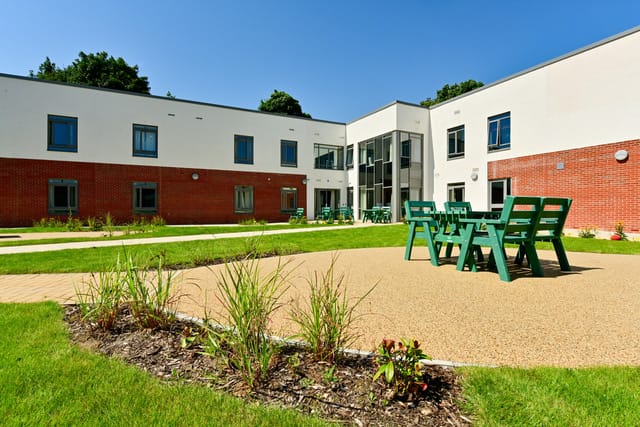
There are many things to consider when finding the right home for someone living with dementia. It needs to be the right choice for both the individual and their close family and friends. Things such as one-to-one support, specialist requirements and staffing should be taken into consideration, as well as the overall environment in which the person will be living.   Many specialist buildings, like care homes, are now being designed with dementia in mind, but even spaces that are not purpose built can be adapted to better the lives of those living with dementia. Considerations can include anything from new technologies and innovations to simple tweaks like rearranging furniture or adjusting colours and lighting.  There are many symptoms of dementia that can make completing everyday tasks confusing or frightening for those living with it. Designing a space that is dementia-friendly helps those living with dementia to maintain their independence for as long as possible, reduces stress and anxiety and significantly improves day-to-day mental wellbeing. 

By |2026-02-11T11:41:27+00:0026 August 2021|Inpatient neuro rehab, Dementia, Care & services|

‘My brain haemorrhage told me to value the time we have and make the most of it’

A man who overcame a near-fatal brain haemorrhage and defied the odds to claim numerous world records is now set to run a gruelling eight marathons in eight days to enable vital support for brain injury survivors and their families to continue. Dad-of-two Neil Rhodes, 63, has completed more than 17 ultramarathons since he nearly died of a brain haemorrhage in 2003. The super fit personal trainer was aged 45 and practising on a rowing machine just three days before the World Indoor Rowing Championships when he collapsed and was rushed to hospital. There, doctors discovered a berry aneurysm in his middle cerebral artery had burst due to a ‘ticking time bomb’ weakness which had been there since he was born. Neil underwent an eight-and-a-half-hour operation to save his life, but doctors gave him just a seven per cent chance of survival.

By |2024-07-04T17:41:32+01:0026 August 2021|Patient stories|

‘We can change the reality for so many survivors’

Through the use of AI-powered technology, BrainQ is set to revolutionise the potential for stroke patients in their recovery from disability and lasting effects of their condition. NR Times speaks to co-founder and CEO Yotam Drechsler about the life-changing potential of its electromagnetic field therapy   In just a few years from now, the potential for stroke patients to reduce and even reverse disabilities could be reality.  Through the groundbreaking work of BrainQ, whose AI-powered electromagnetic field therapy is revolutionising traditional recovery prospects, the outcomes for people who have had a stroke could be unrecognisable against today’s reality.  Results from its pilot trial are undeniably exciting - after receiving BrainQ therapy, 77 per cent of patients had either no symptoms or minor symptoms, with no significant disability, scoring one or even zero on the modified Rankin Scale (mRS), the gold standard for measuring global disability. Additionally, over 90 per cent of people improved by two or more mRS points through the use of BrainQ’s technology. 

By |2024-07-04T17:59:14+01:0024 August 2021|Interviews, Insight|

Sedentary leisure time ‘raises stroke risk’

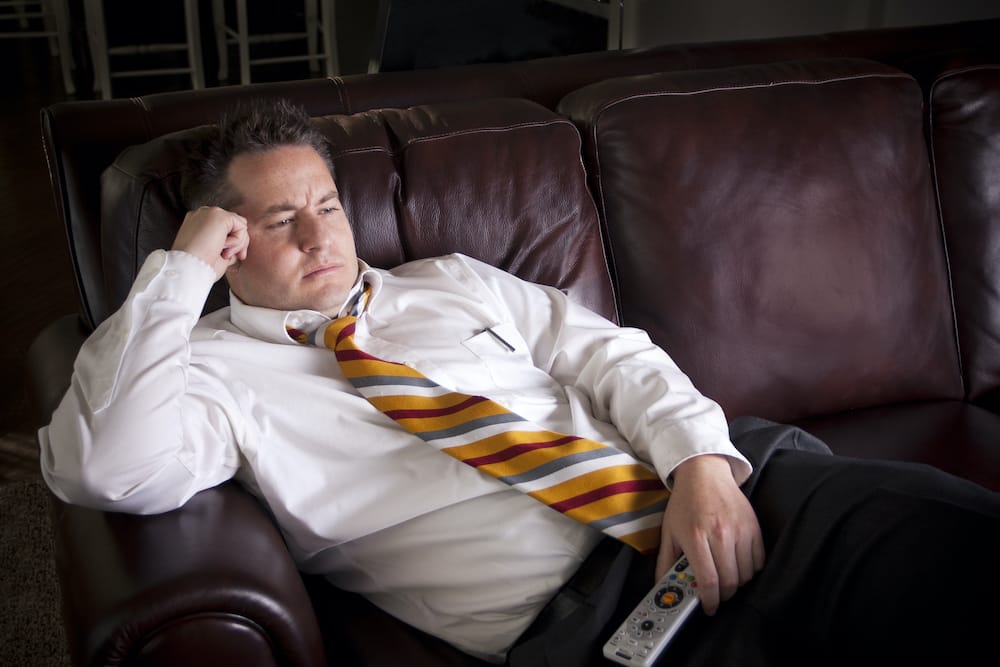
Adults aged under 60 whose days are filled with sedentary leisure time, including extensive use of computer and TV with little activity, are at higher risk of stroke than those who are more physically active, new research has revealed.  A study from the American Stroke Association found that adults in the US spend an average of 10.5 hours a day connected to media such as smartphones, computers or watching television, and adults ages 50 to 64 spend the most time of any age group connected to media.  Death from stroke appears to be on the rise among adults aged 35 to 64 years, increasing from 14.7 in every 100,000 adults in 2010 to 15.4 per 100,000 in 2016.  Previous research suggests the more time adults spend sedentary, the greater their risk of cardiovascular disease including stroke, and nearly 90 per cent of strokes could be attributed to modifiable risk factors such as sedentary behaviour. 

By |2024-07-04T17:41:32+01:0024 August 2021|Stroke|

Mentally stimulating jobs ‘lower risk of dementia’

People with mentally stimulating jobs have a lower risk of dementia in old age than those with non-stimulating jobs, a new international study has found. The large multi-cohort study suggests one possible explanation is that cognitive stimulation is linked to lower levels of certain proteins that may prevent brain cells forming new connections (processes called axonogenesis and synaptogenesis). Explaining the research, lead author Professor Mika Kivimaki, of UCL Epidemiology & Health, said: “Cognitive stimulation is assumed to prevent or postpone the onset of dementia, but trial results have varied and most recent long-term studies have suggested that leisure time cognitive activity does not reduce risk of dementia. "Exposure to cognitive stimulation at work typically lasts considerably longer than cognitively stimulating hobbies, yet work-based studies have also failed to produce compelling evidence of benefits.” An international team of researchers set out to examine the association between cognitively stimulating work and subsequent risk of dementia and to identify protein pathways for this association.

By |2024-07-04T17:41:33+01:0023 August 2021|Research, Dementia|

An ongoing expansion into specialist neurorehab

As an established healthcare provider, Cygnet Health Care has more recently moved into neurorehabilitation and continues to build its presence in the area. NR Times finds out more   Introducing Cygnet Health Care into the Neurological Rehabilitation sector has been an exciting journey over the last 3 years. Cygnet Health Care has long been recognised as offering a wide range of services for individuals experiencing a variety of mental health conditions. However what has not been so widely known is that since 2012 Cygnet has also offered a clinically led evidence based neuropsychiatric rehabilitation pathway provided by dedicated and experienced interdisciplinary teams.  Cygnet offers those individuals presenting with behaviours that challenge as a result of an Acquired Brain Injury a safe place to aid recovery, in addition to offering a caring and supportive placement to help manage the progression of the more behaviourally challenging symptoms which some Neurodegenerative conditions can cause. Quietly establishing a number of sites across the country, Cygnet Health Care Neuropsychiatry services have provided a vital role within the neurorehabilitation pathway nationally. Originally under the name of Cambian, the first eight bedded service was launched on the outskirts of Nottingham to great success. Its sister service the Grange opened a couple of years later providing a further 8 beds in the locality. 

By |2026-02-11T11:41:27+00:0020 August 2021|Care & services, Inpatient neuro rehab|

New approaches to managing spasticity revealed in new study

Medication is not as effective as physical therapeutic interventions after spinal cord injury, researchers have found, with promising approaches to alleviate symptoms of spasticity also being identified. 

A team of researchers representing six Spinal Cord Injury Model System Centers across the United States found that the lived experiences of people with spasticity after spinal cord injury were complex and multidimensional, but certain commonalities - such as stiffness, rather than spasms, as the most problematic characteristic - can inform further studies to identify effective treatments. The research “Characterizing the Experience of Spasticity after Spinal Cord Injury: A National Survey Project of the Spinal Cord Injury Model Systems Centers”  brings together leading experts in the field from across the United States and the world.  Chronic spasticity - characterised by uncontrolled tightening or contracting of muscles - affects most people with spinal cord injury. Its effects range from restricting ability to perform daily activities and pain to negative self-image, and anti-spasmodic medications are often prescribed to mitigate symptoms.  However, data was lacking regarding the lived experience of people with spasticity and the value of medication as a management strategy. To better address this common secondary condition, researchers and clinicians needed more information.
By |2024-07-04T17:41:33+01:0020 August 2021|Spinal injury|

A journey of recovery after COVID, a stroke and Long COVID

Following the life-threatening experiences of contracting COVID-19, having a stroke and then living with Long COVID, James is being supported in rebuilding his life by the QEF Care and Rehabilitation Centre. Here, he shares his story

  “On Christmas Eve I felt bad, I passed out and they called an ambulance out. They took me into East Surrey hospital, checked my sats, gave me oxygen and when my sats improved I went back home. But the next day it happened again, I passed out and they took me to A&E, then a respiratory ward. I didn’t make any improvement, so a bed was prepared for me on ICU, where they put me on a ventilator that saved my life. I remained in ICU at East Surrey Hospital for a further two weeks until I was stable enough to be moved. During this time, it was uncertain if I would survive. I was airlifted to the Lane Fox Unit at St Thomas’ Hospital In London, in the same ward where Boris Johnson the Prime Minister was treated. I stayed on a ventilator there for four weeks.
By |2024-07-04T17:41:33+01:0019 August 2021|Patient stories, Long COVID|
Go to Top