About News desk

This author has not yet filled in any details.
So far News desk has created 2491 blog entries.

Raised blood pressure and diabetes alter brain structure, study shows

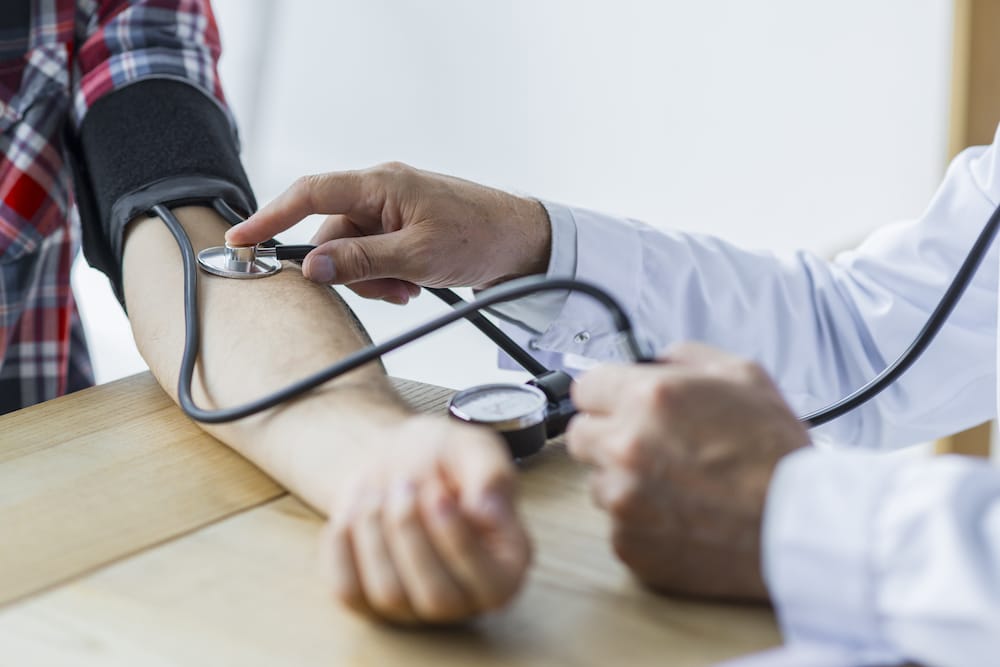
In a new study, neuroscientists have found that raised blood pressure and diabetes in mid-life alter brain structure to slow thinking speed and memory.

Looking at results from 22,000 volunteers in the UK Biobank who underwent brain scanning, the scientists found that raised blood pressure and diabetes significantly impaired the brain’s cognitive functions, specifically the performance of thinking speed and short-term memory. Masud Husain, professor of Neurology and Cognitive Neuroscience at the Nuffield Department of Clinical Neurosciences and lead investigator of the study, said:
By |2024-07-04T17:46:54+01:009 September 2020|News|

Memory training could help Parkinson’s patients

A study has found that working memory training increases neural efficiency in Parkinson’s disease.

The neural efficiency hypothesis describes the phenomenon that brighter individuals show lower brain activation than less bright individuals when working on the same cognitive tasks. Impairment of working memory and executive functions is frequently observed in early stages of Parkinson’s disease. Improvements in working memory performance could potentially be achieved via working memory training. However, the specific neural mechanisms underlying different working memory processes, have largely gone under-investigated.
By |2024-07-04T17:46:55+01:009 September 2020|News|

Researchers find stroke prevention suitable for elderly patients

Using blood thinners to prevent stroke in very elderly patients with atrial fibrillation is a challenge for doctors, because of an increased risk of bleeding.

Researchers from the Saiseikai Kumamoto Hospital in Japan decided to conduct a randomised, double-blind trial to compare a daily dose of blood thinner edoxaban with a placebo treatment involving almost 700 elderly Japanese patients who were 80 years old and above. They all had atrial fibrillation, and weren’t considered to be appropriate candidates for oral blood-thinning therapy at doses approved for stroke prevention.

By |2024-07-04T17:46:55+01:009 September 2020|News|

New service helps stroke survivors during pandemic

More than 150 NHS patients in the Midlands have received personal, specialised care thanks to a new service set up during the coronavirus pandemic.

Stroke Connect, a nationwide partnership between the NHS and the Stroke Association, provides stroke survivors with support and advice in the early days following hospital discharge, without having to leave the house. Experts have said that the new offer is providing a ‘lifeline’ during the pandemic that has helped people to rebuild their lives after having a stroke since it launched last month.
By |2024-07-04T17:46:55+01:008 September 2020|News|

Technology aims to help stroke survivors with spatial neglect

After a stroke, up to one in three survivors will experience a condition called spatial neglect – but researchers say there isn’t enough research being done into the condition.

Spatial neglect is a type of vision loss, where a stroke survivor loses awareness of one side. It’s most common after strokes to the right hemisphere, where people will be unaware of objects or people on the right side, says Helen Morse, PhD student University of East Anglia, funded by the Stroke Association. People with spatial neglect don’t have anything physically wrong with their eyes that causes these problems. Morse calls it a ‘complex and bizarre condition’ that can also affect other ways people receive information, such as visually, as well as their hearing and sense of touch. This, she says, makes it a difficult condition to measure, detect and treat.
By |2024-07-04T17:46:55+01:008 September 2020|News|

There’s a ‘dire’ need for more VR rehab studies, researchers argue

Researchers analysed twelve studies that looked at VR-enhanced rehab, and concluded it can offer long-term positive outcomes for patients with traumatic brain injuries (TBI), especially those with motor skills and cognitive deficits, and those experiencing difficulties with their balance.

One of the benefits of VR rehab is that it can provide a safe environment for people to practice skills with minimal risk of harming. Some VR platforms, the paper states, can model almost any type of environment that may be useful for rehabilitating motor skills including walking, balancing and moving on different types of terrain.
By |2024-07-04T17:46:55+01:008 September 2020|Uncategorised|

People with MS no more at risk of contracting COVID-19 to the general population

Researchers followed almost 4,000 people with multiple sclerosis (MS) in the UK between 17 March to 24 April 2020, which was early in the virus outbreak.

Over this time, six per cent of the group (237 people) reported having self-diagnosed Covid-19, among whom 23 per cent had a diagnosis from a health professional based on their symptoms and 15 per cent had it confirmed by testing. Of these, three went to hospital, and no deaths were reported. The researchers compared this data to more than 1,200 siblings of the participants who didn't have MS, of whom six per cent had a reported diagnosis of Covid 19. They concluded that the risk of contracting the virus was similar for people with MS and those without.
By |2024-07-04T17:46:55+01:008 September 2020|News, Multiple sclerosis|

Educating families on MS and Covid 19

A new online activity has been launched to help explain the relationship between multiple sclerosis (MS) and coronavirus to children.

The activity, designed by Digesting Science and aimed at families with six- to 12-year-olds, takes around 20 to 30 minutes, and covers the immune system and how white blood cells fight infections like coronavirus and whether treating MS makes you more vulnerable to coronavirus. Those wanting to try the activity will need some props, including pasta, paper or card, scissors, drinking glasses, a bowl, a blindfold, a pen and some tape. Digesting Science recently hosted a series of online events for young people with MS covering the disease and issues around Covid-19, emotion, diet and lifestyle, and cognitive changes in school.
By |2024-07-04T17:46:55+01:008 September 2020|News, Multiple sclerosis|

The light and shade of brain injury recovery

When comic artist Wallis Eates saw an ad from Headway East London looking for an artist in residence for the charity’s art studio, she knew she had to apply…

Headway’s East London studio provides a place for members, who all have acquired brain injuries, to create artwork. Eates’ own line of work leading up to this included autobiographical comics, and digital storytelling with prisoners. “I’d been looking for ways to help others share their stories or collaborate on story-sharing,” she tells NR Times.
By |2024-07-04T17:59:17+01:008 September 2020|Interviews, Insight, News|
Go to Top