The second-annual NR Times Awards will celebrate some of the most exciting examples of innovation in the field.
Sponsored by Slater and Gordon, the Neuro Rehab Innovation of the Year award promises to be highly competitive, with a number of exciting entries already in our submissions inbox.
As we count down to the awards, we take a look at some of the most promising neuro rehab innovations to emerge over the past year.
Nominations for the NR Times Awards close on September 30. Find out more and enter for free here.
Health tracker set to improve stroke rehab
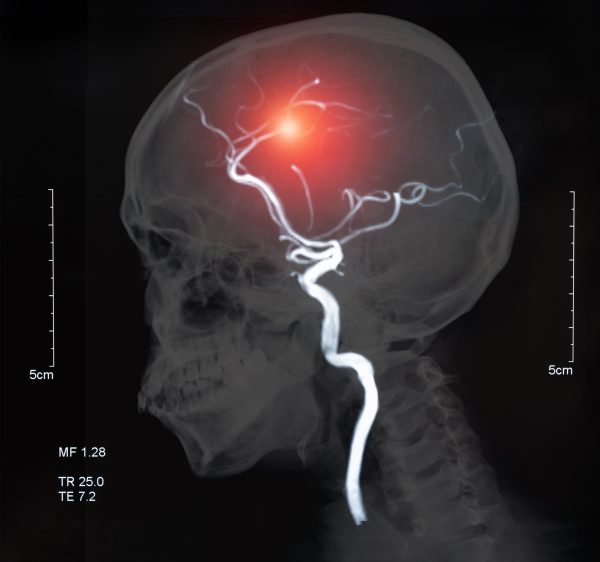
MRI of the blood vessels in the brain and cerebrovascular disease or or hemorrhagic stroke. brain stroke x-ray image.
Researchers at the University of Massachusetts Amherst in the US have been awarded $1.14 million (£940,000) over four years by the National Institutes of Health (NIH) to develop a revolutionary way of tracking body movements.
Its primary application will be stroke survivors’ rehabilitation, with huge potential for future applications across a wide range of disciplines, health-related and beyond.
Patients recovering from stroke need to use their affected side as much as possible in order to improve their chances of rehabilitation.
However, determining how much a patient is using the weaker side outside of the hospital is a challenge.
The new sensing sensing technology, called Body Channel Identification, combines three key components.
‘Smart stickers’ are placed on everyday objects around the patient’s home, like a light switch, for example.
The tag is activated by a wearable wrist device which transmits data to the device about what the patient is doing (i.e. flicking on a light).
The tag and the wrist device are connected via the wearer’s own body to create a closed-loop circuit.
Alongside stroke, the tracker can be applied to other conditions involving motor impairments, including traumatic brain injuries, multiple sclerosis and Parkinson’s disease.
Steps forward in AI-enabled diagnostics

A collaboration between the Francis Crick Institute, UCL Queen Square Institute of Neurology and tech firm Faculty AI has developed an AI tool that may improve diagnostics and support more precise treatments.
Their work, featured in Nature Machine Intelligence, demonstrates that machine learning can effectively predict Parkinson’s disease subtypes using images of patient-derived stem cells.
Remarkably, computer models achieved a 95 per cent accuracy in classifying four distinct subtypes, offering a potential pathway to personalised medicine and targeted drug development.
Until now, nonspecific diagnoses hindered access to tailored treatments.
The researchers generated stem cells representing four Parkinson’s subtypes and employed advanced imaging to label critical cell components.
Utilising AI, they trained a programme to identify each subtype, primarily focusing on mitochondria and lysosomes, revealing their pivotal role in Parkinson’s development.
Innovation supports mental health

A ball which replicates breathing has been designed as a means to support a person’s mental health and help regulate their emotions.
The interactive ball – named the Physical Artefact for Wellbeing Support (PAWS) – expands and contracts in synchronicity with a person’s inhalations and exhalations.
Working through haptic feedback, where sensors attached to the user’s body transmit data about their respiration patterns to the ball via a computer, it is already showing its potential in redefining how mental health care is approached.
Research among those who use the PAWS reveals that there was an average 75 per cent reduction in anxiety and a 56 per cent increase in protection against worry-induced thoughts.
The ball has been developed by Alexz Farrall, a PhD student at the University of Bath, whose research has also revealed a significant improvement in people’s ability to focus on their breathing when they use his shape-shifting ball.
“By giving breath physical form, the ball enhances self-awareness and engagement, fostering positive mental health outcomes,” says Alexz.
“I hope this device will be part of the solution for many people with problems relating to their mental wellbeing.”
High-tech, shock-absorbent helmet under development at Stanford

Researchers have developed an American Football helmet containing liquid shock absorbers which could reduce the effects of a knock to the head by one-third.
The team engineered a finite element model of an American football helmet, incorporating 21 liquid shock absorbers. These absorbers were designed to mitigate the impact of head collisions and reduce the strain on the brain.
The team rigorously tested the liquid shock-absorbing helmet against the evaluation protocol used by the National Football League (NFL) and compared its performance to that of existing helmet models.
In light of growing evidence that even sub-concussive impacts can have serious health implications, they extended their evaluation to include lower-velocity impacts. The team assessed head kinematics for each impact, producing a performance score that evaluated the helmet’s effectiveness in reducing brain strain.
The results were encouraging, with the liquid shock-absorbing helmet outperforming existing models in 33 out of 36 different impact scenarios.
It also secured the best ‘Helmet Performance Score,’ a crucial factor in the NFL’s annual helmet safety rankings.
The helmet excelled in protecting against concussions, particularly in the ‘side upper’ region, reducing impacts by 39-50 per cent across all velocities without compromising protection in other areas.
Enter the NR Times Award here.