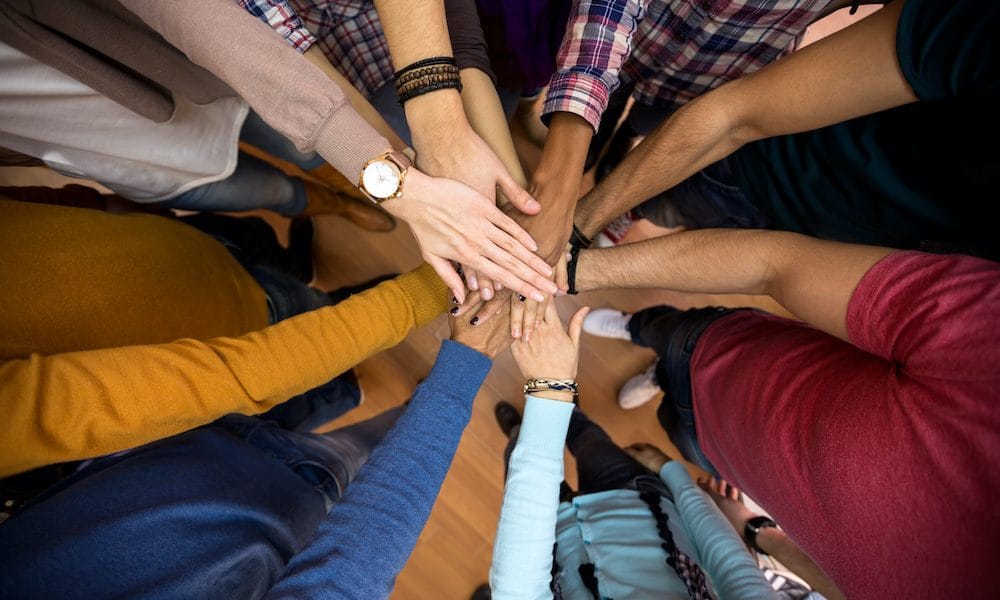
A sense of belonging is held up by psychological experts as being vital to a person’s psychological health, and to the functioning of our society as a whole. So why does this so often not arise for our minority-group clients? What can we do to play our role in achieving this, and supporting those who do not feel that sense of belonging and allyship?
Dr Shabnam Berry-Khan, clinical psychologist, case manager and director of PsychWorks Associates, discusses this hugely important topic, which continues adversely to affect so many minorities in the UK and around the world
October is Black History Month in the UK. During this month, we are reminded to promote and celebrate Black contributions to British society and to foster an understanding of the impact of Black history on the UK today.
While this month originates from ‘Negro History Month’ in the US as far back as the 1920s, Black History is not (and never was) just an American thing. You do not need to dig too far to learn that British history also been greatly influenced and has influenced by Black history. The significant role of Great Britain in the race-based slave trade, and discriminatory treatment of Black people since that time, and the great social movements tackling them, are just two examples over the ages.

Dr Shabnam Berry-Khan, director of Psychworks Associates
You also do not need to think too hard to appreciate that October is not the only time when we can reflect on Black history. Black history and its legacy play a part in modern Britain all year round. With recent acknowledgments about unconscious bias, institutional racism, disparities in treatment and outcomes for the worst in health and justice, and modern policies that have seen people sent “home” (aka Windrush); the Black experience is not really so historical as much as current. As it happens, this year’s Black History Month theme is ‘Time for change: Action not words’. Perhaps this statement can be seen as a clue about the state of play today.
This article is not meant to be about Black History Month alone, but it does provide a convenient springboard for a topic that I want to raise for the personal injury world: Belonging.
Belonging is about fitting in. Feeling like a member of a group. An affinity for a place or situation. A secure bond. A safe place.
Let’s do a little thought experiment: imagine the last time you went on holiday abroad to a country where people looked different to you, ate different foods, wore different clothes, where you had to learn how to navigate a new area, and they spoke to you in a language that you didn’t fully understand and they didn’t speak your mother tongue.
How did you feel?
Hold that thought. As I’m writing this, I am fully aware that some of us will have to use our imagination because English is a first language and a lot of the world can speak some English. What a privilege!
Have you ever had to check in with yourself about whether you fit in or belonged in your society, in the country in which you lived? You are lucky if the answer is “No”.
Given what has been said about current experiences, feeling a sense of belonging is unlikely to be the case for many minoritised groups, including those who identify as non-white. After all, diversity can be written on our skin, and possibly heard in accented voices or choice of language.
Psychologically speaking, the need to belong refers to an emotional need to affiliate with, and be accepted by, members of a social group. This could be any size or type of group: from school to clubs to work colleagues to hobby communities or religious groups. A sense of belonging involves more than simply being associated with others. It is centred on gaining acceptance, attention, and support from members of the group and reciprocating the same back. Validation.
Let’s go back to that thought experiment: What if you had to extend your stay indefinitely (because of, say, a relationship/work/political issues), and the onus was on you to learn to fit in. And when you did learn the language, cook the food, work out what was where and blend in with the local clothing, you still didn’t settle or feel part of the community. How would this impact you?
A positive sense of belonging fosters health psychological health through a reduction in anxiety, depression, loneliness and hopelessness. In other words, when someone feels like they do not belong, they are more likely to develop unhelpful emotional responses that only make a sense of belonging even less likely. Those who feel a stronger sense of belonging are more likely to feel they can be authentic, which results in more confidence, a more positive outlook, more commitment, more engagement, better health and an improved quality of life.
In the main, people thrive when they feel they belong. And society benefits from the best versions of people. Indeed the psychology contributor Maslow, in his famous Hierarchy of Human Needs, placed belonging in the middle of the pyramid, bridging basic human needs (food, clothing; safety in work or housing) with the more complex, internalised needs (esteem and actualisation).

(credit: Bernie Sanders and Maslow’s Hierarchy of Needs | New American Journal)
So, why aren’t we fostering belonging more explicitly, I hear you ask?!
Well, it’s a little more complicated than that, with numerous factors influencing that vital sense of belonging. Some are related to early life experiences, such as childhood traumas, poor attachments to parents or caregivers, bullying at school or political unrest challenging the belief that the world can be safe. Belonging is also influenced by societal factors such as discrimination, racism, xenophobia, disrespect, political ideology and social disadvantage. However, it certainly seems that when we focus on difference, as humans we end up in discomfort, dispute, conflict, even violence and war. It begs the questions, how far can an individual develop belonging if the environmental factors are not conducive to the same?
So, let’s broaden the lens. In the wake of the 2020 Black Lives Matter protests, following George Floyd’s murder, thanks to people’s use of social media to unveil some true horrors in the world today, we may all become bystanders. Witnesses to injustice and oppression. Such challenges have now become everyone’s problem. When someone is seen as so different that they are worthy of different treatment, that can imply they are worthless and unhuman (or on the flip side, have some privilege that protects them). That they may not even belong to the human race. The truth is that we witness transgressions all the time, whether we admit it or not. It might not be as extreme as murder, but it might be instead a racial microaggression we witness or a decision that is made that plays on privilege rather than merit. And we say nothing, despite knowing it’s wrong and alienates or makes it harder for someone else.
Different and otherness 1 – Belonging and allyship – 0.
We are not powerless in ourselves and the time is now more than ever to speak up and support those who are oppressed and disadvantaged. This is what Action is. This contribution for a better world becomes more than words. This is allyship, moving beyond short-term gestures and focussing on long-term behaviour-based support.
Our personal injury clients, colleagues and ourselves of course are not exempt from this picture of diversity, socio-political pressures and allyship. Our clients rely on us to feel that they belong in their own homes with the people that surround them and the choices that they decide to live their life by. Only then will they maximise their rehabilitation outcomes and live as joyful a life as possible. How belonging is fostered therefore in care plans, activities that are meaningful and how they want people in their home to do for them by their own reference or framework is vital. It takes a lot of effort necessarily so to elicit these ideas respectfully and ethically, but the therapeutic bond and understanding that will be formed will be priceless.
Equally, our colleagues need similar: a workplace that allows for their difference to be celebrated and not shamed, where aromatic ethnic foods are not described as “unusual” or “smelly” or where comfortable clothing might mean different shapes and patterns. It is a space for colleagues to express their positive and hurtful experiences safety and openly without minimising or backlash. Where microaggressions are heard as a valid and reasonable appraisal of an incident. Where supervision and guidance can hear how being different causes all sorts of pressures on the hearts and mind. Personal injury work by default is fraught with emotion, distress, feelings of injustice and survival. Such pressures can trigger desperate responses that unveil bias and offensive ideas. As helping professionals, such upset can feel more negatively impactful. For management to have a productive, retained staff team within a happy work culture, these points need to be brought into the fold for basic psychological safety.
What actions can you take as an individual or in your workspace to increase that much-needed sense of belonging for all?
– Know thyself: values connect people. Know what you as an individual, family, social group, organisation stands for and seek relationships on that basis. You will find that knowing your values will exist across race and other social constructs.
– Speak thy truth: now is the time to explore and express what being authentic means to you and how that sounds in your spoken narrative about your own life. As long as respect, honesty and compassion govern what is said (and how it is responded to), it is worth saying.
– Listen with curiosity and not judgement: being able to hear diverse stories and experiences with an open mind, we will find that we can relate and find wisdom in those around us. Regardless of difference. In this process, we find we rehumanise those we speak to. How we bring these ideas into our clients’ and colleagues’ surroundings will mor naturally ensue.
– Acceptance of experiences: that some people have experienced difficult times and this may be because they were simply born to a particular set of parents, in a body that may put them at a disadvantage, with preferences that make it more challenging to be authentic, in a socio-cultural setting that does not value them. If you can go as far as bearing witness to their pain – as uncomfortable as it might be – you will hear a story that is true, but also undoubtedly healing for the story-teller. Any recommendations, planning or guidance that is formed after such honoured encounters will be protective of pain points and will feel safe for your client and/or colleague.
– Become an ally to those who have experienced hardship as a result of socio-political pressures: stand up for those who are burdened by the diversity they represent. In the workspace, support inclusion practices and contribute to the discussions (a much easier task when you’ve heard those stories!), With clients, consider how, for example, recruitment and professional appointments can be more representative of a value base that can feed into a client feeling like they are surrounded by people they connect with in their own home.
Social belonging is a basic human need and is hardwired into our genes. We have no choice but to accept this human feature, else we run the risk of crushing what could and should be good for all of us.
As the inspirational Maya Angelou once said: “Do the best you can until you know better. Then when you know better, do better.”
- For more information about PsychWorks Associates and its work, visit here