Beyond routine care: Delivering safe, person-centred tracheostomy support
By Shila Rundla, senior nurse trainer, Fairlie Healthcare
Tracheostomy care can easily be viewed as a sequence of technical tasks – suctioning, stoma care, cuff pressure monitoring, tube management and emergency preparedness.
When routines take over, the individual behind the tracheostomy can be overlooked.
The challenge for specialist clinicians is to see beyond the task and stay with the person.
Safety is rightly the primary focus in Tier 1 tracheostomy and ventilation care.
Delivering truly safe care, however, requires more than technical competence. It means understanding each patient as an individual and responding to their physical, emotional, psychological and communication needs in a holistic way.
Understanding the Patient
Patients arrive at Fairlie Healthcare with complex clinical, emotional and communication needs, but these extend beyond what is documented in discharge summaries.
Many have experienced life-changing events, prolonged admissions, and significant loss of independence.
Time is well spent getting to know who they are as a person, their fears, values, preferences and ambitions.
Some are still processing a diagnosis or adjusting to a new way of living; others may not feel ready to discuss prognosis. Safe care begins with understanding the person, not just the condition.
A Person-Centred Approach
An approach in line with regulation 9, which governs person-centred care, delivers the best experience and outcomes.
Clinical safety and procedures must be balanced with dignity, autonomy, quality of life and participation in decision-making.
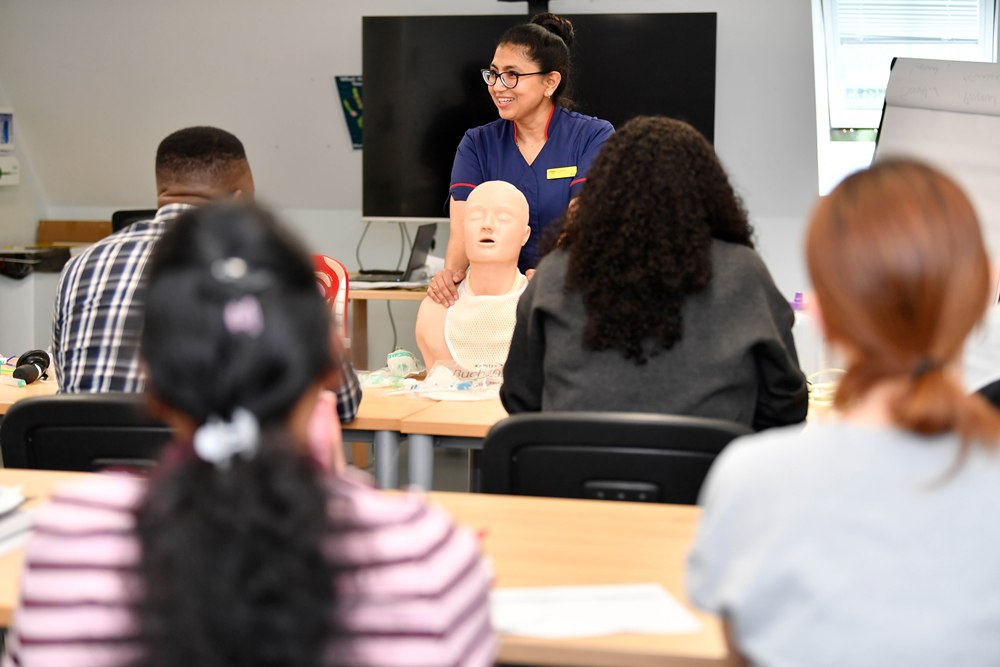
This approach begins in the classroom.
Staff undertake a comprehensive training programme that combines theory, simulation and supervised practice.
Working alongside experienced clinical mentors from an early stage helps staff deliver care that is responsive, individualised, and compassionate rather than task-focused.
Competency Frameworks and Continuous Learning
We place a strong emphasis on bedside learning.
Our competency framework supports the development of the knowledge, skills and behaviours required to deliver safe Tier 1 tracheostomy and non-invasive ventilation (NIV) care.
Competence is not viewed as a one-time achievement but as an ongoing process, reinforced through observation, reflective practice, supervision, and regular reassessment.
Learning should always be driven by patient need and refined through clinical experience.
At Fairlie Healthcare, training and development continually evolve because no two patients are the same.
Our evidence-based competency framework encompasses both technical expertise and the interpersonal skills required to deliver truly person-centred care.
Clinical competencies include tracheostomy and laryngectomy care, airway management, suctioning, cough assist, invasive and non-invasive ventilation, enteral feeding management, catheter care, clinical observation and deterioration recognition, as well as safeguarding and risk management.
These skills provide the foundation for delivering safe, effective care in complex rehabilitation settings.
Alongside the development of these clinical competencies, staff undertake training in areas such as the Mental Capacity Act, safeguarding, infection prevention and control, Equality, Diversity and Inclusion and the Gold Standards Framework.
Together, these programmes help ensure that technical expertise is complemented by an understanding of each individual’s rights, preferences, values and personal goals, supporting a truly person-centred approach to care.
As a Senior Nurse Trainer, I focus on the details that shape a patient’s experience.
It is often the small things – how we communicate, how we involve patients in decisions and how we respond to individual preferences that make the greatest difference.
We learn as a multidisciplinary team, drawing on the expertise of nursing, physiotherapy, speech and language therapy, occupational therapy and wider rehabilitation services.
By sharing perspectives and observations, we gain a more complete understanding of each individual and can tailor care accordingly.
Remaining present in clinical practice is essential.
Working alongside frontline teams helps identify real-world learning needs, ensures training remains relevant and strengthens the link between education and patient outcomes.
Ultimately, it is not only what we do that matters, but how we do it.
Communication as a Clinical Intervention
Communication is essential to engage patients in their own care. It is easy to make assumptions when speech or cognition is impaired, but ‘no voice’ should never be mistaken for ‘no choice’.
Our role is to identify the most effective communication method for each individual, whether that involves speaking valves, alphabet boards, eye gaze systems, gesture, writing or digital communication aids so preferences, pain, and emotions can be expressed.
For many patients, a tracheostomy is a sudden and frightening experience.
Breathing and swallowing are fundamental functions, and the loss of a reliable means of communication can significantly affect confidence, wellbeing and autonomy.
Restoring communication helps reduce fear, build trust and return a sense of control.
One patient was clinically ready for cuff deflation and speaking valve trials but remained understandably anxious about the process.
While the physiological indicators suggested readiness, it became clear that emotional readiness was equally important.
By taking time to explain each step, involving the multidisciplinary team and progressing at a pace that felt comfortable for the patient, we gradually built confidence and trust.
Following successful cuff deflation and speaking valve trials, she was able to use her voice again for the first time in many months.
Being able to greet staff by name, express preferences and communicate directly with family members transformed her confidence and engagement in rehabilitation.
What might appear to be a small clinical milestone represented a significant personal achievement and reinforced the importance of seeing the individual behind the tracheostomy.
Progressing Patient Care at the Right Pace
One of the advantages of working within a specialist community setting is the opportunity to build long-term therapeutic relationships with patients.
We observe changes over weeks, months and sometimes years, allowing us to make informed decisions about care progression and rehabilitation goals.
Decisions around cuff deflation, tube downsizing, speaking valve use or weaning from ventilatory support are never based solely on clinical measurements.
Physical readiness is important, but emotional readiness matters too. Progress is most successful when patients understand the process, feel supported and are able to move forward at a pace that is right for them.
Rehabilitation is not always measured by major clinical milestones. Sometimes progress is reflected in the small moments that matter most to patients.
I worked with a patient who had been nil by mouth for a prolonged period and was actively participating in a ventilator weaning programme.
Following successful cuff deflation and assessment by the Speech and Language Therapy team, she was able to begin trialling small amounts of food safely.
While she was initially unable to manage more advanced food textures, she greatly enjoyed simple foods such as yoghurt and ice cream.
What stood out was not simply the clinical achievement but the emotional impact.
After such a long period without being able to taste food, those small moments brought a sense of enjoyment, normality and choice back into her daily life.
Watching her look forward to those opportunities reminded me that rehabilitation is not only about improving physiological function; it is also about restoring experiences that many of us take for granted.
Continuity of care within a specialist community setting allows us to recognise subtle changes that indicate readiness for the next stage of rehabilitation.
We prepare patients and families for each step and tailor support accordingly, ensuring progress is both clinically safe and personally meaningful.
Experiences like this remind us that successful rehabilitation is not simply about reaching clinical targets. It is about understanding what matters most to each individual and supporting them to achieve goals that improve their quality of life.
Person-centred from beginning to end
Routine is the enemy of truly person-centred care in Tier 1 tracheostomy settings.
While consistency and clinical standards are essential, we must never lose sight of the individual receiving that care.
Person-centred care should not be viewed as an additional consideration; it is a clinical intervention in its own right.
It improves communication, enhances patient engagement, supports emotional wellbeing and contributes to safer care delivery.
For some individuals, tracheostomy and ventilation support may be lifelong.
At Fairlie Healthcare, some patients have been with us for more than 18 years. Being cared for over such a long period requires more than technical excellence. Patients need to feel respected, understood, safe and valued.
Our aim is always to create an environment where individuals feel at home, secure and confident in our abilities, enabling them to live as fully as possible regardless of their condition or prognosis.
Ultimately, that is what delivers the best possible outcomes and quality of life.
In our experience, person-centred care is the only way to achieve that.
Find out more about Fairlie Healthcare at fairliehealthcare.co.uk