



Brian Barr Solicitors: “Sometimes clients just need to vent – we’re happy to be that ear”

Steven Akerman, director of NR Times award-winning Brian Barr Solicitors, talks about fighting for clients, the dangers of fundamental dishonesty allegations and why his team sometimes needs a psychology degree more than a law one.
The origins of Brian Bar Solicitors lies in founder and company namesake Brian Barr’s early-2000s vision.
Brian wanted a practice that would genuinely specialise in complex injury claims and that ethos remains central to how Brian Barr Solicitors operates today.
“What I really enjoy about what I do is that even though the welfare system and the NHS are good in this country, they are stretched,” Akerman says.
“Our clients have another avenue to get the help they need.
“It’s not about lying on a beach with a big payout. These people’s lives are affected and anything we can get them to help with private treatment, loss of income, it just makes life that much more bearable.”
‘Fundamental dishonesty’
One major challenge Steven takes on in these cases is tackling claims of what is known in personal injury law as fundamental dishonesty.
A legislative change introduced several years ago means that any claimant found to be fundamentally dishonest stands to lose their entire personal injury claim and can be ordered to pay six-figure sums in the defendant’s legal costs.
The logic behind the rule is straightforward. The complexity, Akerman explains, lies in how easily innocent clients can be caught up in it.
“We can all agree that someone who is dishonest doesn’t deserve any protection,” he says.
“But the problem is that with chronic or neurological conditions, it’s very easy to make mistakes.
“People have good days and bad days. Someone might be able to walk on a particular afternoon, and on another day they can barely move. That’s just the nature of the condition.”
Steven has seen such examples in his personal life.
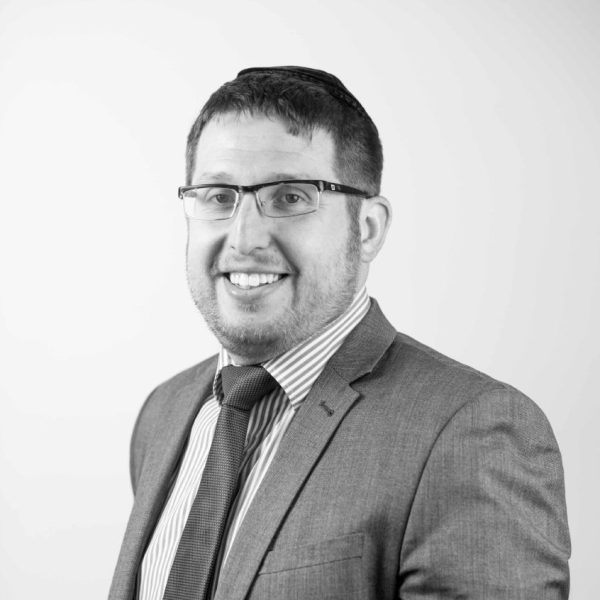
Steven Akerman
A friend of his with fibromyalgia works as a mechanic. Sometimes Akerman sees him walking with a cane, other times he is on his back under a car.
“The man is not making a claim. He is simply living with a condition that fluctuates.
“If claims like that aren’t dealt with properly, innocent people can accidentally be caught up in this mess,” Steven says.
“Because they weren’t very clear about what they can and cannot do, they can be accused of fundamental dishonesty.
“That is the biggest challenge: protecting innocent people from miscarriages of justice.”
The firm takes an intensive and methodical approach to fundamental dishonesty allegations.
Steven describes a case in which his client, a woman whose witness statement described what she could and could not do, was suddenly confronted with hundreds of pages of social media footage.
On the face of it, the evidence seemed to show she was working as a beautician and was physically capable of far more than she had claimed.
“Superficially, it looked really bad,” he says.
“But when we delved into it and understood it, it turned out that a lot of the posts were just regurgitating the same content, the same pictures.
“On Facebook, you want to look busy – you say you’ve only got a few appointments left.
“That’s just normal marketing. It took painstaking hours, going through everything detail by detail.”
The firm was turned down by an experienced barrier dealing with complex claims.
Eventually, they found counsel willing to back the claim and produced a 40-to-50-page witness statement working through the social media evidence page by page.
The case, which had been pursued on the grounds of fundamental dishonesty, ended in a six-figure settlement for the client.
“That is what’s necessary,” Akerman says.
“Just because it looks bad, and just because someone is being accused of dishonesty, doesn’t mean that’s the case.
“You really have to know how to go through the documents and analyse them carefully.”
A colleague at the firm had a similar experience: a client with surveillance footage against her whose previous solicitor had told her the claim was dead in the water.
Brian Barr took it on and settled within weeks.
Working with medical experts
A key part of how the firm builds its cases is through the medical experts it instructs.
With neurological and chronic pain conditions, Steven says, superficial reports simply are not good enough.
“We can’t have a quick five-to-ten-page report,” he says.
“Every bit of the person’s history, both pre and post accident, is relevant to the development of their condition.
“Sometimes a claim can turn on one record. We need experts who are at the top of their field and who will go into real detail.
“The reports are long, and all the records are considered properly.”
Supporting clients through tough times
Winning a claim is only part of the job.
Steven is candid about the emotional weight of supporting clients who are already living with the aftermath of life-changing injuries and who then face the additional stress of litigation.
Clients are warned from the outset that bringing a high-value claim will invite scrutiny: social media trawls, surveillance in public spaces, attempts to discredit their account.
The firm tries to prepare them emotionally as well as legally.
“The other side is going to come with their own evidence and try to undermine as much as they can,” he explains.
“To them, the claimant is just a number. They want to keep that number as low as possible.
“No matter how personal it feels, it usually isn’t. We try to prepare clients for that reality throughout the whole process.”
When clients are struggling, the team listens. Steven describes clients ringing not out of anger at the firm, but because they are overwhelmed and simply need someone to talk to.
“My colleague always says we don’t really need a law degree – we need a psychology degree,” Stecven says.
“Clients are going through very difficult periods.
“Sometimes they just need to vent and we’re happy to be that ear.”
Learn more about Brian Barr Solicitors at brianbarr.co.uk


