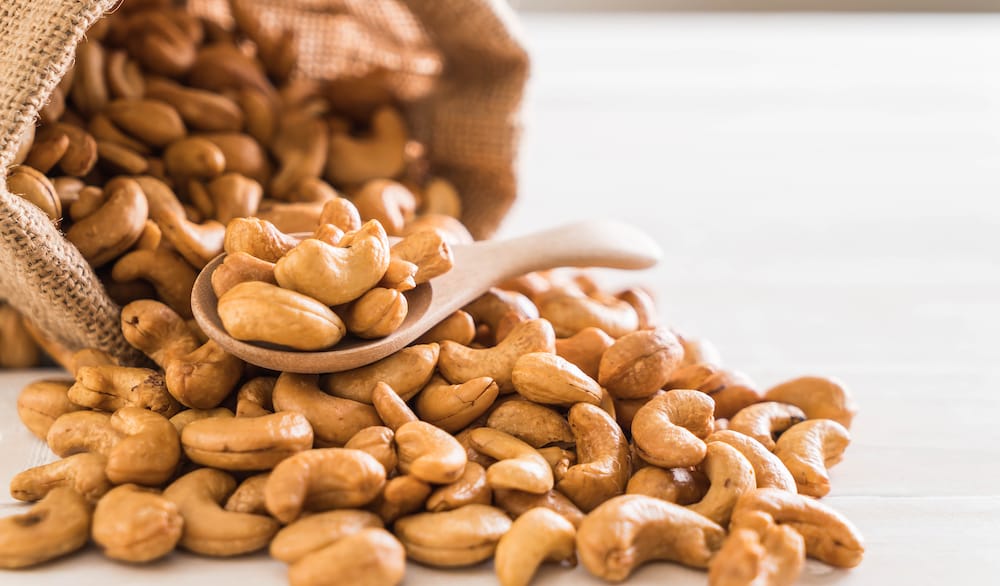
Researchers have found that a chemical compound found in the shell of cashew nuts could repair myelin, which could have benefits for the treatment of autoimmune disorder multiple sclerosis (MS).
In lab experiments, researchers from Vanderbilt University Medical Center in Nashville, US, found that anacardic acid could help in the treatment for demyelinating diseases, which cause damage to the protective covering surrounding nerve fibres in the brain, optic nerves and spinal cord.
Anacardic acid is known to inhibit an enzyme involved in gene expression called histone acetyltransferase, and whatever inhibits this, induces the production of IL-33. Researchers already knew that IL-33, a chemical made in response to injury, induces myelin formation, and is therefore an immune response regulator. MS and other neurological disorders stem from damage to myelin.
The researchers found that giving mice anacardic acid-induced IL-33 resulted in reduced injury led to reduced paralysis and injury in mice experiments.
“We see this as an exciting finding, suggesting a new avenue in the search for therapies to correct the ravages of MS and other demyelinating diseases,” said the paper’s senior author, Subramaniam Sriram, professor of neurology and chief of the Division of Neuroimmunology.
“These are striking results that clearly urge further study of anacardic acid for demyelinating diseases.”