



News
The latest news from across neurorehabilitation.
 Legal28 Jul
Karen Ledger (KL): When brain injury occurs, it's like a bomb going off in the family. Life will never be the same again for any of the members of that family. People will be shocked, bewildered and overwhelmed, and they then have to go through a complicated process of adjustment, and people reach that adjustment at different stages. The person with the brain injury will generally have a neuropsychologist assigned to support them. Most will pay attention to people's feelings and emotions, but the rest of the family may not have any psychological support. This situation doesn't get better of itself without professional input, it can get worse and people’s mental health can and often does spiral down. Louise Jenkins (LJ): It’s a particular challenge if you've got someone with little or no insight. They often won't recognise the need for or be willing to engage with neuropsychological treatment until much further down the line, by which stage, the family may have entered a more advanced stage of crisis and their whole family unit may be at risk of breakdown. There are complex emotions involved in the adjustment process following trauma which include shock, guilt and loss.
 News28 Jul
Most case managers are now making referrals to residential programmes, replacing the ‘virtual first’ approach adopted over the last four months, according to a survey by Calvert Reconnections, a neurorehabilitation residential centre in the Lake District.
One in ten case managers said they’re making referrals to residential-based programmes now, while 70 percent said they expect to be doing so in the next three months. Only five percent said they won’t be making the transition back to offline programmes for at least six months.
However, the survey of 152 case managers also found that 85 percent feel that virtual treatment has been essential for meeting their clients' rehab and mental health needs over the lockdown period.
 News24 Jul
Courts have, up to now, relied on interpreting previous cases when dealing with offenders with mental disorders, states the Sentencing Council. From 1 October, judges and magistrates in England and Wales will use new guidance for adults with mental health, neurological and developmental disorders, including acquired brain injuries (ABI). This includes people with tumour, stroke, haemorrhage, encephalitis, carbon monoxide poisoning, hypoxic injury and trauma. Culpability may be reduced if an offender had an ABI at the time of offending, but only if there’s sufficient evidence of a connection between their injury and their offending behaviour. In some cases, the guidance states, their culpability could be significantly reduced.
 News24 Jul
The internet can often feel like a vapid place, propped up by self-interested, shallow interactions as users compete for the most subscribers, views and shares.
But reluctant YouTuber James Inkson Stevens has what most content creators don’t; he’s in regular contact with at least half of his subscribers.
He sometimes gets frustrated with making videos, and finds the process very tiring, but keeping Stevens going is the memory of how alone he felt 16 months ago, after he was assaulted and left with a traumatic brain injury.
Stevens, 35, was working as an actor in London before he decided to move back to Southampton, where his family live, to buy a flat.
 News24 Jul
More than nine in 10 people with a neurological disorder face stigma because of their condition, mostly from medical professionals, according to a study.
The survey, by the organisation that represents European organisations across neurological diseases, suggests that most of this stigma comes from medical professionals who don't appear to believe patients’ symptoms.
The 1,300+ respondents to the European Federation of Neurological Association’s (EFNA) poll had a range of disorders including ME, migraine or headaches, epilepsy, Parkinson’s and chronic pain.
Around 75 per cent of people reported feeling as though they didn’t receive adequate treatment because a medical professional didn’t take them seriously, while just over a third avoided seeking medical advice because they felt embarrassed.
 News23 Jul
Former football players are around half as likely to be admitted to hospital for anxiety and stress related disorders, depression, drug and alcohol-use disorders, and bipolar and affective mood disorders.
They’re also no more likely to die by suicide than a control group, according to research involving data on more than 7,000 former professional football players.
There is growing awareness of the greater risk of neurodegenerative disease among contact sports players.
Among former professional football players, it is around three-and-a-half-fold higher than anticipated, the study states.
 Legal22 Jul
When looking at the question of capacity to consent to sexual relations, the Courts have historically held that the threshold is low, but a recent judgment of the Court of Appeal has expanded the test for capacity in relation to sexual relations, and has held that the relevant question is whether the person has the mental capacity to engage in sexual relations, rather than to consent to sexual relations.
Presumption of capacity
The question of capacity is issue and time specific. A person must be assumed to have capacity to make any decision unless it is established that he lacks capacity [Section 1 (2) of the Mental Capacity Act 2005].
 News21 Jul
When they first got together, Paul and Lindsay Devereux didn’t seem like the most obvious match. Paul was from Dublin, and he ticked more than a few of the stereotypical Dubliner boxes – he liked a pint and didn’t take himself too seriously, and he had a thick Dublin accent. Lindsay was the sensible one. She was a nurse from Scotland, with a master’s degree. But they clicked. They both loved travel and adventure, and travelled the world together, driving through the US in a campervan
 News21 Jul
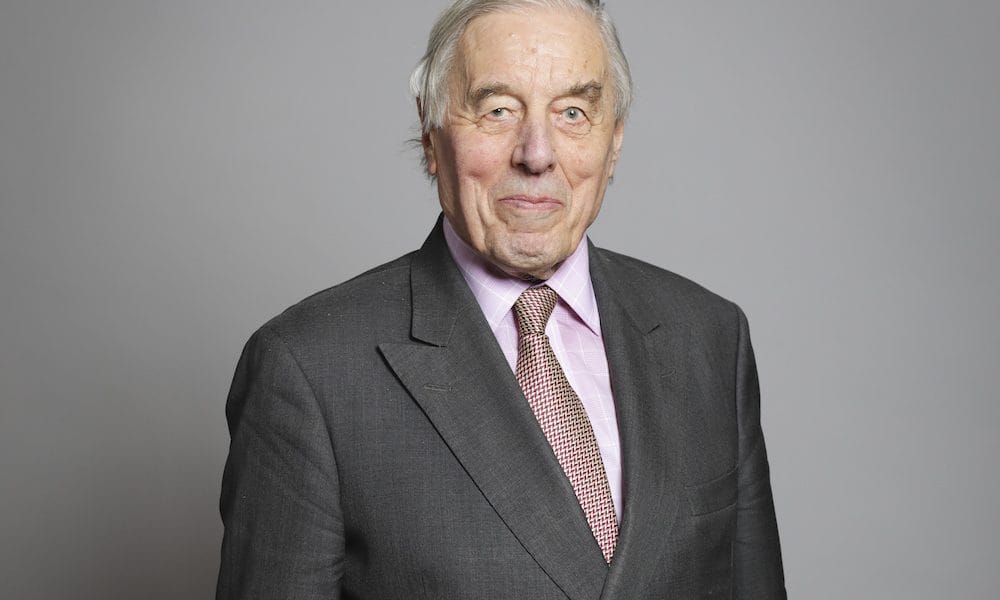
Earlier this month, MP Chris Bryant put forward two amendments to the Domestic Abuse Bill, stated that female prisoners must be screened for acquired brain injury, including concussion, within two weeks of starting their sentence. Bryant also put forward an amendment that women who have been the subject of domestic abuse should be screened for traumatic brain injury. Ramsbotham is in touch with Bryant and has told NR Times he will take the amendments through the House of Lords, propose them at second reading and follow them through to the committee stage. “I'm looking forward to the Domestic Abuse bill coming to our house in the autumn. I think they will have a lot of support because there’s a lot of cross-party interest in all these issues,” he says.
 Research21 Jul
Eighty-seven per cent of cyclists believe helmets can prevent concussion, according to a survey of cyclists in New Zealand. While most participants said they wore a helmet when cycling, many misunderstood how to best use helmets to help prevent head injury. Nine in ten agreed that a helmet should be replaced after a fall, but just over a third had not replaced their helmet after an accident and continued to use it. Many respondents reported cracking or otherwise damaging their helmet but didn’t feel at any increased risk of concussion.


