News
The latest news from across neurorehabilitation.
 Dementia22 Jan
A team has developed a selective compound that inhibits an enzyme tied to inflammation in people at genetic risk for Alzheimer's disease. The compound preserves normal brain function while crossing the blood-brain barrier, the protective membrane that separates the brain from the bloodstream. The driver is an enzyme called calcium-dependent phospholipase A2 (cPLA2). [...]
 Tech & industry21 Jan
OpenAI has invested in co-founder Sam Altman's brain-computer interface startup Merge Labs. The generative AI provider was a major investor in the company's US$252m seed round. A brain-computer interface allows direct communication between the brain and external devices. The potential for an investment was rumoured in the middle of last year. OpenAI said [...]
 Brain injury21 Jan
A brain cap and algorithms may one day let paralysed people trigger limb movement without surgery, researchers in Italy and Switzerland say. People with spinal cord injuries can lose some or all movement in their arms or legs. In many cases, the nerves in the limbs still work and movement signals are still produced. The [...]
 Parkinson's21 Jan
Researchers have discovered a biochemical route that could lead to new Parkinson's treatments. The findings reveal how harmful protein build-up in brain cells causes the death of movement-controlling nerve cells, a hallmark of the condition. The research was led by scientists at Case Western Reserve University. Xin Qi, the study's senior author and [...]
 Brain injury20 Jan
Most people aged 65 and over with lower-risk head injuries do not have positive results on CT imaging, new research has found. CT, or computed tomography, is a detailed X-ray that creates cross-sectional images. The team, led by Yahy Al Fathil, a resident physician in the emergency department at Northern Hospital Epping in [...]
 Neuropsychology20 Jan
Israel has reported a sharp rise in PTSD and suicides among its troops after two years of conflict. The country's defence ministry says it has recorded a nearly 40 per cent increase in PTSD cases among its soldiers since September 2023, and predicts the figure will increase by 180 per cent by 2028. [...]
 Community neuro rehab20 Jan
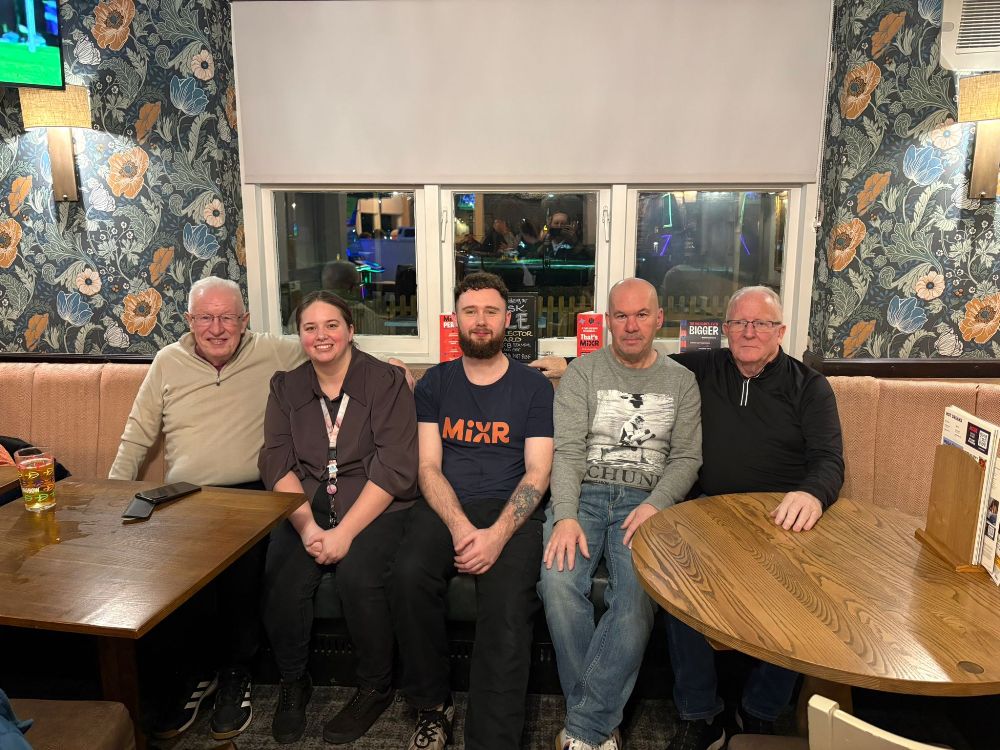
Dermot has always been a Birmingham Blues fan. It runs in the family. Generations before him had followed the club, and it was his dad who took him to his very first match. From that moment on, Dermot fell in love with the Blues — the atmosphere, the loyalty, the sense of belonging. On the [...]
 Stroke19 Jan
A new wearable device could help stroke survivors communicate, offering speech support without implants. The device, called Revoice, uses ultra-sensitive sensors and artificial intelligence to decode speech signals and emotional cues so people with post-stroke speech impairment can communicate. Worn as a soft, flexible choker, it captures heart rate and tiny vibrations from throat muscles, [...]
 MND / ALS19 Jan
A Leeds Rhinos fan will run 108 miles for motor neurone disease charity in memory of his best friend's mum. Andrew Richardson will take on an ultramarathon from his hometown, Horsforth, to the Yorkshire Three Peaks and back to raise funds for the Motor Neurone Disease Association. The 30-year-old was inspired to attempt the challenge [...]
 Stroke16 Jan
A new blood test tracks brain injury after stroke and predicts outcomes months to years later, researchers have said. The biomarker, brain-derived tau (BD-tau), could let clinicians monitor how damage evolves in the hours and days after stroke, which scans alone cannot show. In ischaemic stroke, part of the brain loses its blood supply. Decisions [...]