



Research
New studies, trials and evidence in neurorehabilitation.
 Research3 Jul
Senior clinician Benedict Michael hasn’t slept more than four hours a night since February. While many in the field would say science is a slow process, the opposite is true for Michael since he started leading groundbreaking research into the neurological complications caused by Covid-19. “When it became apparent the virus had taken hold in Italy, I said to the guys, ‘We’ve got to get something up and running’,” Michael, from the University of Liverpool, tells NR Times. Michael led a similar programme during the H1N1 epidemic over a decade ago, when he noticed that, while the number of people who developed neurological complications was low, they were often the most severe cases.
 Research13 Jun
The dream of suspended animation has long captivated the human imagination, reflected in countless works of mythology and fiction, from King Arthur and Sleeping Beauty to Han Solo.
 Research4 Jun
Despite the impact of COVID-19 across many sectors, Parkinson’s research continues at pace with studies across the world shining new light onto the disease, as NR Times reports.
 Research6 May
Sarah Elsayed, pharma analyst at GlobalData, says: “While GlobalData expects that the market for new Parkinson’s disease (PD) products aimed at treating motor fluctuations holds great potential, it will be hard for most companies to meet their drug’s commercial launch expectations under these circumstances. “GlobalData forecasts that if the drug launches in late 2020, it will have a slow uptake in its first year, but is then expected to grow, reaching its peak global sales of US$303m in 2025. “Neurocrine’s decision to delay Ongentys’ launch is the appropriate move to alleviate COVID-19 consequences on its new drug’s uptake for a number of reasons.
 Research4 May
Cognitive problems arising from brain injury are common, frequently persistent, usually disabling and sometimes hidden. They include impairments of attention, memory and executive functioning. The keystones of treatment comprise cognitive rehabilitation together with adaptive processes and technology. In some cases cognitive problems improve following treatment with cognition-enhancing drugs. Treatment response to cognitive enhancing drugs can be very difficult to predict given the multiple ways by which the brain can be damaged and the different levels and places at which damage can occur.
 Research17 Apr
A few months ago, my brother excitedly told us he was planning a trip to Holland with his friends because he thought a few days away would be a welcome break from the stresses of work. However, my sister did not share his excitement and her immediate response was to tell him not to go. When she failed to dissuade him, she told him to at least pack a face mask. This kind of response is not surprising at a time when the world has been brought to the edge of mania. There is a name for this phenomenon- ‘moral panic’. Moral panic is a concept in sociology that refers to the phenomenon of a mass of people becoming distressed about a perceived threat or social issue.
 Research13 Apr
They believe the digestive tract could help explain the link between spinal injuries and changes in mental health, such as increased anxiety and depression. University of Alberta researchers found that rats with spinal injuries experienced changes to their gut bacteria and a rise in anxiety-like behaviour. But when rats with spinal injuries were given faecal transplants from healthy rats, their behaviour, and gut bacteria, remained normal.
 Research13 Feb
What do you think is happening in the images below? Maybe the man is reaching for a glass of water on the bedside table, or perhaps he is moving to adjust his pillow?
 You might be surprised to find out that this man is actually punching someone; or at least, he thinks he is.
He’s suffering from REM sleep behaviour disorder (RBD). These images are taken from a video recording showing a patient having a dream that he was fighting an attacker.
You might be surprised to find out that this man is actually punching someone; or at least, he thinks he is.
He’s suffering from REM sleep behaviour disorder (RBD). These images are taken from a video recording showing a patient having a dream that he was fighting an attacker.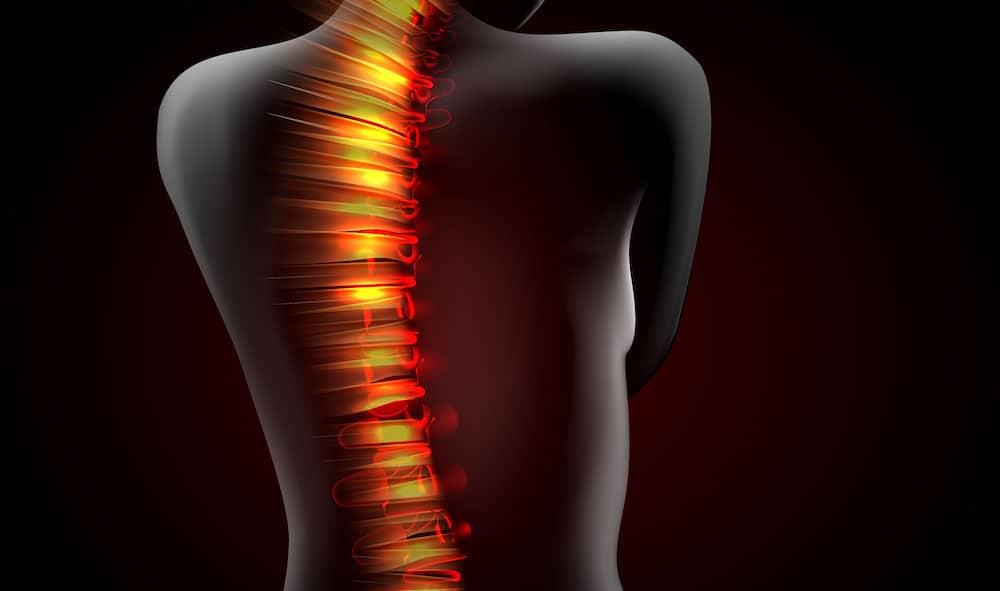 Research13 Feb
NSCs hold great potential for treating a variety of neurodegenerative diseases and injuries to the spinal cord. The stem cells possess the ability to differentiate into multiple types of neural cell, depending upon their environment. As a result, there is great interest and much effort to use these cells to repair spinal cord injuries and effectively restore related functions.
 Research16 Jan
Tremors are characteristic of movement disorders like ET and PD, two progressive conditions that affect millions of people worldwide. Previous treatment options for reducing them in patients who have not responded to medical therapy include deep brain stimulation, a surgical procedure that involves implanting a small electrode in the brain connected to a pulse generator that is implanted in the chest like a pacemaker. A more recently-available option is magnetic resonance-guided focused ultrasound (MRgFUS) thalamotomy, an incisionless interventional radiology procedure.


