




Spinal injury

A mother who lives with constant pain after medical errors left her with a spinal injury and bowel paralysis is campaigning to raise awareness of its warning signs. Toni-Claire Miller, a single mother of two from Kent, was 32 when she was repeatedly "fobbed off" by GPs after reporting numbness in her legs, excruciating back [...]
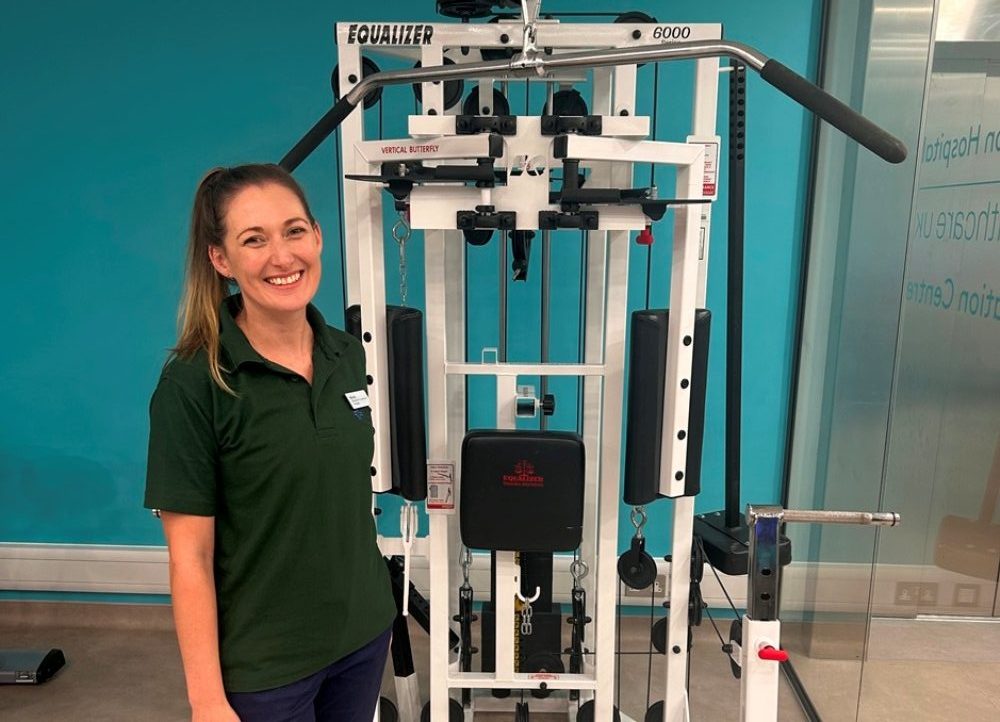
HCA Healthcare UK’s Neuro Rehab Centre sees many patients living with spinal cord injuries. Mandy shares how the team at the centre combines innovative technology with compassionate, patient-centred care to support recovery. Our team here at The Wellington Hospital supports patients at all stages of their journey, from early rehabilitation to ongoing, long-term care. With [...]

Ceri Love (64) from Bristol sustained a spinal cord injury after a car accident in April 1991. However, it took nine years for her to be told the extent of her injury, leading to almost a decade of frustration and inappropriate medical treatment. After a car accident, Ceri experienced numbness in her left leg, difficulty [...]

The first three paralysed people have been implanted with a nerve stimulation device in a groundbreaking clinical trial aimed at restoring bowel and bladder function after a spinal cord injury. The potentially life-changing ImPRESS project at the Royal National Orthopaedic Hospital, Stanmore, brings together a coalition of charities, industry, clinicians and researchers. UK charity Spinal [...]

Turkish doctors are using interventional neuroradiology to treat strokes, aneurysms and spinal disorders without surgery, helping patients recover faster. The minimally invasive methods use needles and catheters instead of surgical incisions, avoiding general anaesthesia and long hospital stays while treating conditions including herniated discs, spinal fractures, spinal tumours and brain aneurysms. Interventional neuroradiology – which [...]

A leisure centre boss using a wheelchair is aiming for a world record by completing a marathon on a ski simulation machine for a spinal injury charity. Richard Cartwright hopes to be the first to cover 26.2 miles (42km) on a SkiErg machine in the SIT 3 category – for people with no core function [...]

Routine blood tests tracked over time may help predict injury severity and survival chances after spinal cord damage, according to a University of Waterloo study. The research team used advanced analytics and machine learning – a form of artificial intelligence that can detect patterns in large datasets – to assess whether daily hospital blood samples [...]

By Spinal cord injury survivor, R.F. Hunt For anyone needing personal care, there needs to be a high degree of trust. But what if that isn’t present? What if you are in a relationship and your partner rather than acting as a ‘carer’ is instead controlling, abusive or neglectful? Molly had been [...]

Scientists have restored movement in rats with severed spinal cords using a 3D-printed scaffold containing stem cells. The research suggests new possibilities for tackling paralysis caused by spinal cord injuries, which currently have no cure. These injuries occur when neurons – nerve cells that transmit messages through the body – die and cannot regrow across [...]

Researchers in South Korea have identified the molecular “brake” that halts spinal injury repair. They found that GABA, a chemical messenger that normally dampens nerve signals, is produced in excess by astrocytes, star-shaped support cells, after injury. This happens through the enzyme monoamine oxidase B (MAOB), which becomes overactive. GABA was shown to [...]


