



Tech & industry

Every year in the US, there are an estimated 1.7 to three million sports and recreation-related concussions, 300,000 of which are American football-related, according the UPMC sports medicine concussion programme. More startling is that according to this data, five out of 10 concussions go unreported or undetected. Many college and professional teams have standardised tests in place, performing baseline tests at the start of the season and implementing others during practice and game situations.

Over 350,000 people in the UK rely on mobility scooters and powerchairs every day. These devices should be a fast-track to freedom, independence and the vital journeys of daily life. Yet this is not always the case, with several challenges hindering their usage. Firstly, as scooters/powerchairs operate on rechargeable batteries, travelling distance is limited. Users going further afield may have to disassemble the device, load it into the back of their vehicle, drive to the destination and then unload it. Some scooters and powerchairs can’t be disassembled, meanwhile. In this case, a vehicle able to accommodate their height and a ramp or hoist to access the vehicle are needed.

The device, which allows people who traditionally may have used a seated chair to make face-to-face and eye-to-eye contact through them being able to stand, has played a central role in developing and regaining the confidence of many users. Going to the gym, using a cash machine, reaching the top shelf in a supermarket, and so many other activities which may have previously proved problematic, are now routinely possible. Additionally, its positive role in a multitude of health matters is also a key factor in its adoption - from improving blood circulation, heart and lung function, bowel movement and bone density to reducing muscle spasm, joint stiffness, shrinkage of tendons and development of pressure sores.
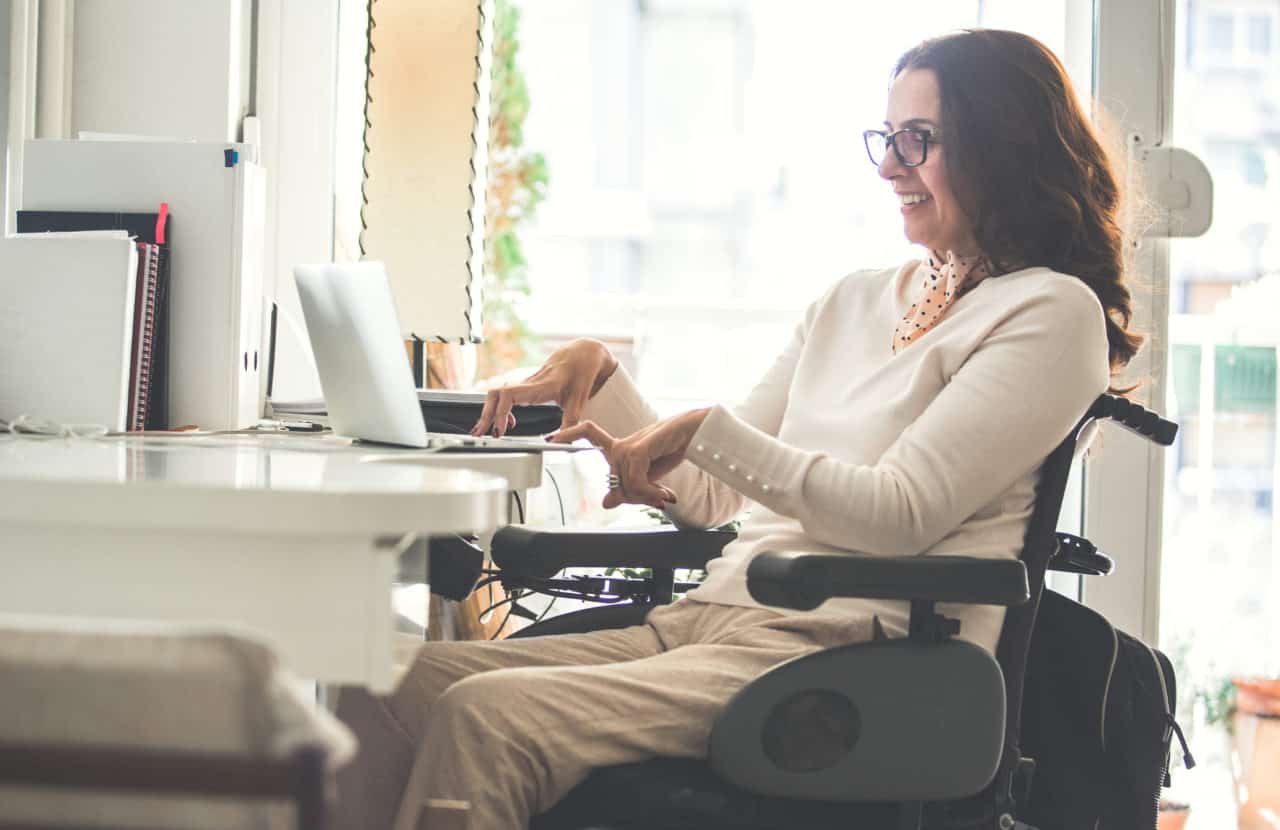
There’s a dilemma for people who need residential care and for their families and loved ones. On one hand it is important for their morale, dignity and rehabilitation that they should enjoy as great a degree of independence as possible. Yet, those who are living with brain or spinal conditions are, by definition, vulnerable. For their own safety and for the peace of mind of their families and carers, they require monitoring to a greater or lesser extent. Monitoring, however, is something which undermines, or even negates, independence.

‘Necessity is the mother of invention,’ so the old proverb goes. For Guillem Singla Buxarrais, that necessity stemmed from his uncle; who was struggling to recover from a stroke suffered in 2010. The Spanish inventor-turned-entrepreneur says: “I wanted to find a solution to motivate him, that was at least affordable to buy and was also fun; that was my criteria and I couldn’t find anything at the time.” Guillem was looking for an antidote to his uncle’s upper limb problems; a device to fire up his morale and get him exercising towards recovery. After a fruitless search, he set about creating something himself.

“People on the ground don’t care about the political situation between the UK and Russia,” says Alesya Chichinkina, PR director of Russian tech firm NeuroChat. “Everyone has these barriers in their heads but they are not the reality. The politics is just for the politicians.” We’re chatting midway through her enthusiastic demonstration of NeuroChat’s impressive communication system. Certainly here at the the NEC in Birmingham, there is no hint of the frosty British/Russian relationship. NeuroChat is one of several Russian parties showing off their wares at a large exhibition stand at the European Neuro Convention. The Russian delegation is eager to work with neuro-rehab professionals, patients and care providers in the UK.

Ottobock is big news in Germany. When the company celebrated its centenary earlier this year, German Chancellor Angela Merkel addressed 350 distinguished guests from politics, industry and academia at its Lower Saxony HQ. On the world stage too, it is a dominant force, with a team of over 7,300 and an array of mobility-boosting products available across the globe. The company exhibited at this year’s European Neuro Convention in Birmingham; and NR Times took the opportunity to explore its newest offerings.

Josh Wintersgill was enjoying a drink by a Tenerife pool when the entrepreneurial spark hit him. He been pondering how to make travelling easier for people with disabilities; a quandary close to his heart. Josh, now 25, has spinal muscular atrophy (SMA) type three – a progressive muscle wastage condition affecting every muscle in the body. His physical capabilities have reduced with age and, since age nine, he has required a wheelchair on a daily basis. Yet Josh loves travelling and so has experienced the often-undignified, stressful and uncomfortable process of being transferred on and off aircraft. In the Canary Island sunshine he imagined a device that would bring an end to the barriers of air travel for many people with reduced physical mobility.

There can be no true independence in the home without mobility; and that includes mobility between floors and levels. Chairlifts / stairlifts are a common solution for people with mobility problems at home. But what about the many people in wheelchairs who cannot transfer on or off a conventional chairlift? Enter Southampton-based Level Access Lifts, an expert in solving such problems. Nick Dade, sales director at the firm, which supplies lifts throughout the UK, explains: “Everything we supply is designed to aid those people who are unable to transfer from a wheelchair and are designed to move you in your wheelchair between floors or split levels.
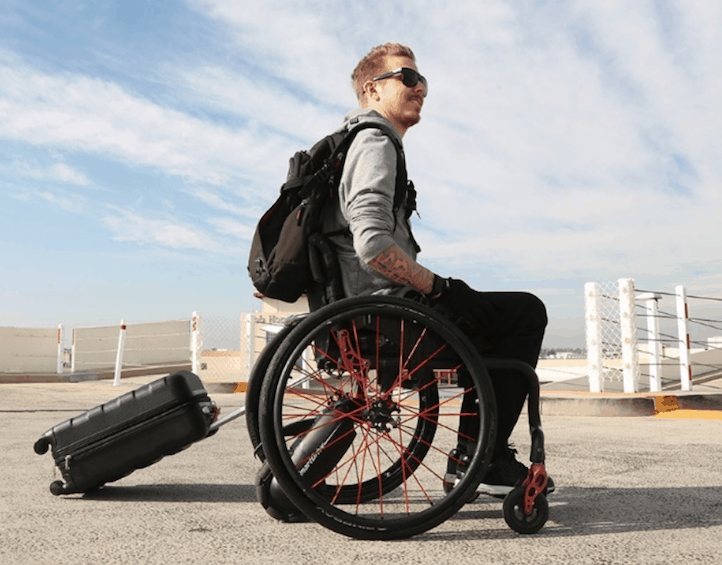
The use of Bluetooth, LED lights and phone charging points are no longer the sole domain of the executive car - these are the types of technology being installed into state-of-the-art mobility aids, to help people who rely on them to explore the world. Major breakthroughs in accessibility in recent years have seen power wheelchairs, manual wheelchairs, power assists and seating and positioning products developed to help empower users, giving them freedom to travel and discover new places and experiences. In addition to mobility and wellbeing, lifestyle is now a key feature in the development of new products going to the market, with modern technology helping to redefine the traditional view of wheelchairs.


