Uncategorised

Formed in 2017, NEURAM (the Neurehabilitation Action Mauritius Foundation) focuses on the management of neurological conditions due to stroke, brain injury and spinal cord injury. It works in a region that faces a high incidence of accidents leading to catastrophic injuries, a lack of understanding of the complex nature of such injuries and their repercussions, insufficient support to patients and families, and a dearth of supportive devices. It also works to improve regional standards of neurological rehabilitation through ongoing education.
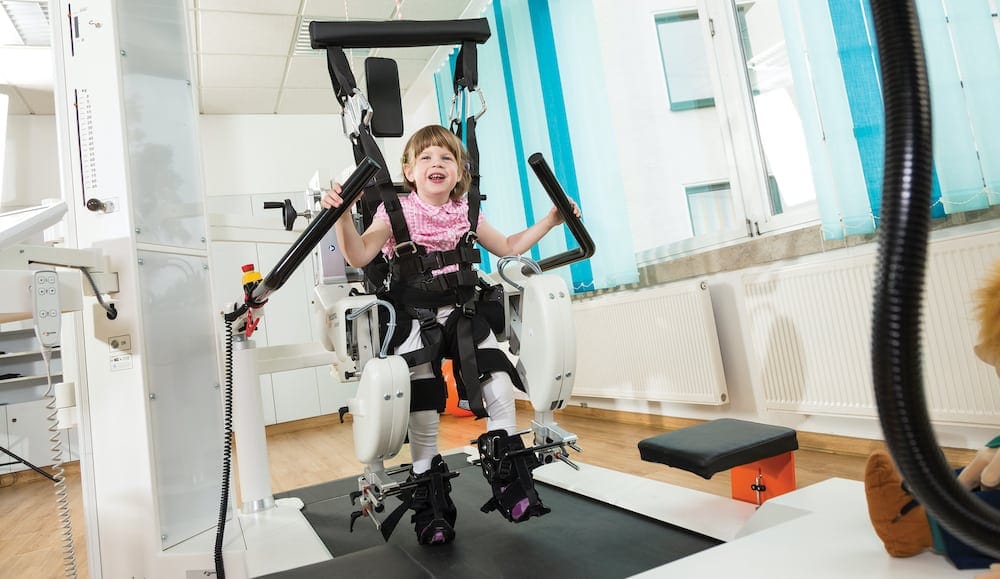
While Lokomat’s evolution has continued to be driven in that time, other devices have thrived too; including ArmeoPower, the world’s first exoskeleton for integrated arm and hand rehabilitation. At Medica 2019, however, digital health is among the latest focus areas. HocoNet is a single software platform which connects to all devices in the Hocoma stable, as well as the existing hospital information system. It enables rehab professionals to manage and keep track of patient, treatment and device data in a secure manner. Patient information need only be inputted once, on one device at the outset and is then synced across all equipment that the patient may require.

The Independent Neurorehabilitation Providers Alliance (INPA) provides a collective voice for private providers of neurorehabilitation services across the country. Chair Lesley Pope, who was appointed in December and has spent recent months visiting and liaising with alliance members, says raising awareness of the power of rehabilitation is a key focus in the year ahead. This, she says, is crucial in the aftermath of the the All-Party Parliamentary Group for Acquired Brain Injury’s landmark Time for Change report, published last year.

When looking for a powerchair what are the primary things people should consider? There are lots of things to consider when looking for a powered wheelchair, here is a list of points to consider: Lifestyle (what is the user wanting the powerchair to do on an everyday basis), what range/distance will they need to travel in a day, size and dimensions of the chair, what is the weight of the chair and what is the maximum user weight and combined weight (for lifts, house and car).

Researchers have found a correlation between deficits in facial emotion recognition and poor community integration in individuals with moderate to severe traumatic brain injury. Their findings have implications for the development of rehabilitative interventions to reduce social isolation in this population, improve outcomes, and increase quality of life Among people with moderate to severe traumatic brain injury, social isolation is prevalent, and contributes to poor rehabilitation outcomes.

Chronic traumatic encephalopathy (CTE), which can only be diagnosed after an autopsy, is caused by repeated blows to the brain over a prolonged period. Head blows are rare in cricket in comparison to other sports like rugby or American football, however they are a serious risk for those competing at the highest level. High-profile examples over the last couple of years include Philip Hughes who was killed by a cricket ball striking his neck and head during an Australian regional fixture. Cricket Australia (CA) has been proactive in this sector following an inquiry into Hughes’ death, having introduced greater testing for concussion at a national level.

The document, delivered to 10 Downing Street, urges the government to give people with a terminal illness easier and quicker access to the benefits they are entitled to. Currently, unless a medical professional signs a form saying the person has six months or less to live they are forced through a laborious process of form-filling, interviews and assessments. David Setters, who is living with MND and consultant neurologist Dr Nik Sharma were among those who delivered the petition; as was Downton Abbey actor Jim Carter.