Brain charity SameYou has established an online neuro-rehabilitation service – NROL – for people recovering from brain injury and stroke. The platform aims to help close a vital care gap in treatment. In this three-part article series, SameYou experts and patients share how the service has transformed lives and supported recovery.
How NROL began: A collaboration led by purpose
Neurorehabilitation Online (NROL) was born out of urgent necessity. During the pandemic, access to in-person rehabilitation services was drastically reduced, leaving stroke and brain injury survivors without the essential ongoing care they needed.
In response, SameYou for Brain Injury Recovery acted quickly, working alongside University College London and University College London Hospitals NHS Foundation Trust to pilot a new, remote model of delivering real-time group neurorehabilitation through video calls.
It is now hosted at East Lancashire Hospitals NHS Trust (ELHT) and delivered across Lancashire and South Cumbria, focusing on cognitive, communication and physical therapy via video calls, enabling more therapy to be delivered and therefore better outcomes for patients.
The result: a scalable, effective and compassionate model that is picking up a wealth of accolades.
NROL was shortlisted for The Chief Allied Health Professions Officer (CAHPO) Awards in the digital practice category, which celebrates the delivery of exceptional care to patients.
Funding from SBRI Healthcare, with partners from East Lancashire Hospitals NHS Trust, Lancaster University, Elaros and Health Innovation North West Coast, announced in March, will support the expansion of the NROL model across Lancashire and South Cumbria, Cheshire and Merseyside and adapt the digital platform to improve the service for its patients and enable even more people to benefit.
Evaluations of NROL revealed it was successful in increasing therapy provision, embedded into real-world practice and well attended by patients.
NROL has also been recommended and supported in the Stroke Association: 10-Year Health Plan, further solidifying its value in the national rehabilitation landscape.
SameYou was founded by actor Emilia Clarke MBE, who survived two brain haemorrhages while filming Game of Thrones, and her mother, Jenny Clarke MBE.
Its mission is to improve recovery care for the millions of people living with brain injuries, pioneering new rehabilitation models to provide the emotional, social and physical support they need.
Jenny said: “NROL breaks down barriers to recovery. We believe everyone should have access to high-quality neurorehabilitation, no matter where they live. NROL is not just a solution—it’s also about access to equitable, innovative, person-centered care.
“We’re proud to support its growth and the incredible teams making it happen.”
Today, NROL is helping bridge the care gap — empowering survivors to continue their recovery from the safety and comfort of home.
Paul Mylrea outlines the life-changing impact of NROL after surviving two strokes.
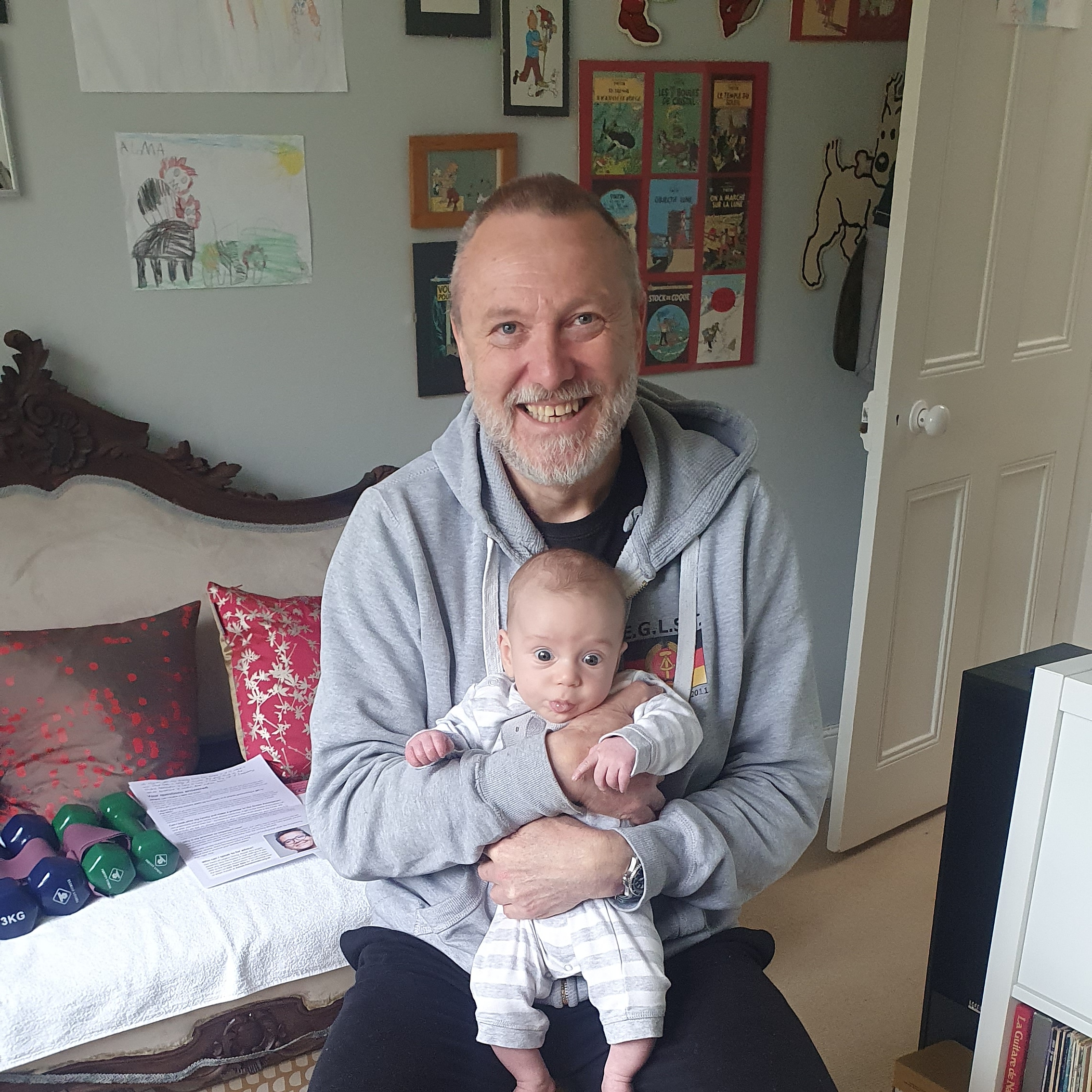
By Paul Mylrea
Two strokes changed my life. They ended my career, permanently damaged my health, took away most of the things that filled my days.
I was in my early 60s, so no teenager. But no one thought I was at risk. I had run communications for major organisations like the BBC and Oxfam. I had been a foreign correspondent in some tough and dangerous places.
I had just had a medical test for scuba diving, my passion. Doctors told me that I was tremendously fit, and my heart was like that of a 50-year-old.
I got ill in March 2020, right at the start of the Covid epidemic. Covid made my blood thick and caused my strokes.
After 10 days in a recuperation ward, I went home. I felt lost. I was no longer the person I had been. I needed concentrated, specialist aftercare. An overstretched NHS working flat out could not provide it.
The effect of my strokes was devastating. I had not just lost my career. Many of the things that had been central to my life were now impossible.
I could not drive, making it harder to see some of my friends, and my damaged memory made using public transport difficult. I would get lost and panic. I had lost some eyesight, and I would walk into things. Friends were caring and concerned. But I did not want to go out.
This is not unusual. Many others like me face the same problems. It puts immense strain on the families and friends of people who have had strokes. It is made worse because support can be hard to find.
So many people with Acquired Brain Injury (ABI), such as strokes or aneurisms, cannot access the outpatient care they need.
I was amazingly lucky. I had a phone call offering me the chance to join NROL – Neurorehabilitation Online. SameYou and University College London had developed this pioneering rehabilitation programme. I leapt at the chance.
NROL used the flexibility of online delivery to reach out and help people. Not only did this help ease pressure on local community rehabilitation teams and on my family, it meant tailored care could be delivered quickly and effectively.
When my mood was at its lowest, NROL offered around eight hours a week of physical and cognitive rehabilitation – free and easy to access online. There was no need to travel to a medical or health centre – which takes time and, for some in our group, would not have been physically possible.
I found myself building strength with exercise, tackling my low mood by talking to a therapist, and making new friends with people who had suffered strokes and who shared their experiences and insights.
Nearly 1 in 3 people will have an ABI at some point in their life. We all know someone who has had a brain injury. Their lives will have changed forever, and they are unlikely to have the care they need. Neurorehabilitation is among the most neglected and underfunded service.
I am well on the way to recovery, a recovery that many thought was unlikely. Of course, I still have work to do. My memory is still poor. I am getting stronger, but I need to take care when exercising my right side, the side most affected by the strokes. I still cannot drive because of my poor eyesight.
I feel deep gratitude to SameYou and NROL. It’s not just gratitude I feel. It’s excitement.
NROL provided hope for me and for my family. It showed that improvement is possible, that I really could continue to recover and live a fulfilling and fulfilled life. It tapped into the latest research into brain plasticity which shows that a damaged brain can be ‘rewired’.
NROL is now spreading that message. It has won awards and is being trialled in other parts of the UK. My hope is that NROL’s pioneering initiative is not just available to a small groups of brain injury sufferers but to all of them.
NROL can reach so many more people than traditional therapy. As someone who has experienced this, I hope NROL can bring hope and direction to many more people when they face the challenges of brain injury.