Disease-modifying trials overtake symptom management in Parkinson’s research for first time, analysis finds
The most comprehensive analysis yet undertaken of Parkinson’s drug trials has found that research aimed at slowing or stopping the condition now accounts for the majority of new trials, overtaking symptom management for the first time in the history of the field.
The study, published in the Journal of Parkinson’s Disease, was carried out by the research team at Cure Parkinson’s in collaboration with Parkinson’s research advocates and The Michael J. Fox Foundation.
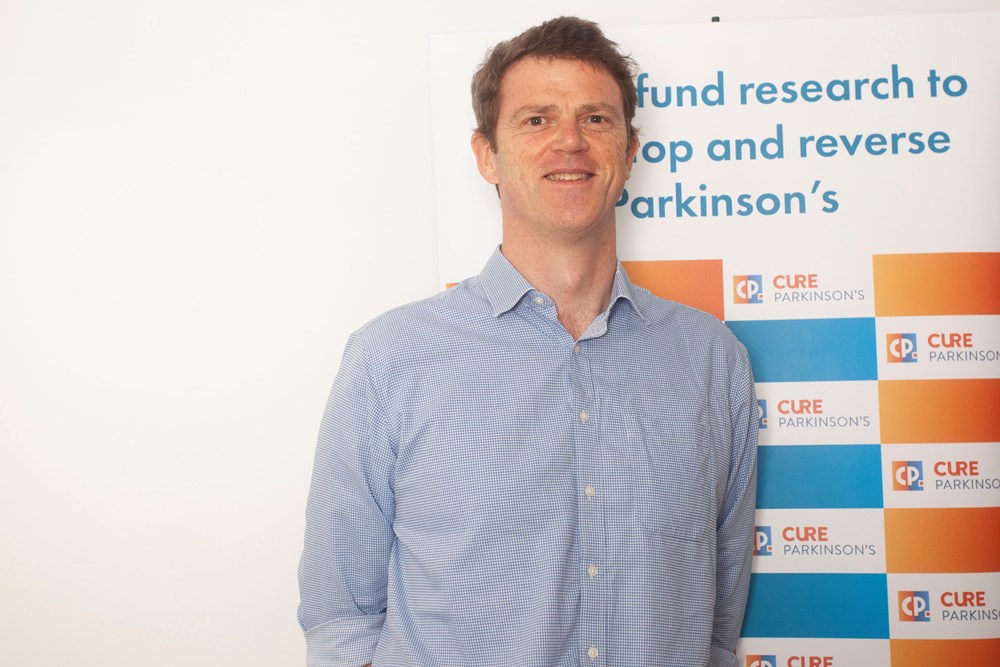
An overview of the findings was first presented by Dr Simon Stott, director of research at Cure Parkinson’s, at the 7th World Parkinson’s Congress in Phoenix, Arizona, one of the field’s most significant international gatherings.
“This is the most comprehensive map of Parkinson’s clinical research that has ever been produced, and what it shows is encouraging,” Stott said.
“The field has undergone a transformation over the past decade. For the first time, the emphasis of new research is on changing the course of the disease, not just managing its symptoms.
“But the picture is not without its challenges. The gap between where most trials are today and the phase 3 results that could lead to approved treatments for patients remains significant.
“The breakthroughs we’re working towards will require sustained investment and collaboration. We are closer than we have ever been, but the final stretch is never the easiest.”
The study examined every Parkinson’s drug trial registered globally between 2015 and 2024: 444 trials, testing 281 distinct drug interventions, involving more than 39,000 participants.
Its central finding is that between 2022 and 2024, disease-modifying trials accounted for more than half of all new trial registrations.
For most of the preceding decade, the majority of trials had focused on therapies to manage the motor symptoms of Parkinson’s, principally tremor, stiffness and slowness of movement.
Many of those treatments are reformulations of levodopa, which has been the mainstay of Parkinson’s care since the mid-1970s but does not alter the underlying course of the disease.
The 133 trials still active as of January 2025 span a broad range of biological targets, from alpha-synuclein, the protein whose abnormal clumping in the brain is closely linked to Parkinson’s, to genetic pathways such as LRRK2 and GBA1, mitochondrial function, inflammation, GLP-1 receptor agonists and cell therapies.
A long way from approval
The report is candid about how far the pipeline still has to travel.
Only nine disease-modifying trials have reached phase 3, the pivotal final stage before regulatory approval, with the vast majority of candidates still in early-stage testing.
The analysis also identifies a gap that will be familiar to clinicians working in rehabilitation.
Non-motor symptoms, which include depression, anxiety, sleep disturbance and cognitive difficulties, and which are frequently among the most debilitating aspects of living with Parkinson’s, remain significantly under-represented in the trial pipeline. Relatively few interventions are being tested specifically for non-motor presentations.
There is a data-sharing problem too.
Of the 224 completed trials in the dataset, only 34 per cent had reported their results on ClinicalTrials.gov at the time of analysis, and 128 were past their due date for doing so.
The researchers argue that better reporting practices are needed if the field is to learn from every trial conducted.
Brian Fiske, chief scientist at The Michael J. Fox Foundation for Parkinson’s Research, said: “The growing number and diversity of disease-modifying trials reflects how far the Parkinson’s field has come in understanding the biology that drives the disease and translating those discoveries into potential therapeutic approaches.
“This analysis highlights a pipeline that is more robust and scientifically diverse than ever before. While there is still much work ahead, it is encouraging to see so many approaches moving through clinical testing as we work toward better treatments, and ultimately a cure, for people living with Parkinson’s disease.”
The role of coordinated drug selection
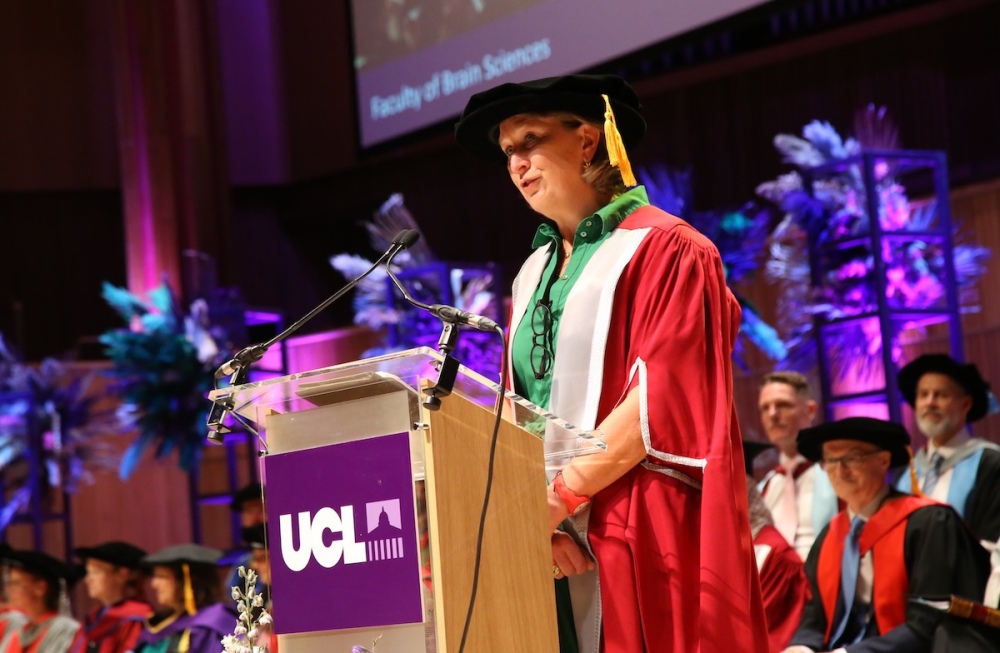
The data also points to a measurable effect from Cure Parkinson’s International Linked Clinical Trials (iLCT) programme, which the charity co-created with Van Andel Institute in 2012. The programme convenes more than 20 leading Parkinson’s experts each year to identify and prioritise the most promising drug candidates for disease-modifying trials.
Of the 133 trials still active at the close of the analysis period, more than 31 per cent of the disease-modifying trials involved drugs previously evaluated by the iLCT committee, which the authors present as evidence that a coordinated, expert-led approach to drug selection can shape the pipeline.
Honorary fellowship for Cure Parkinson’s chief executive
The paper’s publication coincides with recognition for the charity’s chief executive, Helen Matthews, who has this month been awarded an honorary fellowship by University College London for two decades of work that has helped reshape the global Parkinson’s research landscape.
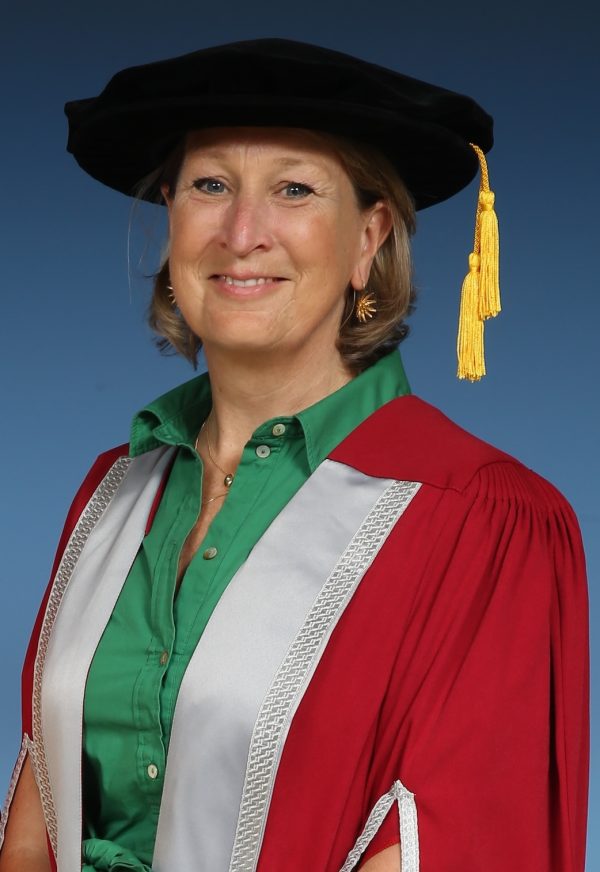
Helen Matthews
The award was conferred on Monday 6 July at the UCL graduation ceremony at the Royal Festival Hall in London (pictured above).
The honorary fellowship is one of UCL’s highest accolades, awarded each year by UCL Council to a small group of individuals judged to embody the university’s founding values of independent thought, intellectual courage and contribution to society.
Matthews said: “I am beyond thrilled to receive this award. It has been an honour and a privilege to work at Cure Parkinson’s since its inception 20 years ago. Throughout that time, my mission has been to drive forward some of the most promising and valuable research into finding a cure for Parkinson’s.
“There’s still a long way to go, but as a charity, we’re enormously proud of how much we’ve been able to help transform the Parkinson’s clinical research landscape, both here and overseas, as we strive to offer hope and optimism to everyone living with the disease.
“This award is a celebration of everything we’ve achieved at the charity so far, and, just as importantly, of the wonderful people I work with, who have poured so much energy and dedication into our mission.”