“Everything I do is grounded in occupational therapy”: One case manager’s journey

The Brain Injury Group is set to host its Adult Brain Injury Conference this June, uniting specialists and practitioners from across the brain injury rehab field.
Taking place on June 11 and 12 at The Lowry, Salford Quays, Manchester, this year’s event marks its first-ever two-day format.
On Day 2, Rhiannon Stokes, founder of Stokes Case Management and chair of CMSUK, will join the panel ‘Strategies & Practicalities: Managing Funds in Partial Settlement and Contributory Negligence.’
Ahead of the event, Rhiannon speaks to NR Times about her journey from NHS occupational therapist to independent case manager, what a week in brain injury case management actually looks like, and why she is urging the profession to keep pushing for recognition.
You started out as an occupational therapist working in the NHS. How did you end up founding your own practice?
Professionally, I am an OT, and that is really important to me.
Even though in this industry I am predominantly known as a case manager and an expert witness, everything I do is grounded in occupational therapy.
I qualified in 1999 and followed the traditional route, working across a variety of NHS Trusts in and around South Wales, in orthopaedics, elderly care, community rehab, burns and plastics, medicine, mental health and forensic psychiatry.
What I noticed throughout all of those settings was that I kept finding myself working with people who had brain injuries.
Even in trauma and orthopaedics, I was splinting patients on the ITU who had come in following catastrophic injuries. It was always there.
When I left the NHS and moved into independent practice, I discovered case management and it felt very natural.
For me, it is deeply similar to occupational therapy. It is holistic, it is about developing and supporting people’s independence
I worked as an associate for about five years, and during that time I could see there was a gap in the market in Wales.
Solicitors were encouraging me to set up on my own, and I had always fancied being a bit of a health entrepreneur.
Stokes Case Management was born from that, and from a desire to mentor other OTs into this world, because not many were doing it at the time, roughly 18 or 19 years ago now.
What does a typical week in brain injury case management look like, if there is such a thing?
No day is the same, and no day is going to go the way you planned.
A week might include an initial needs assessment for a new client, a meet-and-greet for someone considering whether to take on a case manager, a Teams call with a solicitor, CPD reading, liaising with Court of Protection deputies over a client’s finances and going for lunch with a client.
That last one matters more than it might sound.
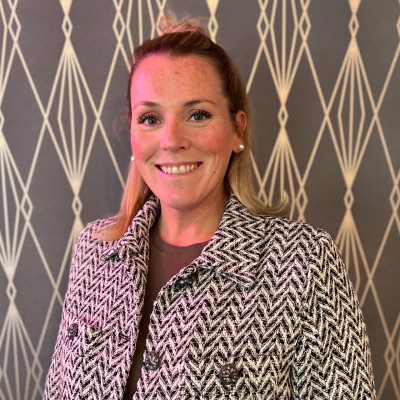
Rhiannon Stokes
A lot of the clients we work with are going through litigation, and their days are already full of expert appointments and formal commitments they feel obliged to keep.
Sometimes the most useful thing a case manager can do is take someone out for coffee or a walk in the park.
A creative approach is really important. It can otherwise become so formalised because of the litigation process.
Anything can be thrown at you in a given week, from researching holiday options to finding charities that provide assistance dogs, so you have to be ready to respond quickly to whatever the client needs.
You are not just managing the client’s needs, but everyone around them too. How do you juggle that?
You do feel in the middle of a lot of competing opinions and views, and it can be challenging.
Partners, spouses, parents, solicitors, Court of Protection deputies, therapists – each of them has something they consider the priority. I think the key is to take a step back, write everything down, and remember there is a human being at the centre of all of it.
Sometimes I will go directly to the client and simply ask: what is your priority this week?
I have also had to tell everyone involved that a client is struggling and is not able to have any appointments that week.
Really listening to the client’s voice, or whoever needs to speak on their behalf, is fundamental.
Are there common misconceptions about what case managers actually do?
Some people, including professionals and family members, think we are a kind of PA who makes appointments. I feel we are a great deal more than that.
We are equal clinical partners and it is important that we are treated as such.
We set our own rehabilitation goals for clients, and we need to be present in person to do that properly.
There is also an assumption that everything can be managed by email or video call.
But in-person visits are vital. When someone has a brain injury, they rarely present with that alone. There may be physical difficulties, mental health complexities, safeguarding concerns.
You simply cannot pick all of that up from a text message.
It sounds like an emotionally demanding role. How do you look after yourself?
It is exhausting, and it does not get talked about enough. Not over-committing yourself is essential.
Quality over quantity is a phrase I come back to constantly. I still carry a caseload, I still work as an expert witness and I run Stokes, so people often ask how I manage it all.
For me, it comes back to the occupational therapy concept of a balance of occupations: vocation, personal care, domestic life, leisure, rest.
I make sure I have all of those. I play rugby, which is an area of my life where I completely switch off. I spend time with my wife, walk the dogs, see friends.
I have also recently been working on not scheduling appointments before about ten in the morning and allowing myself to wake up naturally where possible.
It also allows me time to reflect on the work completed to date, check emails and plan the day ahead.
Giving yourself the time to make time for yourself really matters.
Where do you see case management heading over the next decade?
Over the next decade, I think we will see case management continue to grow as a recognised and highly skilled profession across many different sectors.
I am really excited about the work of the Institute of Registered Case Managers (IRCM), which was founded collaboratively by CMSUK, BABICM and the VRA.
I have just renewed my first year on the register, and it is encouraging to see the register, standards and assessment processes continuing to develop.
What has become increasingly apparent to me, particularly through my role as Chair of CMSUK, is that case management extends far beyond the litigation sector that many people traditionally associate it with.
Case managers are working across prisons, probation services, the NHS, charities, community services, the private sector and rehabilitation settings, often under different job titles but undertaking fundamentally the same core role; coordinating care, managing risk, advocating for individuals and improving outcomes.
I would love to see greater recognition of those shared skills across sectors, alongside more opportunities for collaboration, learning and professional development.
That wider understanding of case management as a profession in its own right feels like an important direction of travel for the future.
One thing I do know is that the appetite for learning within the profession continues to grow.
More training opportunities, CPD and pathways into case management can only strengthen the sector further.
You are on a panel at the forthcoming Adult Brain Injury Conference. What can delegates expect from the event?
I have been to a number of Brain Injury Group events and I always find them genuinely beneficial.
What I love is that they have not gone too big. They feel bespoke and well thought-through, with the delegates very much front of mind in the way the event is set up and structured.
They get the balance right between talks and networking and I really love the exhibitors that they have there.
The new exhibitors that they bring on board always seem to bring a new edge to the events that they run. You don’t see this at other events.
They are also very open to feedback.
Not that long ago, I reached out to them having gone to an event and said,’I wasn’t sure that you captured the voice of case management.’
They took that on board and I’ve been invited to speak on a panel at their forthcoming Conference, which is great.
I would really encourage people to find out more about the Brain Injury Group and consider becoming a member or attending an event like this one.
The work they do is so beneficial for professionals, families and clients.
Find out more about the Adult Brain Injury Conference and book your place here.