



Having pioneered virtual therapy solutions for patients since 2011, it’s safe to say Evolv Rehab was one of the first entrants to the now-thriving global telehealth marketplace.
“Back then, telehealth was often a phone call, or maybe even a fax. The cloud back then was something you looked at in the sky,” recalls David Fried, CEO of Evolv.
What started off as a small project for people with Multiple Sclerosis at an MS patients’ association in its native Spain has led Evolv to develop a whole new model of virtual support.
Now a fast-growing medical device manufacturer that specialises in developing rehabilitation technology solutions, its expansion into the UK has seen it used in nationally-leading centres including the renowned UCL Queen Square Upper Limb Neurorehabilitation Programme and the Royal Hospital for Neurodisability.
Ongoing global roll-out is ensuring patients around the world – including in North America, Asia and across Europe – can benefit from its array of VR therapy solutions with motion capture technologies.
Evolv – which spun out of the VR engineering firm Virtualware – works closely with Microsoft and the tech giant supported Evolv in its donation of its personalised telerehabilitation solution RehabKit to different hospitals globally during the pandemic including The National Hospital for Neurology and Neurosurgery (NHNN) in London and Mount Sinai Hospital in New York. Even Microsoft’s CEO Satya Nadella took notice when he spoke at a computer vision conference about Evolv’s pioneering use of the new Microsoft Azure Kinect camera sensor for stroke rehabilitation.

With significant further growth planned, as the world continues to adopt technology in rehabilitation and healthcare after experiencing its positive impact during COVID lockdown, the Evolv story can all be traced back to that MS group in Bilbao.
“Virtualware normally worked on bespoke projects for a wide variety of clients in different sectors, and this was a great one which really identified the benefits to patients of how VR and exergaming could work in clinical settings,” says David.
“Therapists at the MS patients’ association were already using video games as a way of adding more activity into their mix of traditional therapies.
“Playing video games, like the Wii Fit and those kinds of things, is great fun for sure, but the problem in people with MS playing a normal videogame is that six months ago you’re getting 1,000 points, three months ago, you’re getting 600 points. Now, you’re getting 200 points. You’re seeing your physical decline reflected in the score of the game.
“So all those benefits of gaming – engagement, enjoyment, forgetting about your problems for 20 minutes while you’re playing – go out the window.
 “The therapists from the MS patients’ association came to us and said they love the concept of gaming, but these games are made for able-bodied people, who don’t have the physical impairments someone with MS might have. Could you build something specific for us?”
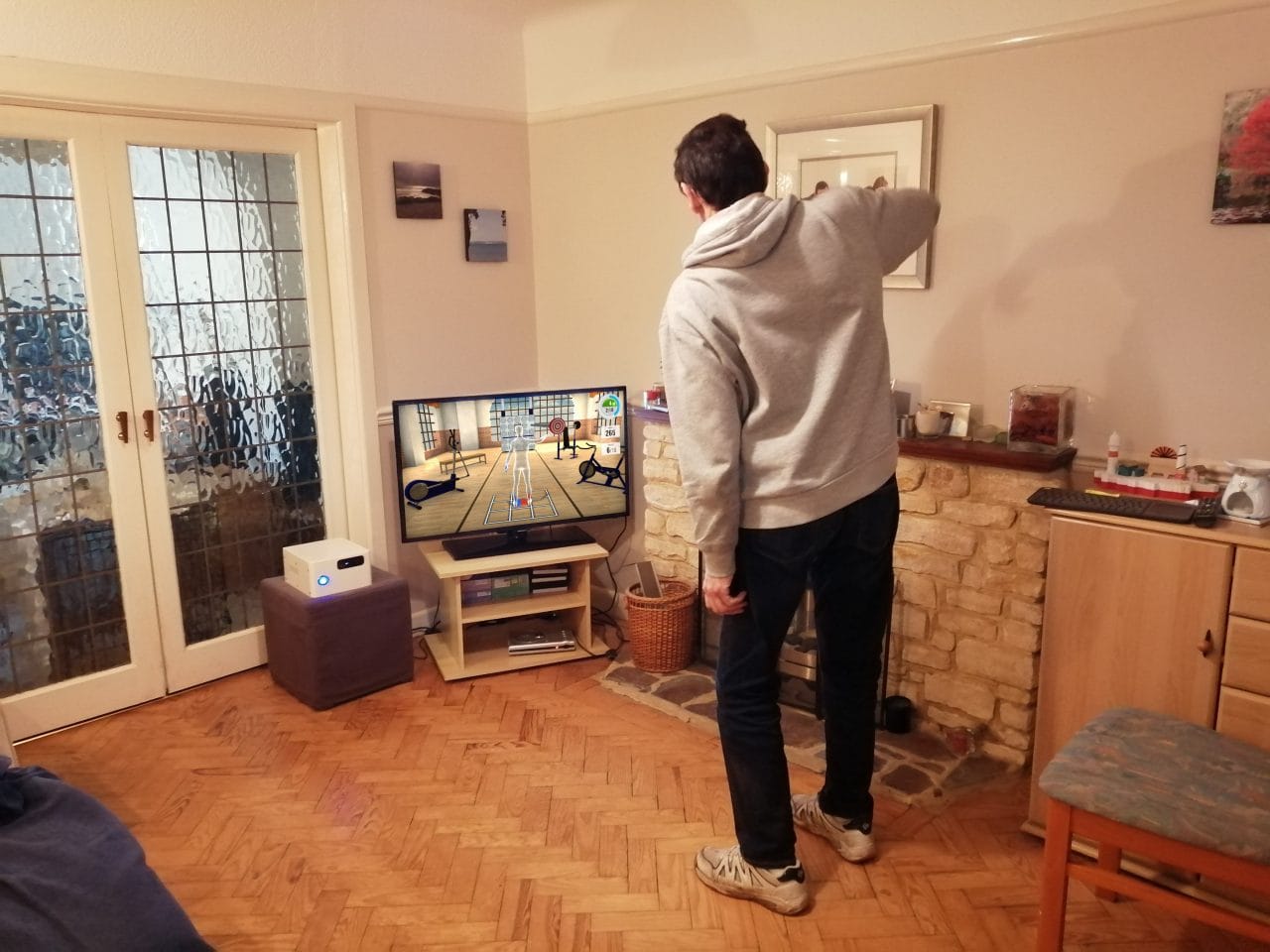
From that conversation came one of the earliest versions of gamified digital rehab technology, which comprised an exergame using a Microsoft Kinect 360 camera where the patient was represented as a virtual ‘stick person’ avatar reaching for targets in order to work on reach, balance and other motor functions.
A study in 2012 of 20 MS participants who used the exergaming solution for two 30-minute sessions per week for 16 weeks not only showed improvements in the Functional Independence Measure (FIM) scale, static and dynamic balance, but also reduced levels of anxiety and depression.
And seeing the positive impact on the lives of people in this one group made the team realise the potential to replicate this globally, in other neurorehabilitation settings including stroke rehab.
As advances came in technology and broadband access, with significant progress in widespread use of virtual reality – and its first telehealth project in Russia in 2013 – Virtualware became the first European firm to get CE marking for a VR therapy solution the following year.
Keen to expand beyond Spain, the UK became the next target destination, with the UCL Queen Square Upper Limb Programme becoming its first adopter. Evolv has now grown its UK presence to the extent is has just opened its first base in London, with further expansion set to come.
“The UK is a very forward-thinking place and we knew we needed to find a champion for this product,” says David, who took on the role of product manager of the VirtualRehab product.
“Through a project with UCL, I met some folks from the Institute of Neurology Queen Square who introduced me to Professor Nick Ward, who at that time had just started the Upper Limb Programme. He was very interested in trying out new rehab technology solutions and his team effectively took us under their wing.
“We’ve been able to ride that wave, if you want to call it that, as they’ve helped us to develop and validate the product. They have been absolutely fantastic, they’re a brilliant team and we really value the relationship we have with them.”
And through working with Professor Ward and his team, alongside other leading names globally, Evolv has developed a suite of products supporting the effective rehabilitation of people worldwide.
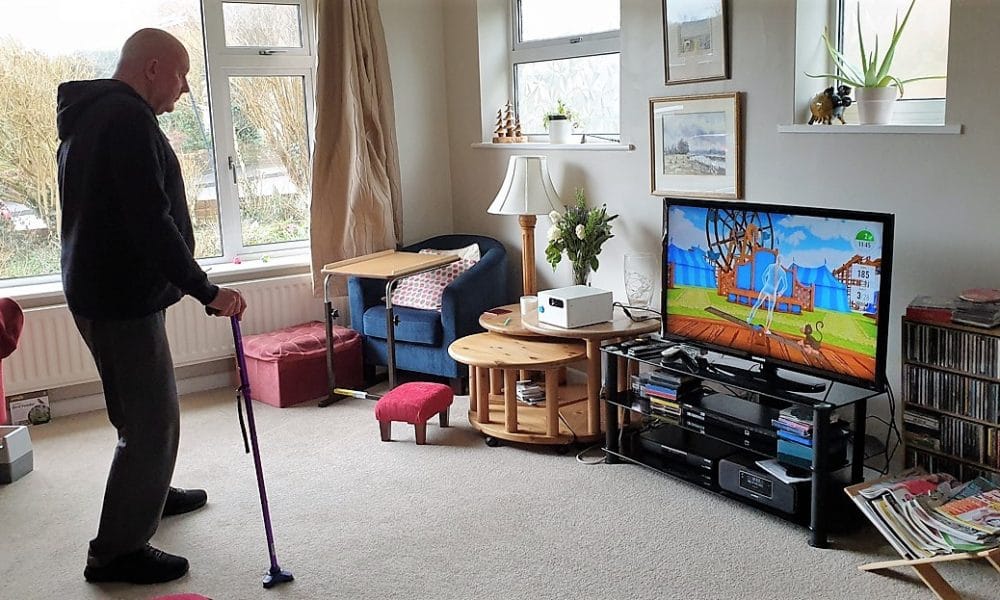
Its EvolvRehab Body and EvolvRehab Hands programmes have been used in 22 countries around the world, and its Evolv RehabKit hardware system played an important role for significant numbers of patients during the pandemic. It has also developed a Falls Prevention programme for senior citizens that was co-designed with clinicians from Mount Sinai Hospital in New York.
“Working with clinical partners on the development of our technology for stroke was fantastic, because a stroke patient receives multidisciplinary treatment including physiotherapy, occupational therapy, speech and language, and so on. It’s not just one therapist to treat everything and that was really fascinating for us,” says David.
“It helped us see our goal, how patients could be receiving these different types of therapy at home, outside of a clinical setting, and how we can support that continuum of care from the hospital to home, or hospital to community to home. And that’s what we are now able to do.”
The at-home element, a phenomenon which continues to grow, is hugely important to Evolv’s continued development.
“We realised telerehab would be key for improving patient outcomes right from the start with the MS group who asked us about using our system at home, and also with our first telerehab project in Russia back in 2013. Because of the distances there, somebody might have to travel six hours for a 45-minute therapy session,” says David.
“But even though technology has moved on now, it’s the same principle. We know doing high-dose, high-intensity therapeutic activity is effective. And if it can be personalised to each individual, it’s even more effective. And if the therapist can connect remotely with the patient and maintain the contact with them, then it’s even more effective.
“Our RehabKit system is super simple to use, you press a button and you start your rehab. If you have a physical disability or a cognitive disability, you don’t need somebody else to do it.
“We tell patients that with the RehabKit, it’s like we’re giving them the keys to the car. If you want to drive it, you can go for a drive. If you want to leave it in the garage, that’s up to you, but you won’t get any better.
“We’re helping patients to take control of their own care, so they know they are making a difference to themselves getting better, and that’s great to give them the means to do that.”
- David Fried is a speaker at the Virtually Successful conference, hosted by Remote Rehab in association with NR Times, held online from January 24 to 28. To sign up at a special NR Times discounted rate, visit here


