Significant and ongoing growth in the use of exoskeletons could see the global market worth over $2billion within the next six years.
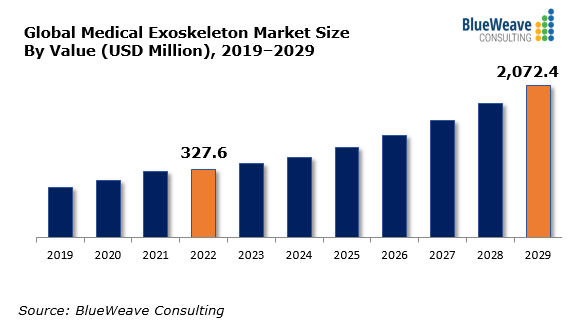
The global medical exoskeleton market is currently estimated at $327.62million, with demand soaring through factors including a growing elderly population and more widespread use to support people with disabilities and after injury.
And in the period to 2029, the market is predicted to see a compound annual growth rate (CAGR) of 30.2 per cent, reaching a value of $2.072billion.
The COVID-19 pandemic and resultant use of telerehab and robotic devices which can be used remotely continues to be an area of growth going forward.
The analysis by BlueWeave Consulting displays the huge potential for exoskeleton businesses in the coming years, with robotic devices increasingly playing a central role in neuro-rehab – a trend the study suggests will only grow.
It also builds on previous research which predicted the United States exoskeleton market alone is set to hit $745.6million by 2032, with global demand set to grow by over 20 per cent.
However, the new report does point to the regulatory challenges in securing approvals for such medical devices as being a restraining factor.
Robotics and exoskeletons are becoming more widely used and accepted in neuro-rehab, and are proving highly effective for survivors of spinal cord injury, stroke and a host of neurological conditions which impact on mobility.
The use of tech in rehab has been shown to deliver often life-changing results for patients, and maximises their potential through enabling challenging yet enjoyable work. Some robotics incorporate gamification, which adds a further dimension to traditional rehab.
While the COVID-19 pandemic did adversely affect the growth of the exoskeleton market, the rise in the use of technology during the pandemic is a key factor in its resurgence.
According to Ekso Bionics’ 2020 annual report, revenue income decreased by 36 per cent during 2020 compared to the previous year due to a substantial reduction in medical device sales, with demand for exoskeleton-related items dropping by 38 per cent at the start of the pandemic.
The rising emphasis on telemedicine influenced the medical exoskeleton market, says the BlueWeave analysis.
As the pandemic limited in-person consultations, telerehab has developed as an important method for healthcare practitioners to give care remotely, meaning demand has grown for medical exoskeletons that may be used remotely.
The analysis identifies major players operating in the market as including Ekso Bionics, ReWalk Robotics, PARKER HANNIFIN CORP, CYBERDYNE INC., BIONIK, Rex Bionics Ltd., B-Temia, Bioventus, Hocoma, Wearable Robotics srl, ExoAtlet, Meditouch, Suit X, MarsiBionics, Rehab-Robotics Company Limited, and Myomo Inc.
The ongoing growth of the above and other players in the market is underpinned by aspects including mergers and acquisitions, partnerships, joint ventures, license agreements, and new product launches.