A technology-led, drug-free treatment for depression is able to relieve all symptoms of the condition in ten weeks for more than half of patients, the largest clinical trial of its kind has revealed.
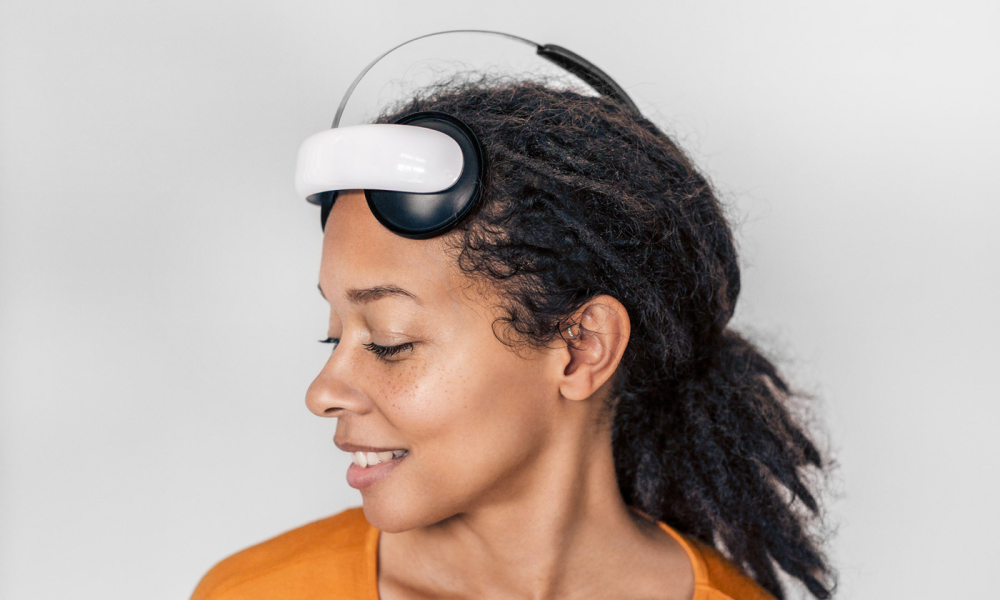
A study of a new headset, created by Flow Neuroscience, revealed it is twice as effective as the best-selling anti-depressants in treating depression.
The Flow headset uses a non-invasive brain stimulation technique called transcranial direct current stimulation (tDCS) to target the left dorsolateral prefrontal cortex, which is the area of the brain associated with depression.
This is delivered through a headset worn by patients and is now set to provide an alternative to antidepressants for millions of depression sufferers in the UK.
And in a clinical trial involving patients in both the UK and US, it was shown to relieve all symptoms for 56 per cent of patients in ten weeks, and 62 per cent were found to have an improvement of at least 50 per cent.
The Flow headset – designed to be affordable for individual users and can be used at home – is helping to make mental health therapy more accessible, enabling patients to access therapy without having to wait months or even years for NHS intervention.

Flow Neuroscience co-founder Daniel Månsson said: “Depression is one of the most common mood disorders, and unfortunately, it is also one of the hardest to treat.
“Our core mission was to create a treatment that is effective and accessible to as many people as possible in their own homes, with little to no side effects.
“The results of this clinical trial show how effective this treatment has become and how breakthroughs are still possible in the treatment of depression.”
Allan Young, director of Centre for Affective Disorders in the Institute of Psychiatry, Psychology and Neuroscience at King’s College London, said: “These exciting and encouraging new data raise the prospect of a real advance in the treatment of depression.
“Major depression is undertreated throughout the world, and all of the currently widely used treatment modalities have significant limitations.
“The nature of this treatment, being both effective and well tolerated, means that it is a treatment which may be widely adopted and should be a helpful intervention for many people suffering from major depression.”
Azhar Zafar, GPA director of re, search, NHS GP and senior lecturer at the University of Buckingham, said: “These findings are incredibly promising and align with the valuable insights gained from utilising Flow in primary care.
“Flow has gained significant popularity among our NHS patients, and a considerable number of them willingly opt for Flow when presented with the choice for the treatment of depression with or without pharmacotherapy.
“This positive reception speaks volumes about the effectiveness and patient satisfaction associated with Flow.”
Corey Keller, assistant professor of psychiatry and behavioral sciences at Stanford University, added: “These results show clear separation of active and sham treatment arms in a large, multisite, randomised controlled trial for at-home low-intensity brain stimulation for depression.
“Flow’s novel brain stimulation approach could offer valuable opportunities for individuals to manage their depression from home effectively, signalling a very promising development in mental health treatment.”