The research comes from Simon Fraser University and also showed that certain processing responses in players at the start of the season differed when observed in the postseason.
As well as this, the players in the older age group observed more of these changes.
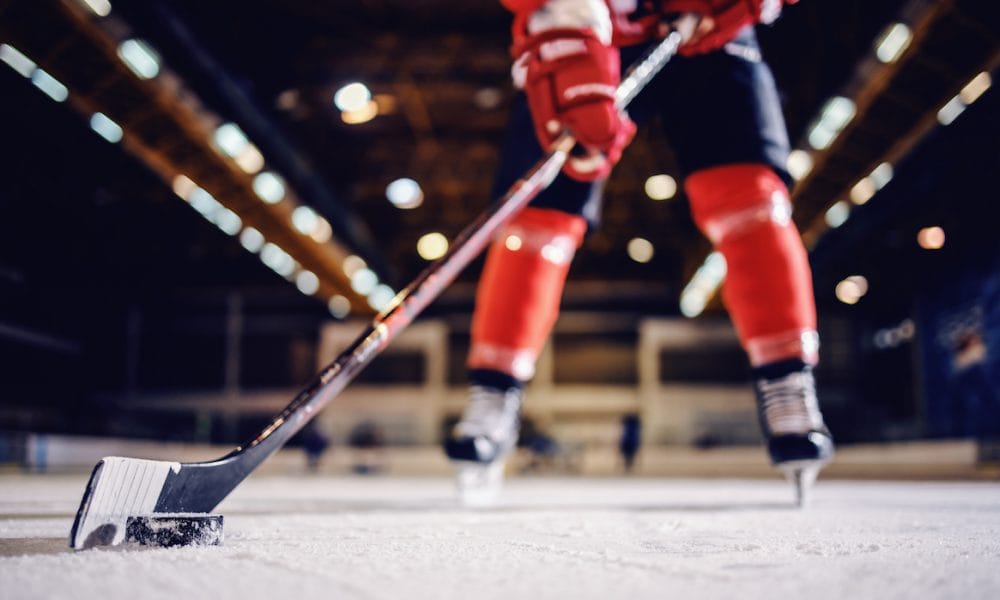
Those involved in the study monitored ice hockey players in Rochester, Minnesota from two different age groups: those 14 and under and those 16 to 20.
They measured the player’s cognitive function using electroencephalography to determine their ‘brain vital signs,’ which includes a person’s auditory sensation, basic attention and cognitive processing.
Head impact in ice hockey usually comes from player-to-player or player-to-board contact, with the researchers wanting to determine if this impact had any effect on brain function.
The majority of these collisions go unnoticed as they are classed as subconcussive, where a person will not show any symptoms afterwards.
However the multi-part study has shown that players’ auditory sensation and cognitive processing were both impacted from playing ice hockey, with these changes in direct correlation with how many head impacts a player has suffered.
Dr Shaun Fickling, lead author of the study, said: “Our research has shown that repetitive subconcussive impacts triggered compounding effects in brain function changes, which underscores the importance of shifting our thinking and understanding of concussions as a singular acute-injury model to a spectrum of head-impact exposure and effects over time.”
In 2019 results from the first part of the study were published which looked at players suffering concussion, which also showed that brain vitals signs were damaged from this.
Furthermore it highlighted that concussion leaves undetected impairments, even after players were cleared to carry on playing under ice hockey’s current protocol.
This is not the only sport where the rules around head impact have come under scrutiny. NR Times recently covered fresh calls from charities and ex-players to change the ‘fundamentally flawed’ guidelines in football.
A recently formed group also did the same for rugby. Those at Progressive Rugby labelled concussion as “the greatest threat to the worldwide game” and called for changes to be made to protect players from developing neurological problems later in life.
“Concussion in sports is a major concern for many,” said Dr. Aynsley Smith, principal investigator of the study. “Our research has shown that having an objective physiological measure of brain function at rink-side is key to detection and managing concussive impacts.”
These head traumas can have huge repercussions for athletes, as NR Times recently found out when speaking to former skeleton athlete Eleanor Furneaux. She was forced to retire from the sport aged only 24 after a major accident while training.
Speaking about the results of the study, professor at Simon Fraser Dr. Ryan D’Arcy, said: “In medicine: you can’t treat what you can’t measure.
“With breakthroughs on measurement challenges, we hope to now accelerate treatment innovations for prevention, acute care and extended care concussion management – for all people across a range of different applications.”
The study is part-funded by USA Hockey, with the results being published in the peer-reviewed journal Brain Communications.