


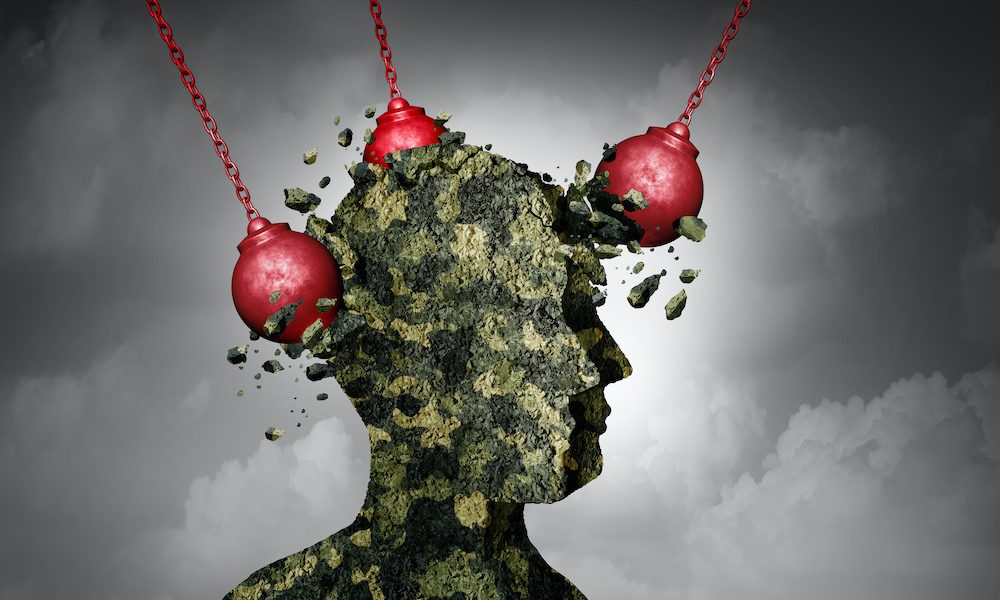
Many military service personnel who sustained mild traumatic brain injuries (TBI) continue to feel adverse effects for years afterwards, new research has found.
A long-running study has found that, rather than the signs of a seemingly minor head trauma disappearing in a short amount of time, they can persist, amplify and increase.
“What we have found, unfortunately, is that a large proportion of them have continued symptoms, and not just specific symptoms, but things that evolve over time,” said Dr Christine Mac Donald, the study’s lead investigator from the University of Washington School of Medicine.
She added that the findings contrast much of the existing historical data on mild TBIs, which indicate that symptoms usually resolve in three to six months, although recent research has revealed this can go on for longer.
A mild TBI involves a bump, blow or jolt to the head, which may not seem severe initially – but can go on to have cognitive, emotional and psychological consequences.
Dr Mac Donald launched this study in 2008 while working in trauma surgery in Landstuhl, Germany.

She led the effort to enroll over 500 then-active duty US service members who were based in Afghanistan or who had been evacuated to a medical centre in Germany. Some had been diagnosed with a mild TBI while others had not suffered any head injury.
Enrolment continued through summer 2013 and evaluations of all participants have occurred in Seattle every one, five and ten years since.
Dr Mac Donald says the ongoing ten-year follow-ups are delivering a surprising and concerning trend.
“At the ten-year wave, we are starting to see individuals present just generally sicker than their civilian counterparts,” she said.
“They’re more likely to have unhealthy conditions, or conditions of ageing pop up before we typically see them: things like diabetes, heart disease, hypertension – outside of the brain.”
The wellbeing of veteran service members should be viewed as a major public health concern, she said.
“It doesn’t matter where you fall on the political spectrum. It behooves all of us to better understand how we can help these individuals have the best quality of life as their healthcare falls to all of us – not just for themselves and for their family, but for the community that they live in, and for us as a society,” said Dr Mac Donald.


