Rehab physician and former health system leader Dr Gerda Maissel now dedicates her time to the forgotten complex care patients lost in the mechanisms of American health. Here she tells NR Times about her My MD Advisor mission.
Dr Gerda Maissel is something of a guiding light for neuro-rehab patients lost in the American healthcare system.
The former rehabilitation physician who later spent 12 years in health system leadership, dedicates her time to helping people with complicated healthcare problems navigate their way back to an appropriate pathway through her enterprise, My MD Advisor.
“People get lost in the system a lot here,” she says from her home in New York State.
“Fundamentally, the system which helped people with severe injuries in the past, now provides very short lengths of stay in inpatient, acute rehab settings; and so, people get dumped into sub-acute rehab, where there’s not even remotely the level of expertise needed.
“Families become lost, not only in not knowing their choices, but also in not knowing how to get to the next best level.”
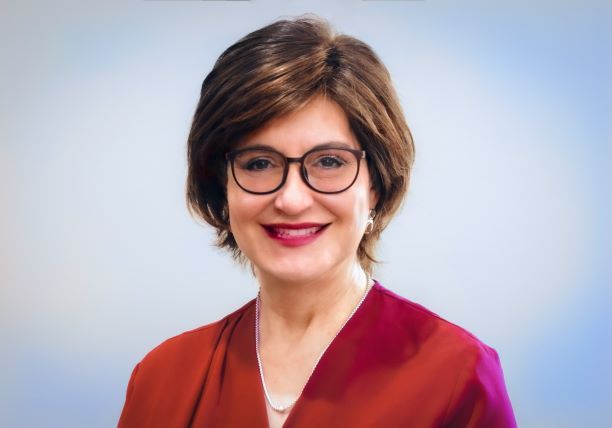
Dr Gerda Maissel
Dr Maissel founded My MD Advisor in 2021 to help people lost within or frustrated with the healthcare system, to improve communication and care. She calls herself a “medical navigator and patient advocate” who guides through the “up and downs” of complex health journeys.
“I’ve had client after client who was starting to make progress in the acute rehab setting, that after a month, are pushed out and into a world that doesn’t meet their needs at all, and they struggle.”
The mechanics of the insurance industry dictate the length of acute setting stay in the US; and neuro-rehab patients are often left in the charge of health professionals in sub-acute settings with little or no relevant experience of managing such conditions.
“Insurance payments have shortened up stays. Harking back to a long time ago, stays in the past, were many, many months long, allowing people to recover, stabilise medically and then really make gains.
“In the inpatient rehab facility, you have neuro trained therapists, rehab specific nurses, a daily MD visit, usually by a physiatrist or some kind medical physician, and it’s designed to take care of people’s medical and intense rehab problems.
“Sub-acute rehab is in nursing homes. Most of those nursing homes are aimed at older people. They’re much less intense, and you often see new graduate therapists. There are frequently staffing problems and you are less likely to see a physiatrist.
“You may get a lovely nurse practitioner, but his or her rehab knowledge, especially on things like brain injury medications, which is crucial to get right during the recovery period to get the medications, may be lacking.
“I’ve run into a lack of knowledge of the basics, for example where the therapist didn’t know about spasticity and how to evaluate it or how to do proper seating. The seating that you need at one month may not be what you need when you transition to the community and three or four.”
Dr Maissel’s journey from healthcare leadership to helping the lost and forgotten on a one-to-one basis came after she became disillusioned with corporate life.
“The higher you rise up the ranks, the more you spend time cutting budgets and doing things that aren’t really helping people directly,” she says.
“I really love helping people, that’s what brings me meaning.”
Contributing to this desire to serve was Dr Maissel’s experience with her brother, who had severe developmental disabilities. Visiting him in the 1970s, the “deplorable conditions and disregard for human dignity” she witnessed left an indelible impression which helped to inspire her career.
The launch of My MD Advisor was also sparked by a troubling case she encountered in autumn 2020.
“Someone connected me to a man who had been driving his wife across the George Washington Bridge in New York when they crashed in a rainstorm, resulting in his wife becoming a quadriplegic on a ventilator.
“So, she did her stint in acute rehab, and then she went to sub-acute rehab, where they didn’t know how to take care of her.
“Her bowel, bladder and skin – nothing was being treated properly. She developed several ulcers on her skin and ended up with infections that they weren’t recognising, with very high white counts.
“When I talked to him, this grown, strong man was trying not to cry, he was holding back sobs. He said to me, ‘they’re killing my wife’. And so, I helped him, and we were able to get her out of that place.
“Eventually, even though she was a quadriplegic on a ventilator, we got her home. She did eventually pass away, but she did have a period of time at home with a better quality of life.”
Sadly, demand for a service like Dr Maissel’s is huge, in part because of the lingering impact of the pandemic on health system capacity.
“COVID made everything worse in facility-based care across America, because there were massive staff shortages.
“Where I saw it most were in the sub-acute rehab centres because they are not particularly attractive environments to work in, so they were already frequently short staffed; and so you got a shortage on top of a shortage. That’s not to say that acute rehab centres didn’t suffer also, everybody did, including hospitals, but the sub-acute centres became really difficult.”
Her role in finding and redirecting patients towards a better outcome may involve providing a different perspective of the official narrative of that particular case.
“Just because someone says that the doctors aren’t doing a good job, I don’t always take their word for it. In the case [of the lady injured on the bridge] I started by reading the medical and therapy records. I had some nice conversations with the therapist and tried very hard to review with them the kind of things that would be helpful.
“I’m not her doctor, but I can help give the family ideas. We got her the care she needed when she had a bad infection, for example. I had coached the husband to insist that she be transferred to the hospital, because they weren’t going to send her there.
“We got her to the hospital and then I coached him that he could refuse to have her return to the care facility. The hospital, of course, wanted to return her there, but he didn’t know he could say ‘no’.
“I also advised him on what to ask for in terms of medical treatments and the sort of things that she needed as a quadriplegic; because some people aren’t educated regarding what people need with spinal cord injury, and how to take care of bladder, bowel, skin, spasticity and all of those things.
“Over time, I educated him to educate other people as to what was needed and eventually we got her home.”
That first case was the catalyst for the launch of My MD Advisor, which has been Dr Maissel’s main focus in the two years since.
In working with neuro-rehab patients, a common problem she finds is people on too many medications.
“I had one gentleman in the community who was on over 30 medications when you counted his supplements. Two of his supplements contained vitamin D, and he was also taking separate vitamin D pills.”
While some cases may require intense work on Dr Maissel’s part, often it is simply about providing the right advice or connection at the right time.
“I have one lady who had a bad outcome after neck surgery. She had horrible pain and was having trouble with a recurrence of a bunch of problems. I helped her to find some much more knowledgeable people to help her understand how to change her future.
“Her surgeon had just given up. He said [to her] ‘I don’t know what else to tell you. The surgery was fine, even though you’re miserable’, which was true. I helped her find other doctors with expertise that could tell her what she needed to do to feel better, and that’s in process now.”
These diversions from one care pathway to another can dramatically change outcomes for many of the individuals involved.
But is My MD Advisor’s work sometimes simply a case of giving patient-families the confidence to question the official advice being given?
“It’s being able to ask questions. Going through the health system is all about informed choice. You should get to do what you think is right but sometimes in the moment people are overwhelmed.
“Sometimes they don’t know to ask questions. Sometimes they’re intimidated. Sometimes they just need someone to explain to them what the doctor is saying.
“What I’ve also learned is that there’s a huge subtext in medicine. Often doctors say things and you have to read between the lines, but people don’t know how to.
“Part of what I’ll do is explain ‘here’s what the doctor meant’, not just the medical terms, but what they were inquiring in their statements.
“Ultimately, as people gain a greater understanding, they can ask better questions, and make better decisions.”