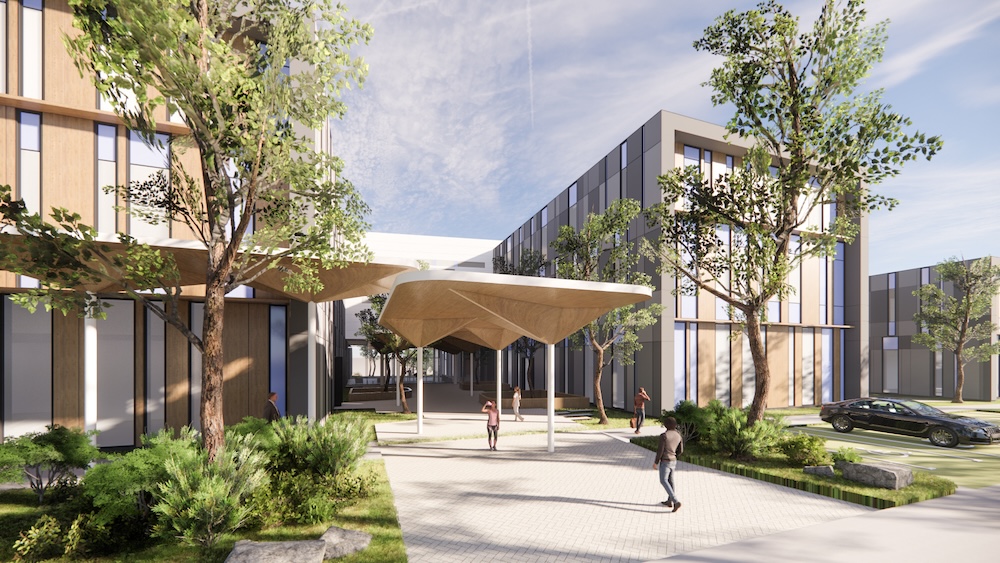
Driven by the aim of improving rehab services and addressing unmet needs across the UK, the new National Rehabilitation Centre (NRC) will open its doors this summer. It will include a dedicated ward for neuro-rehab, offering intensive rehab for a variety of conditions. NR Times spoke to lead nurse Rebecca Kenny for an update on the much-anticipated addition to the UK’s rehab network.
Based at the Stanford Hall Rehabilitation Estate alongside the Defence Medical Rehabilitation Centre (DMRC), it will benefit from the specialist knowledge developed at the DMRC, via the sharing of expertise, knowledge and feedback with the defence facility.
The 70-bed NRC is part of the UK government’s plan to build 30 new hospitals. It will bring together patient care with research and training, acting as a clinical model that could be rolled out across the country in the future.
NR Times spoke to lead nurse for the NRC, Rebecca Kenny, about how the centre aims to transform rehab services for patients in the UK following a life changing injury or illness.
“The NRC has come from the fact that there is a need for rehabilitation in the UK, and that we don’t perform as optimally as our partners across Europe and North
America,” says Kenny. “We are saving more lives than ever in terms of major trauma centres and all we’re doing around trauma care, but there has been an unmet need with regards to rehabilitation.
“The key for us is to make an impact on patients who are not able to access the rehab that they need because of the capacity in rehab services across the country.
Kenny explains that the average cost of rehabilitation for an individual patient that uses rehab facilities is approximately £39,000, but that this has a huge economic benefit in saving approximately £500,000 in health and social care costs for those people.
“Those are situations where people may have been discharged home with large packages of care or residential needs, but with the right rehab could go home with smaller packages of care, or to their home when they may have not otherwise made it to their home,” she says.
Also, says Kenny, it’s about “helping working age people back to work, and the economic benefit and the benefit to society” that comes with that, through activities such as “vocational support and rehab [aimed at] getting back to the workplace”.
She adds: “Our ambition is for the military and the NHS to work closely together, because the military do rehab incredibly well, particularly around vocation and getting people back to operational service. There’s a lot that we can learn from that.” As well as improving access to rehabilitation services, Kenny emphasises the importance of the NRC’s ambition to improve the intensity of rehabilitation and working with SMEs to bring research together and foster innovation.
Such innovation is already underway, and the centre is set to be a digitally smart building; trialling silent wards, smart controls such as chin touchpads and digital asset tracking. It is looking to run further digital trials in the future, says Kenny.
The centre will act as a national hub and aims to bring care, research and innovation together under one roof, with successful developments there being implemented at other UK locations.
“At the moment, implementation of clinical research can take up to 10 years, and for us, we really want to have an impact on that,” says Kenny.
“We have partners such as the University of Nottingham that are working hand in hand with us, sharing the facility, bringing in companies, and working together. It reduces the time for clinical research to be able to come into practice.
“We help define what good looks like and how we work with our research partners and our universities, but then there will be spokes across the country.”
Currently, a 25-bed neuro-rehab unit, Linden Lodge, is located at Nottingham University Hospitals (NUH) City, where a specialist team provides care for a number of neurological conditions including such as TBI, spinal cord injury, and multiple sclerosis, among others. Kenny explains that when the NRC opens, Linden Lodge will close and its team will move to the NRC where they will continue providing their specialist care.
“We’ve got a great team of staff at Linden Lodge, the majority of whom are able to and want to move across with us and to the NRC, and then to the NRC will grow to be 70 beds.
“However, we won’t just offer neuro-rehab. In conditions like stroke, we already have specially commissioned pathways, and we won’t take those patients.
“So, we won’t take stroke patients if there is a specially commissioned pathway that is working well for that condition. It is for anyone with a rehab goal that doesn’t sit on one of those already existing pathways, and that would benefit from an intensive period of rehab.”
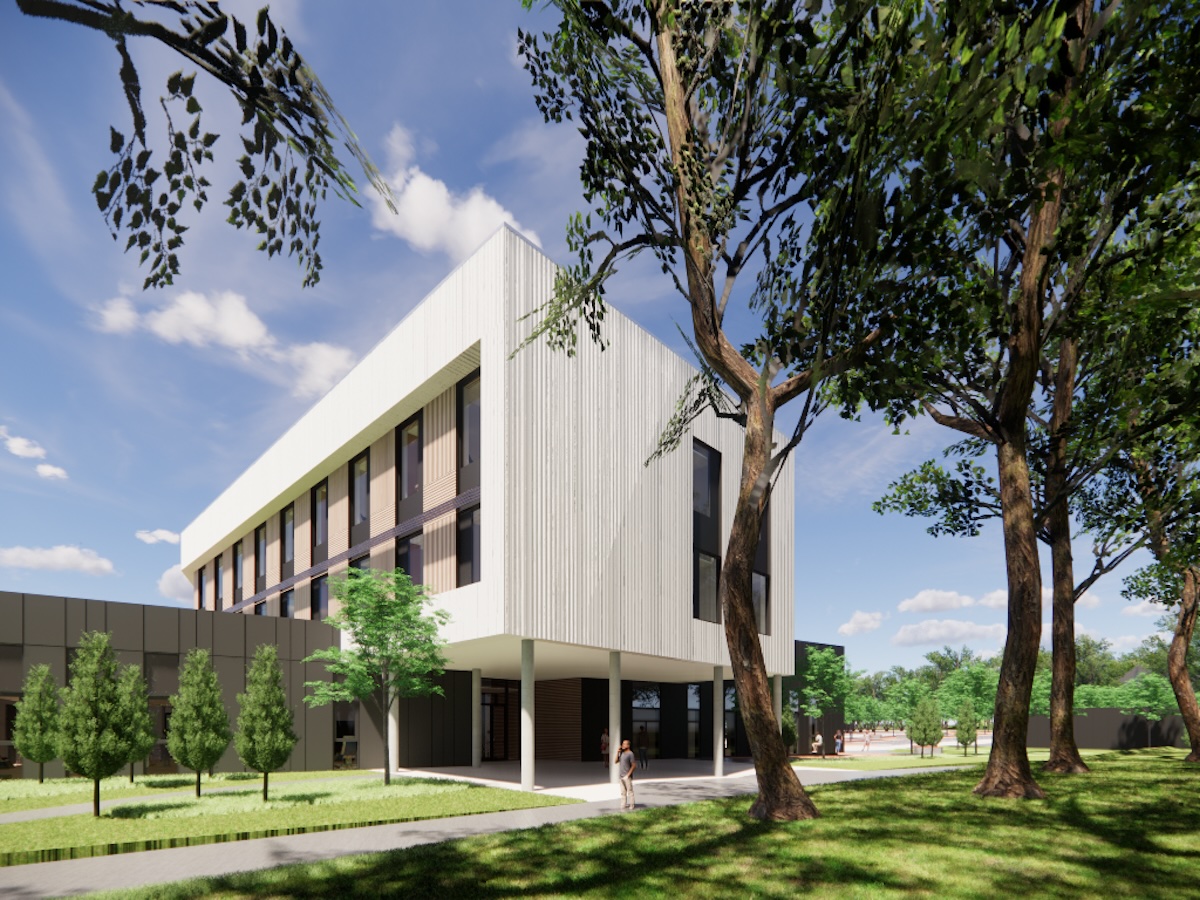
The NRC consists of three floors, including communal spaces, gyms, and private personal spaces that are designed for minimal noise. Above the ground floor will be a 35-bed space specialised for neuro-rehab patients, with four of the beds dedicated to patients with more severe cognitive impairment, and a number of individual rooms.
“The idea is that the rooms are used from a rehab perspective, where people go to sleep and support sleep hygiene and rest, and that the rest of the building is used like they would their house, and to use that as independently as they can, with our support.
“The building feels like home – we’ve got a pantry space so patients can make themselves a drink, if they’re able to do so, and there’ll be fruit there for people to access. That was born out of feedback from patients saying, in hospital, they have food at set times, for example, and if they were at home, they could go and get something.
“That’s what transitioning back to home is all about – living in a way that you would at home, and to further support that, we’ve got some rehab flats so families have the opportunity to come and stay.
“A key thing for people who have had cognitive impairments, is that things can change a lot, and how you learn to cope with those as a family is incredibly important.
“We are supporting and educating people to do that, but in a setting that feels safe for them.”
Complex rehab has not traditionally been a specialty in its own right, says Kenny, but the centre is working to provide a range of rehabilitation care, and the centre aims to upskill healthcare staff.
“We want to give people exposure to skill sets that they may not have already had exposure to as well as all of the work that we are doing around complex rehab. We’re really doing a lot of work to make complex rehab an attractive specialty.”
Recruitment for roles at the NRC is now underway.