




Might 2024 be the year that we finally see football authorities take the lead in their battle to address the game’s harmful impact on the brain?
Given the decades in which the sport’s leaders have had to be dragged kicking and screaming into the neurological fight, perhaps that is optimistic.
Events are conspiring, however, to at least build momentum needed for change in football this year.
It’s now 22 years since coroner Andrew Haigh recorded what was hoped to be a pivotal verdict of “death by industrial disease” in the case of former England striker Jeff Astley who died aged 59 after years of living with dementia.
That milestone itself came after at least three decades during which evidence that heading a football was harmful had built up.
At the time a spokesman for the Professional Footballers Association said: “We cannot do anything about what is going on in the past, but maybe we can do something about the future.”
For many of the families of former footballers affected by dementia, change has been painfully slow in the years since. But there are reasons on which to pin hope that change is speeding up.
Last month a group of 19 former footballers had their first day in court as part of a landmark litigation.
During the course of the impending legal battle, it is expected that the number of ex-players involved will grow beyond the 50 mark, according to reports.
The case is being taken against the International Football Association Board, the Football Association, the Football League Limited and the Football Association of Wales. It centres around alleged harm caused by heading the ball and the pursuit of compensation over brain injuries among the former players.
With the next hearing due in the spring, the case may be a drawn-out affair, but its eventual significance could be huge.
Another recent development in football’s great awakening to the neurological needs of its former pros, is the creation of the new £1m fund by the Professional Footballers Association and the Premier League. The funding is allocated to assist former players and their families who have been impacted by dementia and other brain conditions.
“This is an important step forward,” said PFA chief executive Maheta Molango.
“We continue to believe there needs to be a football wide responsibility. That includes providing access to financial support for former players and the families who most need it.”
Ex-professional footballers who have been diagnosed with a neurodegenerative disease are eligible to apply for financial support; with a new independent panel made up of social care, nursing and neurology experts assessing the claims.
“The welfare and care of players have those been a priority for the Premier league,” said Premier League chief executive Richard Masters.
“We feel it is important to offer our support this newly established brain health fund.”
While decades ago football’s harmful impact on the brain may have been disputed via those citing lack of proof, the research-based evidence is now vast and growing year-on-year.
Last year a study from Swedish university the Karolinska Institutet compared the health records of 6,000 elite footballers and around 56,000 non-footballers between 1924 and 2019.
Footballers were found to be 50 per cent more likely to develop dementia than the rest of the population.
Nine per cent of male players that had played in the Swedish top division were
diagnosed with neurodegenerative disease, compared with six per cent of the control sample.
The study also suggested that outfield players had a 1.6 increased risk of Alzheimer’s and other forms of dementia compared to the wider population sample.
Goalkeepers had no increased risk of Alzheimer’s or dementia, “supporting the hypothesis that mild head impacts sustained when heading the ball could explain the increased risk in outfield players”, study authors wrote.
These findings followed a 2019 study in Scotland that concluded that professional footballers are 3.5 times more likely to develop dementia and other serious neurological conditions.
The study was conducted by Professor Willie Stewart and researchers at the University of Glasgow, and was based on death records in Scotland.
Further research, in 2022 at the University of East Anglia, suggests that professional footballers are likely to have worse brain health after the age of 65 than non-players.
Screening Cognitive Outcomes after Repetitive Head Impact Exposure – or SCORES – involved the monitoring of around 75 former elite players and a group of active non-footballers.
Lead researcher Dr Michael Grey said footballers did better in the 40 to 50-year-old age group – but worse over 65. He said there was a “need to investigate ways to limit damage to the brain as people play sport”.
Evidence gathering and the pursuit of a greater understanding of the neurological fallout of football goes on.
Useful contributors include the HEADING study – which is examining brain health in around 300 former players aged 50+.
The results have so far enabled the development of a model which can be used to measure footballers’ exposure to repetitive sub-concussive head impacts.
While researchers are unlocking knowledge about what football does to the brain over the long term, it is the lawmakers and regulators of the game that must protect current players in the here and now.
Amid some patches of encouragement, progress on this front has largely been inconsistent and frustratingly slow.
Permanent concussion substitutions were introduced to the top flight women’s and men’s games in 2021; giving teams extra substitutions to remove players with suspected concussion from the field of play.
The Premier League, custodian of England’s top tier, has since argued that temporary concussion substitutions would be more appropriate; removing pressure from medical staff and coaches to make a snap decision about potentially concussed players.
However its application for a trial was rejected last summer by the International Football Association Board (IFAB) which oversees the laws of football.
Official FA guidelines dictate that anyone with a suspected concussion must be immediately removed from play.
In all cases of suspected concussion, it is recommended that the player is referred to a medical or healthcare professional for diagnosis and advice, even if the symptoms resolve.
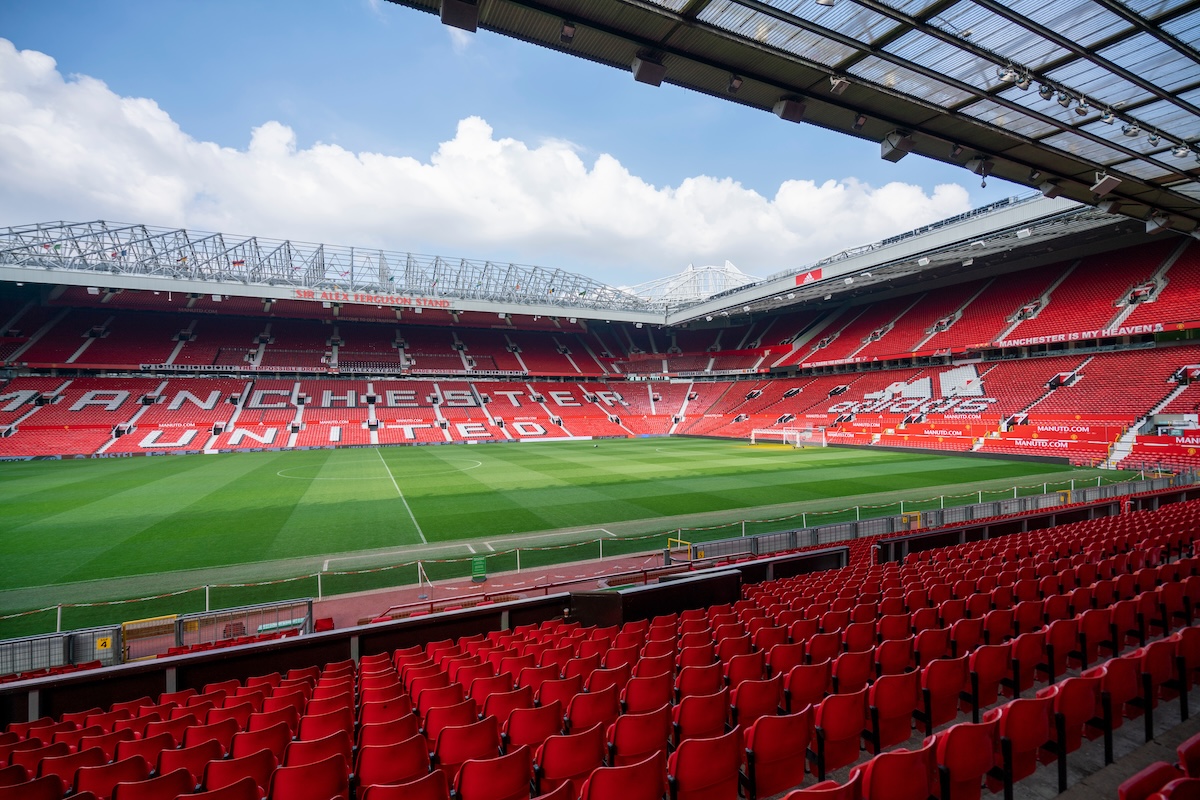
Even at the elite level, however, this guidance is not followed, for example last November during a Manchester United v Fulham match.
Defender Harry Maguire showed signs of discomfort following a collision but was allowed to continue after being assessed by medical staff.
After around an hour of play, referee John Brooks called for another assessment with Maguire looking dazed following a headed clearance.
Headway chief executive Luke Griggs said at the time: “This is an issue with the very culture of football and its stubborn refusal to put players’ health above all else – including the result of a game.
“Every time the ‘if in doubt, sit it out’ principle is seen to be ignored in elite level football, our chances of educating younger players and better protecting future generations from short and long-term brain injury is diminished.
“Temporary concussion substitutions would immediately help return some credibility to the process, but an evolution of attitude is urgently needed.”
At the grassroots level, recent years have seen extra measures put in place to better protect against brain damage.
Last July, the FA extended its trialled heading ban in games involving children up to age 12 for a second season. Its findings will be presented to IFAB in the hope that a global ban could follow.
Another source of optimism is the fact that technologists are also joining the effort to make football safer.
The Q-Collar, developed by American company Q30 Innovations, is designed to increase blood flow to the skull, creating a thicker “airbag” to reduce the impact of collisions.
It does this by exerting a slight pressure on the neck muscles and was inspired from the natural world – from the way in which a woodpecker can withstand repeated impacts.
Among numerous studies that have shaped the development of the device, two high school girls football teams participated in a trial supported by advanced imaging to help determine whether internal jugular vein (IJV) compression provided long-term beneficial protective effects over three timepoints spanning nine months.
The control and intervention groups both wore accelerometers that were used to collect daily head impact data in excess of 20g.
The DTI data revealed significant white matter changes from pre- to post-season scans of the members of the control group.
Those changes only partially reversed themselves during the 3-month post-season period. Despite similar head impact exposure, the intervention group (who wore the Q-Collar), did not have significant changes to their white matter.
The device has now been the focus of over 25 pre-clinical and clinical trials and made headlines when two players wore it during the 2023 women’s World Cup.
Such tournaments can be a focal point for new trends and developments. Perhaps referees and officials can raise the bar on the management of concussion and head injury at this summer’s Euro 2024 tournament to inspire change throughout the game.


