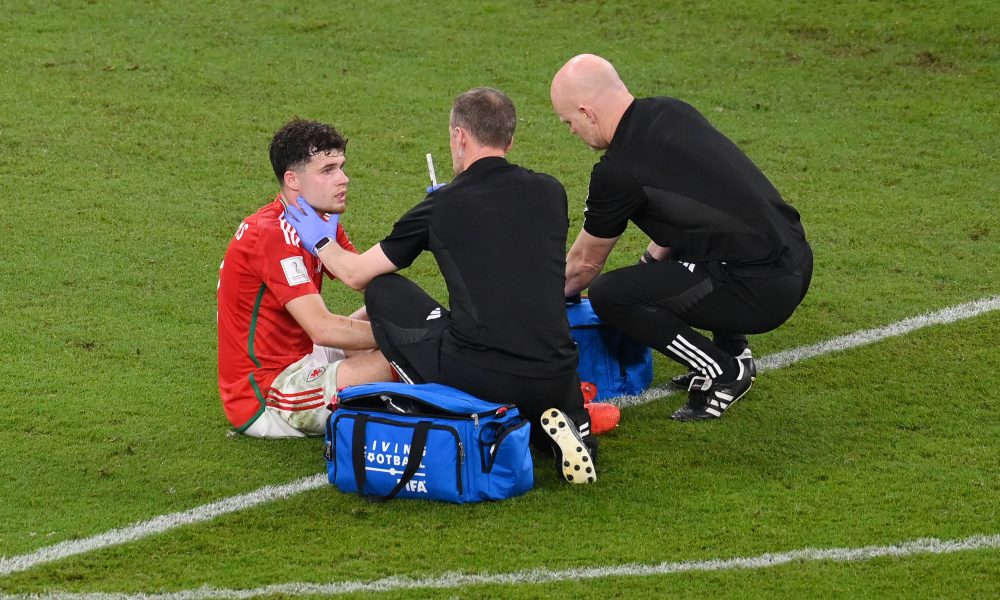
FIFA has been accused of “shocking” complacency after further controversy around players being allowed to continue after head injury in the Wales v England match.
The injury to Neco Williams has also reignited calls for temporary concussion substitutes to be introduced without delay.
Wales defender Williams sustained a head injury after blocking a powerful strike from Marcus Rashford, leaving him visibly dazed.
However, after receiving brief medical treatment, he was allowed to play on – only to be substituted minutes later after it became apparent he could not continue.
The incident has been the second such occurrence in the World Cup 2022, with Iran goalkeeper Alireza Beiranvand sustaining a head injury and being allowed to continue, in what was condemned as an “abject failure” of concussion protocols.
Responding to the injury to Williams, brain injury charity Headway called for immediate action to protect players.

Luke Griggs, interim chief executive at brain injury charity Headway, said: “This is the second incident at this World Cup where a player’s brain health has not been prioritised.
“Medics are being forced to make snap judgements under pressure, which is resulting in players being allowed to stay on the field despite the assumed presence of at least some doubt over potential concussion.
“FIFA and IFAB’s refusal to introduce a temporary concussion substitute rule is causing undue risk to players. The rule is supposed to be ‘if in doubt, sit it out’ not ‘play on and see how it goes’.
“The longer FIFA and IFAB refuse to act, the less credibility they will have in any discussions about brain health in football.
“Their complacency when it comes to brain health is frankly shocking, it’s time to take control of this situation and look after the players.”
England legend Alan Shearer, a studio guest in the BBC’s coverage of the match, is also open in his views around the need to introduce temporary concussion substitutions. He again called for action live on BBC.
“I would say to IFAB, ‘What on earth are you waiting for?’ Because everyone is under pressure then to make a decision,” he said.
“You’ve got the doctors and the physios on the pitch trying to buy a little bit of time. If they were able to get him off for ten minutes, assess him, bring someone on and then make their mind up there rather than be put under huge pressure on the pitch.
“What on earth are IFAB waiting for? Do it now.”