



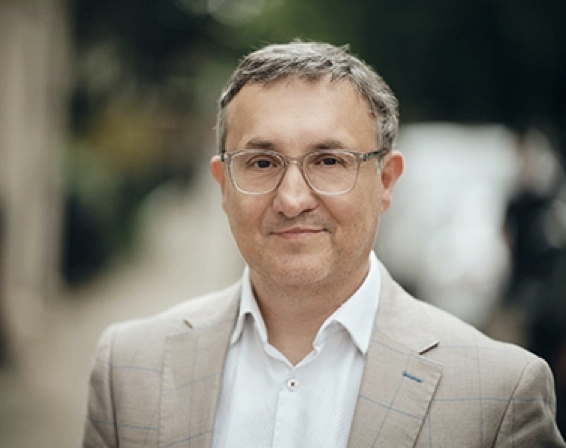
In the first of our new Meet the Lawyer series, NR Times meets Daryl Robinson, senior associate at Moore Barlow LLP in London, who discusses the role of a specialist lawyer and that of the MDT in supporting clients after brain injury and spinal cord injury
Tell us about your career to date
- Legal 500: ‘a top-class PI lawyer who is able to engage well with clients and is tenacious in achieving the very best outcome’
- Ranked in the Legal Service Directory ‘Chambers UK 2023’
- Listed in the Top 10 East Anglia Claimant’s Personal Injury Lawyer by ‘Business Today’
I am an accredited senior litigator with the Association of Personal Injury Lawyers (APIL) and a recommended Legal 500 and Chambers ranked lawyer with over 35 years’ experience in personal injury. I am now solely focused on catastrophic injuries in the Moore Barlow Major Trauma team in Central London.
My first major role came at just 19 years old when I was asked to head a new industrial disease department for a trade union law firm, of some 200 cases, in the mid 1980s. Over time, my team expanded and at its peak, we were handling approximately 1,700 non-contentious cases.
Towards the late 1990s, I acted for a female Police Officer in the renowned Flying Squad (now SO9), which set a precedent in noise-induced tinnitus cases and became a high-profile case with both nationwide newspaper and TV coverage. This acted as a springboard for me to step into mainstream personal injury.
My new role covered all fields involving road traffic accidents, accidents at work and national disasters (such as the Ladbroke Grove rail disaster). Within a short period, I conducted my first traumatic brain injury case which resulted in my first seven figure settlement but, compared to disease work, it was the process of running such a serious claim and the input towards my client’s neuro-rehabilitation and working with specialist clinicians that really cemented my passion in this field of work.
Unusual as it may be – but let’s call it unique! – I then worked for a law firm based within an NHS environment at Addenbrooke’s Hospital, Cambridge from 2010 for over a decade, learning the processes of acute medical care as well as establishing relationships with medical staff, rehabilitation consultants, clinical case managers and neuro-navigators, forming part of my expertise in handling traumatic brain injury (TBI) and spinal cord injury (SCI) matters.
This exposure enabled me to appreciate the excellent and first-class level of acute treatment given to in-patients throughout the NHS and also the importance of my role by providing a bespoke package of privately funded care following hospital discharge to keep the momentum of treatment moving forward. I also grew to understand the immense financial pressures placed upon the NHS, Clinical Commission Groups (CCGs), NHS England and local statutory services. I began to strongly advocate the need for privately funded care package to both serve the client well but also to alleviate the pressures on the NHS.
My colleagues at Moore Barlow are also supporters of the NHS Cost Recovery Scheme in which the compensator has to reimburse the NHS the incurred treatment costs and that recovery is estimated at £200m per year.

What makes brain and spinal cord injury claims different to general personal injury claims?
These types of claims are classed as catastrophic or major trauma injuries and are usually defined as being ‘life-changing’.
The long-term impact on the injured individuals’ lives is therefore significant and the claim will not simply be limited to securing compensation. In serious cases I am likely to be focused on the rehabilitation package for a number of years before even reaching a stage in which to value the claim. For this reason, there needs to be a strong understanding of the complexities and pitfalls of each type of injury.
In addition to the careful selection of a clinical case manager and multi-disciplinary team (MDT), there are other aspects that require experience and careful scrutiny. This relates to the treatment generally, the need for financial support, guidance to access DWP benefits, plus a coordinated effort by the MDT to select a suitable rehabilitation [level 2] unit and/or nursing placement.
You are never just working for the injured party in most major trauma situations, but the immediate family who may also require support during this tragic and unexpected transition to the family dynamic. An immediate member of the family may give up their own career to afford gratuitous care to the injured party, although funding for additional commercial support is sometimes essential, not just for specialist care, but to avoid a family reaching breaking point. This can be one of the most challenging areas that I have to address. This already enormous shift in family life may further extend to having to move home to a more suitable property with the guidance of experienced accommodation experts. This may require an independent living trial and it is always my preference to engage in this process.
Experience in the consequences of a TBI and/or SCI is required particularly as there are many health conditions that may follow the acute stage of hospitalisation that requires increased monitoring. Health problems can remain after critical illness. Those admitted to ICU and dependent on a ventilator, or other treatment, may suffer from the long-term consequences of being in intensive care and there needs to be an understanding of the impact of post intensive care syndrome (PICS).
The rehabilitation process alone may take 12-36 months to either conclude or reach an acceptable plateau before the cost of supporting the injured person’s life can be assessed to reach the right level of compensation. This is why the client and lawyer relationship is so different compared to other areas of law.
How important is it to appoint a lawyer with specialism in brain and spinal injury claims?
The instruction of a lawyer with specialism in TBI and SCI is essential as seen from some of the examples already mentioned. Whilst I will, in most cases, be supported by a clinical case manager and MDT, the lawyer needs to understand from the very first meeting the rehabilitative path that a client is likely to need. It is, however, a team effort.
I take the view that working collaboratively with a defendant representative, whether insurer or lawyer, is always preferable as this helps to promote securing funds for the client whether by way of interim payments or through the Rehabilitation Code. Running simultaneously with this process is the requirement to build the legal compensation claim itself, however the immediate rehabilitation and recovery needs must always be given the absolute highest priority.
From the outset of the claim, I may face an array of issues that require clear direction. Regrettably, TBI clients may lose mental capacity to manage the litigation as well as their own property, personal welfare, healthcare and financial affairs. It is important to have a strong understanding of the process in assessing mental capacity in accordance with the Mental Capacity Act 2005 and how these lead on to the instruction of a Deputy to manage a Deputyship once appointed by the Court of Protection. The capacity issue is not limited to just intellectual functioning but also higher cognitive functions such as insight, judgment, impulsivity, initiative, and volition.
An understanding of The Serious Injury Guide is also vital to ensure that the clients needs are met and how to best use the guides escalation process so as not to derail rehabilitation should a disagreement with the defendant arise.
An appointed lawyer will also review both medical records and the immediate needs assessment to identify the correct medico-legal disciplines needed and the order and timing for those reports.
Can you share an example of a particularly challenging case you have worked on, and how you overcame these challenges, to secure a positive outcome for the client?
In the realms of TBI and SCI, there is an incredibly wide range of challenges from start to finish. These range from the provision of care following hospital discharge, in sometimes very difficult situations, through to the loss of employment and the need to introduce vocational rehabilitation, requiring a phased-return to work and adaptations in the workplace (disability parking, etc.).
These cases require a range of skill sets from understanding the mechanics of how an accident occurred sometimes with the use of accident reconstruction expert evidence, to understanding faulty work equipment and poor working practices to establish a breach of duty of care, right through to also understanding medico-legal expert opinions.
Cases tend to be very diverse and one such challenge included a non-national who suffered a TBI judged to be severe within the Mayo classification system and was hospitalisation for several months. It transpired that he had been living alone with no family support in the UK. It was established over time that this gentleman would remain in a minimally conscious state and would never regain mental capacity, so a professional Deputy was appointed. It was also ascertained that his working visa had expired during his hospital stay. It was therefore necessary to apply to the Home Office initially to retrospectively validate and extend his stay and then a further application for indefinite leave to remain (ILR) which was successful. This also meant that he was no longer subject to a prohibition on receiving public funds relevant to his future placement and care.
Can and should a client change their lawyer if they are not happy with how the case is progressing?
In short, the answer is yes. Each claim can come with a number of complex issues, whether it is related to establishing liability which impacts the rehabilitation funding, addressing difficult family dynamics or simply not executing the claim with due diligence. It is important that both lawyer and client always maintain an open line of communication.
Claims of this nature are very intrusive to one’s personal life and those of the family, therefore a supportive and trusting relationship is key. If a client remains dissatisfied, then indeed the client or litigation friend should research and refer to a specialist lawyer.
I have taken on a number of cases from other lawyers over the years, including one more recently for an amputee with significant mental health issues which were proving difficult to address for an inexperienced lawyer. The middle-aged client was left languishing in an elderly care home for over 18 months which was unacceptable. This, thankfully, was recognised by the family and following a recommendation, I have been working tirelessly to make up ground and re-trigger the rehabilitation process.
The selection of a law firm with specialism in TBI and SCI is key to success. There are also benefits in selecting a full service law firm that enables the lawyer to pull in colleagues to handle other legal matters such as conveyancing, deputyship, probate and private wealth all of which we have at Moore Barlow.
What do you look for when appointing or working with members of an MDT?
The starting point is the selection of a specialist clinical case manager and to work closely together to choose key personnel to form part of the MDT. The disciplines required are usually established in an Immediate Needs Assessment (INA). This needs to be a quality partnership working together. Every discipline plays a vital role and one cannot undervalue the importance of appropriately trained support workers.
How vital a role can the right MDT play in a client’s outcome?
The importance of selecting the right experience in TBI and/or SCI cases cannot be understated. Acting as the lawyer is like being a conductor in a band making sure from the very outset that the right disciplines are in place and introduced at the appropriate time and performing well. Working closely with the clinical case manager enables the MDT to be formed and prepare an initial assessment and targeted goals aimed to deliver person-centred and coordinated care. The nature of the injuries dictates the disciplines required. In significant TBI cases, it is advisable to have input from a consultant in rehabilitation medicine with experience in neuro-based injuries along with a neuropsychologist, neuropsychiatrist and other neuro based disciplines.
I have represented clients with TBIs who have experienced suicidal ideation and without these disciplines in place it becomes difficult to flag and address these issues. Suicidal ideation is not however limited to TBI and has also arisen with SCI clients. The input from an MDT with SCI experience could be essential to also identify other traits including the high risks associated with urinary tract infections and the onset of Autonomic Dysreflexia (AD) which is a common pathological life-threatening condition after a SCI.
I acted for a 19 year old solider injured whilst on leave. His career aspirations were only ever to serve in the military and there was a family history of military campaigns dating back to the Second World War. He suffered an “ASIA A” (Impairment Scale) complete paralysis. The MDT was attentive and spotted the early onset of AD. The same client regularly exhibited suicidal ideation in almost every MDT meeting I attended in the first 12 months, which required many sessions with the treating neuropsychologist. It is no exaggeration that on this occasion the MDT, and in particular the clinical case manager and the treating neuropsychologist, saved his life. Over time his mental health improved and even more so when he moved into an adapted home which also improved his quality of life.
The aim for a MDT is to have a clear focus on rehabilitation so that the client can return, as much as possible, to independent living even if this comes with some assistance.
Can you share some personal career highlights
My first TBI case in the mid 1990s was for a gentleman who suffered serious temporal and frontal lobes damage and suffered from intractable epilepsy. The condition curtailed his ability to drive a car and limited access to his young children. At trial he broke down in the witness box but, following a break recommended by a compassionate Judge, the parties managed to agree a good settlement without having to continue with the trial.
The next notable case was for a young woman aged 21 with a severe TBI with some of the worst cognitive and executive deficits I had experienced. This required a 24/7 care package with night carers and moving the family from a council property to a privately-owned adapted bungalow. Our journey together enabled her to reach a number of milestones including a one-mile sponsored walk which was made into a heart-warming film for Headway Essex. The highs and lows for her parents were profound but the final settlement package, worth an estimated £18million inclusive of periodical payments, gave them the peace of mind that she would always be cared for.
I continue to act for clients with a wide range of injuries. TBI remains a key element of my work. One example is a trauma-induced aortic dissection leading to a stroke and cognitive symptoms. Another major trauma injury involves a lower limb transfemoral amputation case with the client opting for Osseointegration (performed in the Netherlands) and having just secured life-time funding for prosthetics equipped with a microprocessor Knee and Ankle.
Moore Barlow also works extensively with the Major Trauma Signposting Partnership (MTSP) which promotes a strong focus on rehabilitation and good outcomes.
I have also recently acted as an external advisor to support the Proclaim Group’s functional neurological disorder (FND) service which has also been very rewarding.
#strongertogether is a mantra at Moore Barlow that clearly rings true.
Tell us a little about your life outside of work
I am a devoted family man and dedicated hockey coach and player. This is a great way to mentally relax at the weekend whist trying to maintain some fitness. More importantly, however, has been the enjoyment my wife and I have from watching our daughters play at England U18 and East of England levels and now at club national league level.
I enjoy kart racing, having had a professional racing license in my younger days, but the enjoyment is still there if only restricted to watching F1 on the sofa. I am also a keen music listener with a rather eclectic range of music but me for, the Beatles are always top of the playlist. I am also proud to donate to the East Anglian Air Ambulance charity and, close to my heart, Smile Train UK, a charity providing corrective surgery for children with cleft lips and palates.


