The launch of NeuroProActive.com is empowering patients, therapists and families to better manage neurorehabilitation. Here, Lisa Beaumont explains the difference the online platform will make to the lives of fellow stroke survivors, and how she continues to gain confidence in her own ongoing recovery
In September, I recognised a significant step towards my goal of walking again.
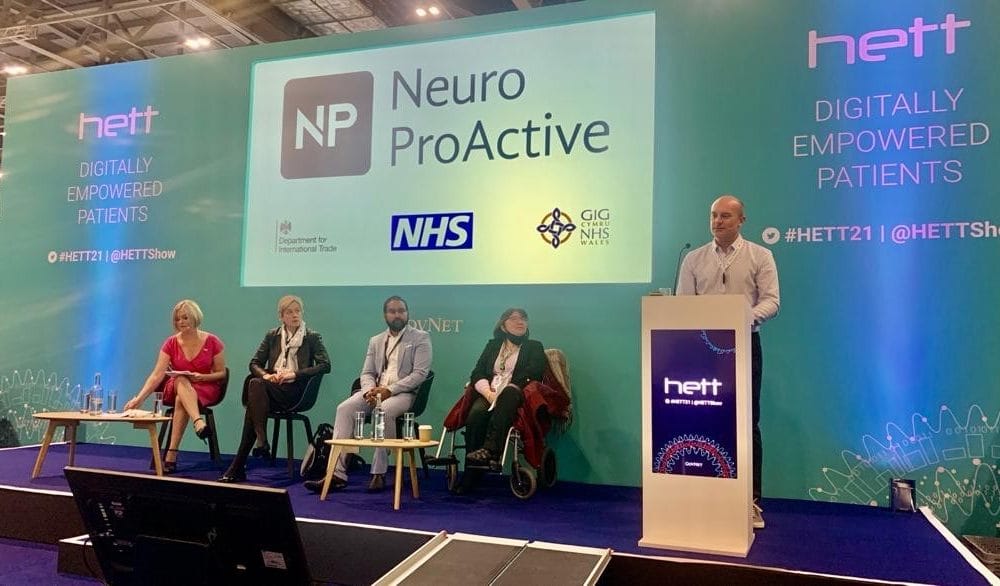
I had been invited to take part in a panel discussion at the launch of NeuroProActive.com at the Health Excellence Through Technology Conference, HETT21, at the Excel Centre. The day trip into London by public transport meant that my carer had to take me in my wheelchair.
Eventually, we arrived at the presentation theatre for the session, called Digitally Empowered Patients.
I noticed that there were steps onto the stage and realised that I hadn’t mentioned to the organisers that I would arrive in a wheelchair that day.
I think that oversight is indicative of a fundamental shift in my mindset. I don’t think of myself as wheelchair-enabled anymore.
Mentally, I have the confidence for speaking publicly about my recovery journey, which is matched by my belief in my ability to walk again at last.
Ian Pearce introduced his pioneering, digital solution that will empower 12million patients living with neurological conditions. Neuro ProActive enables the patient to manage their neurorehabilitation with input from their support team of AHPs and carers.
Next, I was introduced as a patient representative who could voice the experience of patients, on behalf of the 1.3million stroke survivors in the UK. Ian asked me to tell the audience about my recovery journey and highlight the challenges that Neuro ProActive could help to solve for the survivors of the future.
I highlighted three issues from my lived experience of stroke recovery.
- Dislocation: Most importantly, I believe that the availability of Neuro ProActive in hospitals will ease the abrupt disconnection from your normal life to becoming an in-patient.
- Navigation: A big challenge for anyone who’s new to the sector of neurorehabilitation is finding your way. I have discovered that there’s lots of support and expertise available, once you know about it. For example, invaluable resources from the charity Different Strokes PA’s directory will solve many of those problems.
- Repetition: During my hospital pub-crawl, I had to repeat the same information many times, not always with huge confidence. I’d lost six weeks while in a coma. It will be a huge bonus for all details to be captured on Neuro ProActive and to take it with you to new care settings.
After I spoke with Hassan Chaudhury, Digital Health Specialist for Department of International Trade, who explained why this platform has been included in their Companies Playbook as one of the 100 companies selected for their global uniqueness and export potential.
You can find out more about this platform by visiting www.neuroproactive.com