A 15-minute blood test is helping ER doctors avoid some CT scans for suspected brain injuries using only a few drops of blood.
Doctors at UCHealth Memorial Hospital Central and UCHealth Memorial Hospital North in Colorado Springs are using the bedside test to measure biomarkers associated with possible bleeding around the brain.
If the biomarkers are not elevated, doctors can use the result alongside other diagnostic tools and clinical assessment to help determine that a patient does not need a head CT scan.
The two hospitals are the first in Colorado to use the test, according to George Hertner, chair of emergency medicine for UCHealth in southern Colorado.
“I’m really excited about how this changes our care for mild head injuries,” Hertner said.
“We are always at the forefront of innovation and technology, and we are always looking at better ways to serve our patients and communities.”
Hertner’s team began using Abbott’s i-STAT Alinity in December. The handheld electronic device uses a single-use cartridge containing testing materials and produces results at the patient’s bedside.
Before introducing the devices, doctors tested them in 242 patients using both the blood test and CT scans.
Among patients whose blood tests did not indicate a brain injury, CT scans confirmed the blood test results, Hertner said.
Since December, doctors have used the device with about 200 patients. In 80 per cent of those cases, they determined that the patient did not need a CT scan.
The blood test typically costs a few hundred dollars, while CT scan costs vary depending on the scan and facility.
Blood test results are available in about 15 minutes. CT scan results can take up to three hours when the procedure and a radiologist’s interpretation are included.
“Being able to do a blood test is really new and novel,” Hertner said.
“We can look at cell-specific proteins that enter the bloodstream after a head injury. That really lets us reduce the use of head CT scans.
“We are changing the way we approach these patients for the first time in years.”
The test detects two biomarkers that enter the bloodstream after a possible brain injury.
One is Glial Fibrillary Acidic Protein, which peaks in the bloodstream within 20 hours of an injury. The other is Ubiquitin Carboxyl-Terminal Hydrolase L1, which appears within eight hours.
Elevated levels of one or both proteins can indicate a brain injury.
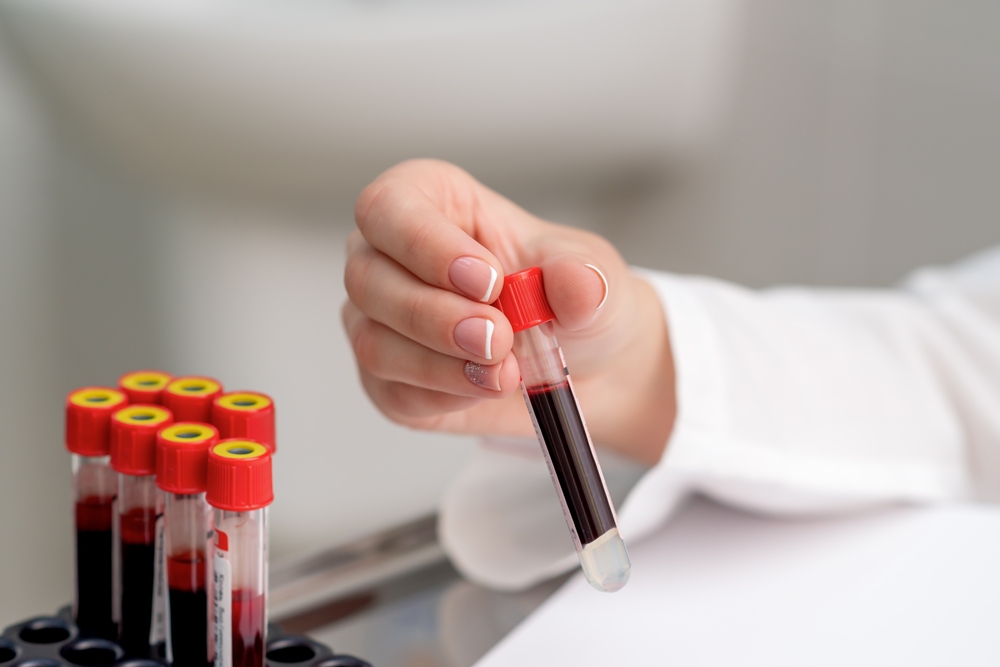
A provider places a few drops of blood onto a cartridge before inserting it into the device. A result of “not elevated” or “elevated” appears within 15 minutes.
If the biomarkers are not elevated, doctors can use the result alongside their examination and other diagnostic tools to help rule out the need for CT imaging.
If levels are elevated, doctors typically order a CT scan.
The test can be used for patients aged 18 or older who arrive at the ER within 24 hours of a suspected brain injury.
Doctors also assess symptoms including loss of consciousness, altered mental state, blurred vision and headache, as well as other traumatic injuries that may independently require CT imaging.
Kayla Boynton, UCHealth’s point of care coordinator for the southern region, helped implement the test and said its introduction required extensive testing and training for ER staff.
“It’s very exciting,” she said.
“This showcases the progress being made in laboratory medicine and in clinical innovation, and that’s what our patients have come to expect.”