A devastating motorbike injury left young student Dominic Hurley fighting for his life, thousands of miles away from home.
But with hard work and the help of his family, Dominic built a new life from himself as a brain injury advocate and prolific fundraiser.
Now a peer support worker, Dominic has raised more than £100,000 for charitable causes close to his heart.
NR Times called up Dominic, winner of the NR Times Lifetime Achievement award sponsored by Proclaim Group, to get a first-hand account of his story and learn more about his career – and literary- ambitions.
Hi Dominic. Firstly, congratulations again for winning the NR Times award.
To kick things off, could you tell me a bit about what was going on in your life at the time of your brain injury?
I was in the second year of a Hotel Management degree course at the University of Birmingham, where we had to do a work placement anywhere in the world.
A friend and I decided to go to Cyprus for a year.
We’d been there for seven weeks. It was hard work and not well-paid. But it was Cyprus and it was sunny.
One night after working a 12-hour shift, we all jumped onto mopeds and headed into Ayia Napa for drinks as we had done many times before. We only wanted a couple as we were so tired from work.
Eventually, we headed back, me with a girl on the back of my bike, neither of us wearing a helmet.
She fell asleep and she assumes I fell asleep and the bike just came to a stop and I fell off and banged my head.
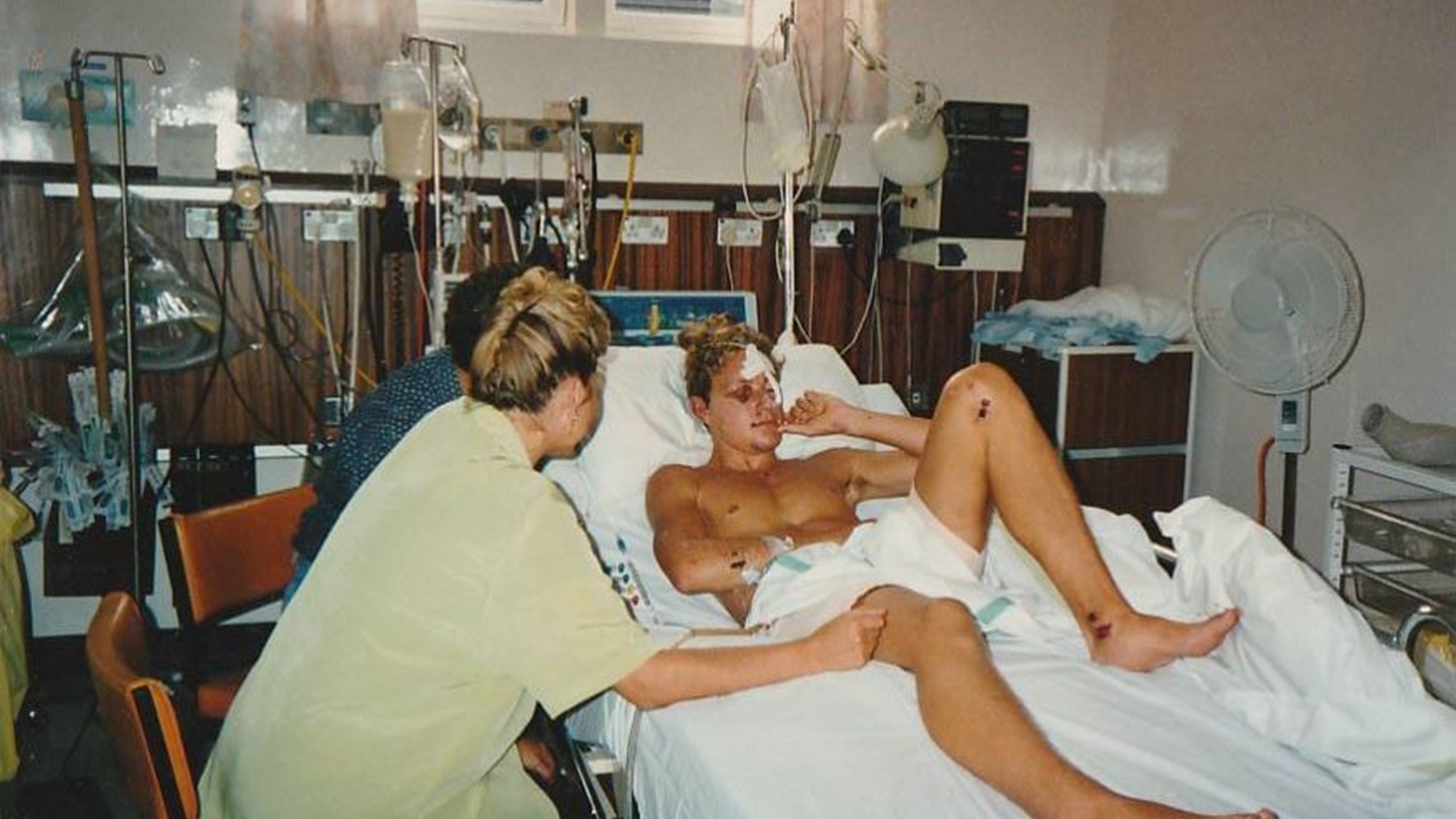
The accident put me in a coma for three months. My parents were flown out at short notice and told that if I lived, I’d never walk or talk again.
It’s been 30 years of hard work, pushing myself and trying to do things, and there was no compensation claim, because it was my fault.
Fortunately, my mum was in a position to retire from work and look after me and take me everywhere, which I didn’t appreciate till about 20 years later.
She was my physio, OT, speech and language therapist.
I then started working in a local pub that I’d worked in before I went to Cyprus.
The manager there was just the same. He was doing my physio, got me doing the quiz as my speech and language therapy, got me helping with the books, doing the pipes, everything.
He put his business in my hands. He was always there with me. He really helped me.
That’s amazing. I guess when these things happen, you don’t necessarily know who is going to step up and support you.
Yeah. I thought I’d never work again. His response was not at all what I expected. He was amazing for me.
What kind of formal rehab did you have at the beginning?
I did physio once a week, had a couple of sessions of speech therapy and did some OT.
I didn’t get on with the first therapist. Not because she was bad at the job, it was about me. But the second one was better. She asked what I was doing before the injury and what what I wanted to do now.
She got me back to college and using the computer that the pub had bought for me.
You led a very active life up until your injury. What did you transition from that to having to adapt to your new brain and limitations?
Hateful. It was just an awful, awful time.
I got on the plane to Cyprus as a 21 year old without a care in the world. Everything was going good.
I’d had a lot of injuries before with my legs and stuff. But everything I touched kind of turned to gold. Everything was perfect in life, family and everything.
Then it was like being thrown back to being a child again, having to live with my mother after being away at university.
That was so hard to come to terms with. And I don’t think I did come to terms with it until years later.
We didn’t know of anything like Headway back then. It felt like I was the only person in the world with a brain injury. Now as a peer support worker, I can show people what they are capable of.
How did that job come about?
A guy I knew from Headway offered me the chance to do peer support work. I now work for Ariya Neurocare, working with people who’ve had brain injuries.
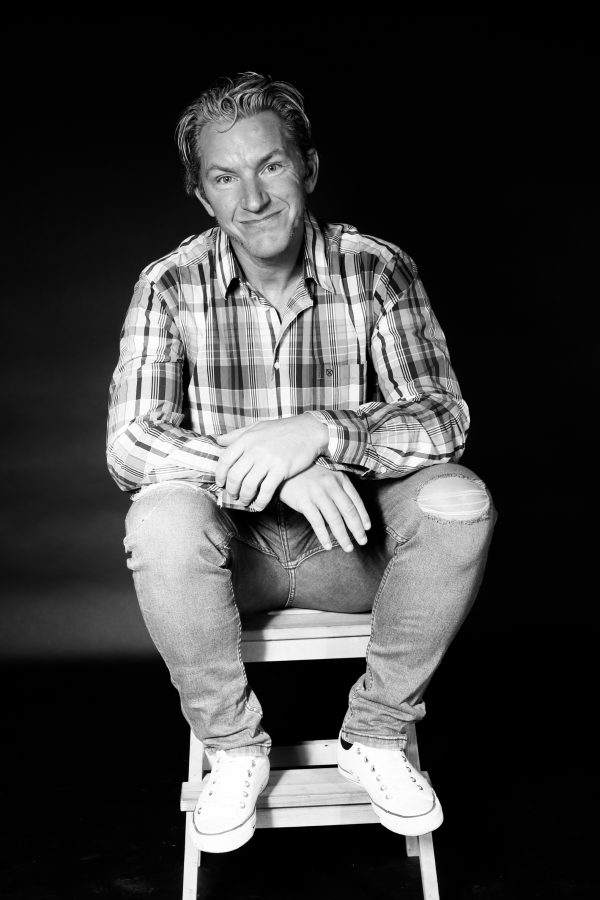
Dominic today
What common questions do you get from the people you work with?
It’s never really a question and answer. It’s just addressing the frustrations and working through them.
Without being big headed, I can honestly say that I know how they feel. Other staff can say that but they can’t really understand. So I can talk to them in that way.
Every day is completely different and every person is different.
Their life before the brain injury matters too.
They have the accident at, say, 50. But we don’t know the 50 years before that. We’re working with that period since the brain injury and it matters so much.
That’s why I’ve been working on my book. I’ve written about 90,000 words so far and am looking to get it published soon.
It’s my journey from my birth until now. It’s not just my brain injury – that was just a small part of it.
90,000 words – that’s quite an undertaking.
It’s been years and years.
It’s just started out as a memory aid to write things down I remembered them, which I’m glad I did because I wouldn’t remember them now otherwise.
And I just kept building it and building it. I might not write anything for six months or a year, then I write a bit more and stop again.
Now I’m hoping to get my mum’s side of it, as well as the girl I went to Cyprus with and then it should be ready.
Well, that’s exciting. What else do you have planned for this year?
I’ll continue with the peer support stuff. I’ve probably finished the fundraising bit because I’ve raised over £100,000 which is a nice figure to end on.
I’ve also just started another peer support role on Mondays.
I teach spinnings between seven and 10 times a week at the gym as well. I also try to do extra work on films, so I just don’t have the time to fundraise anymore.
It’s just about carrying on and working and building in this role.
Even today, I’m still learning on the project, and working how to deal with staff and so on. So I just keep doing as I am right now, and keeping going.