



Pain doesn’t just challenge your body, it tests your identity, patience and ability to hope

Our latest patient story we share Natalie’s experience of chronic pain after spinal cord injury following a workplace injury
Natalie McCreith (39) from Southport was left with a life-changing spinal cord injury after a half-tonne steel beam fell on her in a workplace accident.
Now left with chronic nerve pain, she discusses the impact on her life and how she is inspired to live life to the full.
Before her injury, Natalie worked building ice rinks around the UK, including building rinks for Dancing on Ice and Somerset House. Natalie said, “Life was great, a constant adventure. My body was healthy and strong. My personality was bold and fun; I would give anything a go. My mind had space for myself, my family, and the community of friends I cared deeply for. I had time for people, their stories, and feelings. I loved motivating and inspiring others, helping them see their own potential.”
After a workplace accident, Natalie was flown to hospital, where she found she had sustained a spinal cord injury in her thoracic spine, had broken her tibia and fibula, as well as most of her ribs, and she had punctured her lung. She remained in hospital for three months where she underwent intensive physiotherapy to aid her recovery.
As a result of her spinal cord injury, Natalie was paralysed from the waist down, lost sexual function, and was experiencing nerve pain. While she eventually regained a lot of her movement thanks to intense physiotherapy, she has been left with chronic nerve pain that she describes as “like your body’s screaming and it doesn’t quite know what way to turn.”
Natalie said, “It’s not just the nerve pain as well. Your hips don’t want to work, your back doesn’t want to work, and then the nerve pain feels like a vice in my bum and it’s the most painful thing in my life. It misses the middle of my legs and goes into both feet, and it feels cold and like it’s burning at the same time. And then when I walk, it feels like I’m walking on glass and it never gives up. It’s there all day, every day, and I can only hope it dampens down a little bit.”
Natalie has tried various pain management methods, including attending a six-week pain management course, taking pain medication, and doing hydrotherapy and acupuncture. While she finds that acupuncture offers some relief, her pain is constant and she has been told that it is unlikely to ever go away completely.
For Natalie, her connection with other people has been the hardest part of her spinal cord injury, including their reaction to her pain. She said, “People don’t understand your pain because people have never felt nerve pain, and I can’t expect them to understand. We can all talk to people about pain and they can pretend they understand and are listening, but most of the time once you say something that’s a bit negative, they’ve gone or they’re waiting with a story about something that hurts on them. There’s very few people who can hold space for somebody, and that’s not just with pain, that’s normal life. That’s how I feel.”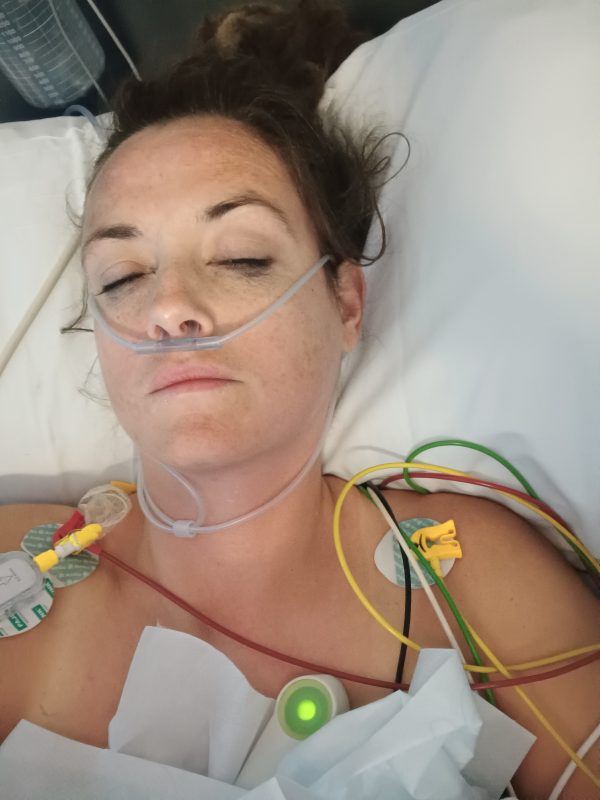
Reflecting on her relationships, Natalie said, “What upset me the most is I’ve always been the person that if anything happened, I would drive or climb whatever mountain to get there. It made me feel lost, scared and invaluable to the most important people in my life.
“Relationships are still okay because the people around me love me and they understand what’s going on and they give me the space when I say I can’t come because I’m too tired or I’m in so much pain. But for me, that’s a whole part of my identity that feels like it’s gone because I’m no longer the hero that’s going to protect you. I’m now a vulnerable person who can’t even protect myself if something happens.”
A representative from national spinal cord injury charity Spinal Injuries Association said, “Chronic pain is a little-known effect of spinal cord injury that can have a life-changing impact. For many people like Natalie, loss of mobility is just one part of life after spinal cord injury, and the unseen effects are just as life-changing as the effects others can see. As a charity, we hear from people like Natalie every day who need more support, compassion, and understanding when it comes to their chronic pain.”
Natalie’s determination to live a full life has kept her going through her pain. She said, “My pain’s been a 10/10 for so long, so what’s the point in not pushing through it? Through all of this, I have discovered the incredible strength of the human mind and spirit. Pain does not just challenge your body, it tests your identity, your patience, and your ability to hope when every part of you wants to give up. But it also teaches gratitude, resilience, and the value of each small step forward.”



