




In the 30 years it has been in operation, Community Case Management Services has established a reputation for its high quality service and commitment to clients, with its heralded international trips being truly life-changing for many. In the latest of our case management focus features, NR Times learns more about the development of the company and its future plans
Why was Community Case Management Services established and what was the ambition? How has the business developed over time?
Community Case Management Services Ltd was established in 1988, when co-director Maggie Sargent saw there was a need for those who had suffered catastrophic injuries to have person-centred, therapeutic rehabilitation goals to support them to achieve their own personal goals. Many people who had suffered life changing injuries needed support, and Community Case Management Services Ltd were able to act as an advocate for them to achieve their potential with their care and rehabilitation.
Maggie was a co-founder of the British Association for Brain Injury Case Managers now known as British Association for Brain Injury Complex Case Management (BABICM), and this is where the guidelines for case management were defined. By adopting and incorporating these guidelines, Community Case Management Services Ltd were able to develop and take on more complex and challenging clients.
 Kate Russell became a co-director in 2008. She was fundamental in establishing a comprehensive Case Management Development Pathway Programme. This provides the independent case managers who come on board to work with Community Case Management Services Ltd, a full understanding of the litigation process that our clients are going through to gain the settlements through court for their injuries. It introduces the bio/psycho/social model needed to try to put the client back into the position they could have been in, had they had not had their injury.
An essential element of case management is to draw on the clinical skills of the case manager to identify needs and for them to work closely with other disciplines to provide cohesive rehabilitation ensuring that all work from a goal based platform with measurable outcomes.
Thirty years later, the company has over 60 experienced and skilled case managers from a range of disciplines, Nurses, Occupational Therapists, Physiotherapists, Speech & Language Therapists and Social Workers. This number also includes the Assistant Case Managers, who can support the case managers with their clients where clinical skills are not required.
As the company grew, behind the scenes our head office team grew too. We introduced our HR Liaison & Recruitment Manager, who then took a lead with developing the HR liaison and recruitment team to assist and support clients with directly employed care and support personnel. All of the HR and recruitment activity is undertaken collaboratively with the case manager, and the employer (being a deputy or trust corporation usually), with a specialist focus on recruitment and retention, meeting regulatory compliance for those providing care, and with adherence to employment law.

An Operations Manager was essential to provide peer support to the case managers and to manage the day to day business. To ensure that we met regulatory compliance, we recruited our CQC Registered Manager to oversee our quality standards. We have an IT and Information Governance Manager whose support ensured business continuity throughout the pandemic, optimising hybrid working with the use of remote means such as Zoom and Teams becoming second nature, along with taking a proactive lead in ensuring we met our GDPR requirements. Our infrastructure has improved greatly from those early days, and we also have a solid administration team, who are the backbone of the company, led by our Office Manager, they diligently ensure we maintain our high quality standards.
Nearly three years ago we introduced our Clinical Governance Team, who meet weekly to discuss high risk critical clients and incidents, manage clinical issues as they arise and develop best practice. Case reviews are carried out with each case manager to provide professional support and guidance, and ensure they are providing a proactive biopsychosocial approach to their cases and maintaining compliance with regulatory standards. Our governance covers the due diligence that we carry out with all privately appointed treating professionals, to ensure they are fit to practice their therapies with our clients and their teams.
Community Case Management Services Ltd realised clients needed more than rehabilitation goals they needed a life! …a need to travel, to work, to socialise, and with that came the Community Case Management Services Ltd strap line ‘Life is for Living’. We then began to explore options for clients which included purchasing a farmhouse in France and completely refurbishing it so that it became fully wheelchair accessible, with a specialist adapted adjoining gite for high level disability needs, and rooms for the clients to take their carers.
We encourage our clients to meet up and gave them group opportunities to socialise. In 2011 Maggie established the Oxford  group of the Silver Lining Charity and later the Bristol group. The group provided a much welcomed social forum and activities for its members with brain injuries. Lasting friendships have been formed, but it also supports its members with vocational needs and work with them to get back into their previous job or hobbies.
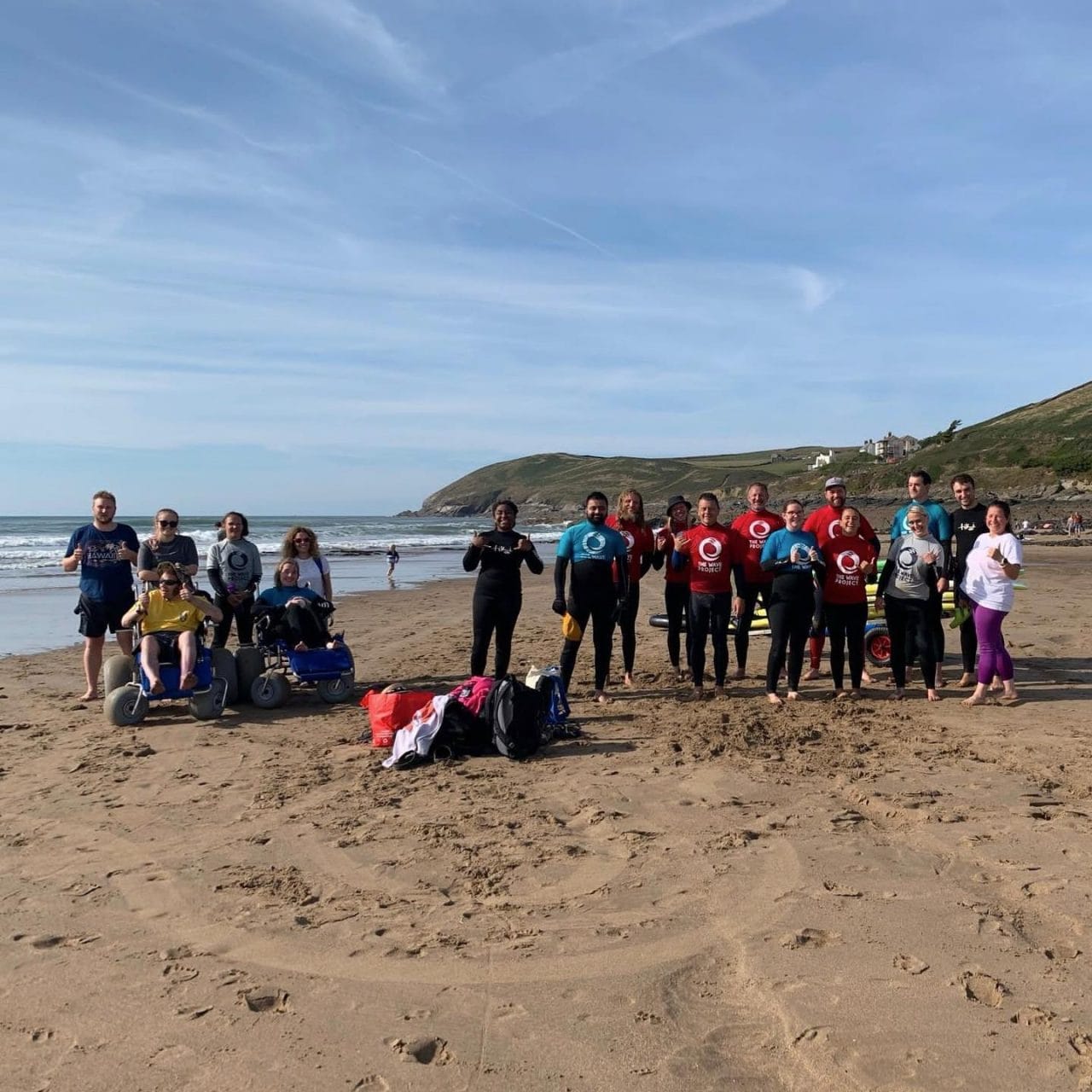
Maggie and Nicola Cale (Case Manager) are famous for their ski trips, safaris, and surfing trips, where innovatively the leisure activities incorporate therapy and fun. Clients are able to increase their quality of life through these adventures, which also increases their functioning ability. They are supported by their care and support teams who are fundamental to the success of the trips.
We have kept a lot of original clients over 20 plus years and have grown with them. Some we met as children and have become adults and the adults become the elderly, all needs are managed and all are at different phases of life – sexual relations, parenting, going back to work the list is endless.
How did the team adapt to the many challenges presented by COVID-19?
Our head office team adapted brilliantly and were extremely quick to adapt to the ‘virtual workplace’ and there was no change to the services that we provide as support to our case managers, clients and their care and support teams.
We already had a phone system that could be used away from the office and our IT Manager was quick to respond to ensure that all team members had laptops available which meant we could leave the office and work fully from home – we were ‘business as usual’ from the moment we left the office for the first lockdown! We did have one team member based at the office to deal with incoming post and other office-based tasks so that our office functions were not disrupted, and our team remained as safe as possible under the lockdown restrictions.
Some of our office team continue to work remotely, while we do now have an increased presence in the office, we continue to observe social distancing and cleaning protocols along with regular testing. Team meetings still take place virtually via Teams and it allows us a better opportunity to capture the whole team, rather than just those available at the office at any one time.
As for our independent case managers and clients, the client’s needs always come first and with the correct safety measures in place we were able to visit face to face if vital, but many utilised the available technology. Some of our clients have become excellent at Zoom, with the support of their care and support teams. Where meetings in person were essential, the case managers carried out full and thorough risk assessment and full PPE was worn.
Community Case Management Services Ltd supported case managers with as much information and guidance as possible. The case managers produced risk assessments and contingency plans and supported clients and their families with understanding the guidelines. The care and support teams that work with our clients are employed by the client, or their representative. This meant that they could carry on providing the care and support and had as little cross over as possible during hand over. There were many of the care and support teams that went above and beyond for our clients, and we cannot thank them enough for their dedication and hard work.
Of course, lockdown was hard for our many of our clients, however we tried to introduce the new normal and hosted online discos, quizzes and continued virtual therapy sessions. We will of course continue to use technology, as we did before the pandemic, however, will continue virtual internal meetings and multi-disciplinary meetings where possible.
What are your priorities going forward?
 Firstly, and fundamentally we aim to continue to keep our clients safe. Many clients have had delayed or interrupted rehabilitation which may have set them back. So we need to help our clients to get back to how they were, whilst maintaining a balance as the pandemic eases and always to be aware of the risks.
We are looking forward to reintroducing more skiing trips, vocational experiences to the orphanage in South Africa and trips to our farmhouse in Camprond. This year we hosted a surf trip with Covid risk assessments in place – it was a huge success and clients were delighted to have some normality back in their lives.
What does the long term future look like for Community Case Management Services?
Our ambition is to continue to help as many people as possible to achieve their best quality of life and achieve the right level of independence for them.
Community Case Management Services Ltd has developed and grown over the last 30 years. As a company we have become more confident in what we can offer, due to the increase in client base and number of case managers who choose to bring their expertise and knowledge to us. We have learnt a lot about our clients and what is available for them, for example the ventilator scheme, that wasn’t possible 30 years ago.
The company remains independent and privately owned, but the longevity of the company is due to the high standards of quality and excellence we continue to uphold. This will continue, to provide our clients with the best possible outcomes for their care and rehabilitation.
We look forward to the next 30 years and all it may bring!


