Redefining rehab: first-of-its kind ward gets set to open
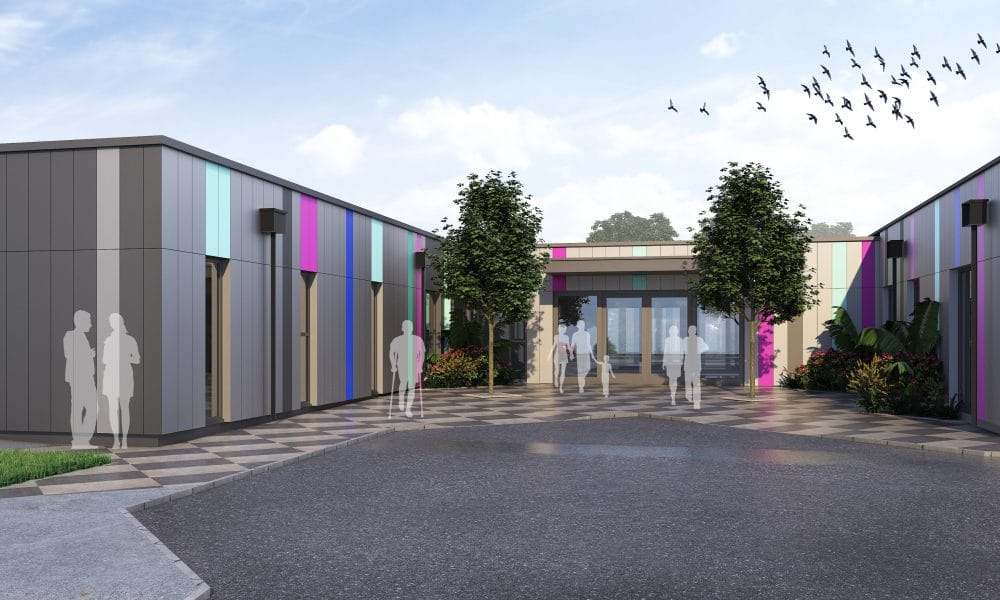
As the new Castle Hill Hospital rehab ward gets set to open, NR Times speaks to Dr Abayomi Salawu, whose dedication to achieving goals through rehab, and passion for using VR and AR within it, is putting Hull at the forefront of the UK
A new NHS rehabilitation centre, which will be the first in the UK to incorporate digital technology and virtual reality into its rehab offering, is set to open its doors.
The purpose-built ward at Castle Hill Hospital in Hull will have 12 beds and has a range of facilities, including a gym, therapy room and garden area, to enable a comprehensive rehab offering to be delivered.

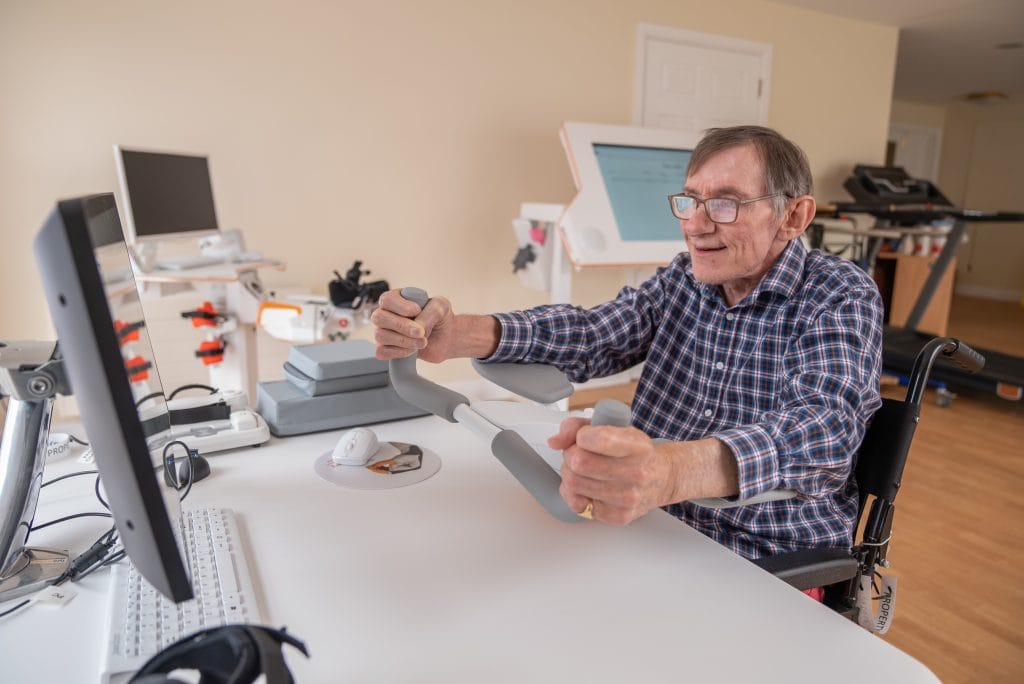
It also becomes the first NHS inpatient rehabilitation unit to incorporate digital technology, including virtual and augmented reality into its rehabilitation programme, after Hull hosted the UK’s first successful clinical trial of the GEO robotic gait trainer in 2017.
Patients are expected to move into the new building – the first purpose-built NHS specialist rehabilitation centre across the Humber, Coast and Vale area and neighbouring Lincolnshire – in the coming weeks.

“This new building brings rehab into modern life. Previously to this, we had our rehab unit as part of the cardiac ward, and more recently in the oncology section, but the limitations of not having a dedication rehab ward became obvious,” says Dr Abayomi Salawu, consultant in rehabilitation medicine at Hull University Teaching Hospitals NHS Trust.
“Our role in rehabilitation is to help restore function and enhance quality of life for people with complex health needs so that they may go on to live fully and meaningfully, not just exist.
“Normal hospital ward environments aren’t generally suited for this purpose, especially in the case of patients with acquired brain injury or physical and cognitive deficits.
“This new ward will give us the space and the facilities we need to provide specialist rehabilitation input to the highest level, and will also deliver an environment which is more conducive to patient recovery.
“We have 12 beds, we do need more, but while acute clinical care and public health have both received significant investment for many years, rehabilitation – the third pillar upon which the NHS is built – has sadly lagged behind.
“So our new rehabilitation ward is a really significant development and definitely a step in the right direction.”
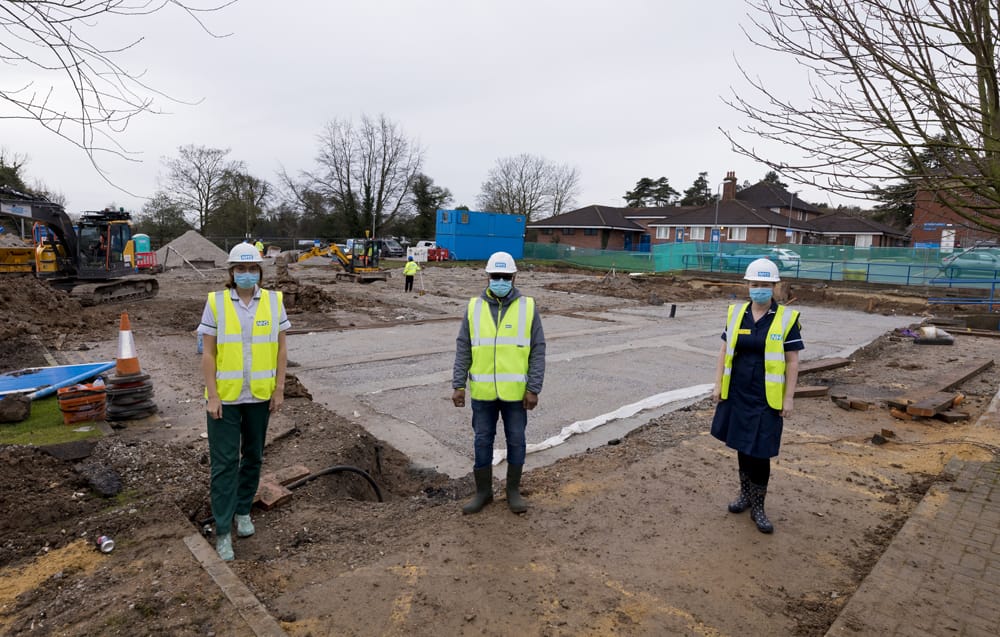
On site during construction (l-r) Madeleine Leetham, senior occupational therapist, Dr Abayomi Salawu, consultant in rehabilitation medicine, and Lisa Cunningham, ward sister
Redefining the traditional definition and practices of rehab is something Dr Salawu has long been committed to, and that extends into the ethos of the Castle Hill ward.
“We offer complex rehab, if the nurses or staff on any ward think they have a patient who could benefit, then they can come to the new ward,” he says.
“Life has to be about more than going to the toilet and the whole ethos of being able to conquer that starts by conquering your first environment, which is hospital.
“The approach that has always been taken often makes a patient more poorly, in a way. I’m not underplaying physical injury, but in an NHS hospital, the first thing we do is give someone a bed, even if they walked in. A lot of people become de-conditioned when they are hospitalised, and that’s making patients worse.
“If you can get a patient as physically fit before surgery, through ‘pre-hab’, then that can make things so much better before and after. With our amputation patients, we do the ‘pre-hab’ work with them and it’s so successful we can then pick them up after surgery as an outpatient. We haven’t used our rehab beds for amputation patients for four or five years now.
“Another thing in rehab is that there isn’t always a cure, but that doesn’t say you can’t live life well and meaningfully. If, for example, you have a child with Cerebral Palsy, then that condition isn’t going to be reversed – so let’s move on and find out what we can do. How can we enable them to do things and how can we support them in that?”
One key way of engaging patients is through technology, believes Dr Salawu. In addition to the therapy work of the MDT, Dr Salawu is a firm believer in the power of virtual and augmented reality, and is so invested he is even leading the development of new apps.
“I’m a firm advocate and believer in technology, I’m totally sold that this helps rehab. I always look for whatever low hanging fruits we can use, and technology is something we can use. It’s easy, quick, achievable and doesn’t cost a massive amount,” he says.
“We use virtual reality and augmented reality and we have linked in with Hull University to develop a virtual kitchen app, which patients can interact with virtually and then use their skills to replicate the tasks with their OT in the real-life kitchen.
“It’s all about practice, practice, practice. That’s what helps recovery and that’s what rehab is about. But practice is boring, for a lot of people rehab isn’t exciting, and that’s the problem.
“If you want someone with a paralysed limb to practice moving it, if they try a few times and their limb doesn’t respond, even the most motivated patient will give up. But if you translate that into a virtual environment, where you can move your virtual limb in a virtual world, then that might give the opportunity for some recovery – and psychologically can be very important.
“The more opportunities you give to the patient to practice rehab, so they can maintain or recover their function, the better. That’s why VR works so well, because it’s fun it makes rehab more engaging.
“That’s where we should be pushing, to empower patients to take over their own rehab.
“I said to the computer scientists that I hear video games are addictive, could they please create some addictive rehab for my patients so they would become addicted to their practice!
“But we also have a quiet room in the new unit, where patients can use the immersive environment of a VR headset to be calm, de-escalate, become less agitated. We have developed the Brain Recovery Zone app, which is very calming and soothing, and can be used by patients in their own homes as well.
“Through putting on a headset and being in that calm environment, that can also be very important in rehab.
“For my patients, I’ll say ‘Whatever floats your boat. Try things in rehab, see what you enjoy and what works’ and we’ll see what we can achieve. I want to empower patients to take control of their rehab however they can, and by using these pieces of technology, we’re seeing great results.”