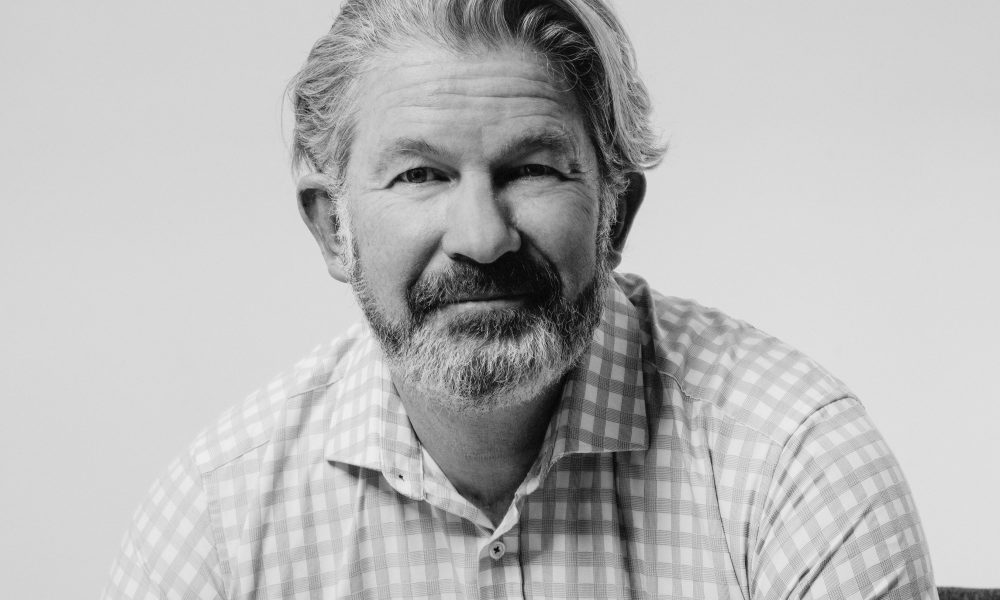
Dr Bruce Powell was Australia’s longest-serving state director of organ and tissue donation, an experienced anaesthetist and head of an intensive care unit before an horrific cycling accident halted his career.
During his 25-year career, Dr Powell worked as a medical officer with the Royal Navy, and as a kidney specialist, intensive care doctor and anaesthetist in the Australian health system.
He led a new intensive care unit in Western Australia’s Rockingham Hospital and after introducing an organ donation operation within the facility, he was asked by the Australian Government’s organ donation authority, DonateLife, to lead their work throughout Western Australia.
But his impressive career would come to a dramatic end in September 2018 when he took a trip to the east coast of Australia to compete in a charity bike ride on the Great Ocean Road.
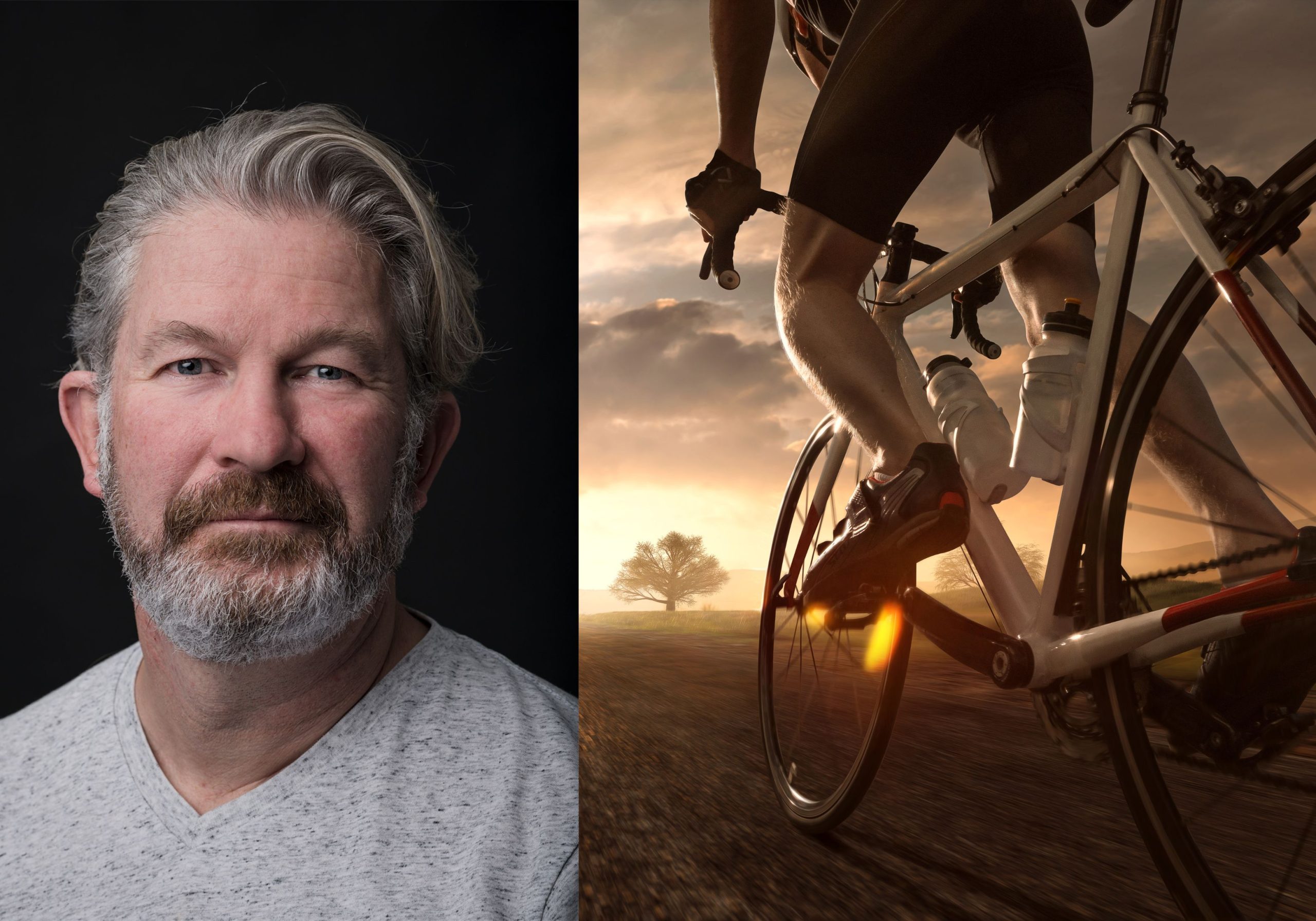
On a long, steep slope into Apollo Bay, he careered into a hairpin bend that he wasn’t expecting. He flew into the high grass verge and catapulted off the bike headfirst into a road sign. He was travelling at 65 kmph.
Bruce shattered his jaw and broke his neck, hands, ribcage and lower spine, while also rupturing his lung, kidney and liver. His helmet was destroyed and his right ear was partially torn away.
He lay on the roadside alone, unconscious and with a blocked airway until another cyclist, who happened to be a critical care nurse, found him and cleared his blood-filled airway, saving his life.
He was flown to the Royal Melbourne Hospital for emergency operations and woke a week later in intensive care.
Miraculously, Bruce survived the shocking incident and is now a vocal advocate for neurorehabilitation and brain injury.
He spoke to NR Times about life after the accident and his path to finding a “new normal”.
NR Times: What do you remember of the immediate aftermath of the incident?
Dr Bruce Powell: I remember only brief flashes of the next few months. Waking up in ICU was disorientating and distressing. I was tied to the bed, both arms plastered and my neck in a rigid brace. [My wife], Anita was there.
There is very little else that I remember about the rehab in Melbourne or indeed the following 12 months.
So many remarkable health colleagues, teams of intensivists, trauma and rehabilitation staff, friends and family, all forgotten.
I put on a good act. No one really knew how badly I had been affected, but Anita knew.
What have been the longer-term impacts of your brain injury?
Eighteen months later, I tried to go back to work. Medicine was all I knew. It defined who I was. I was desperate to rediscover my old self. My carers and my professional support were all tirelessly optimistic, telling me [I’ll] “find a new normal”. But I didn’t want a new normal, I liked the old one.
My return-to-work plan started with just two hours per day, two days per week at DonateLife. Returning to work is such an easy trap to fall into. We seem okay but we’re often not. I coped because of a quiet home life and an attentive wife.
I didn’t manage the finances, the ongoing insurance issues or the mortgage. I just got dressed and watched TV. I walked the dog sometimes and sat by the ocean watching the kite surfers fly.
Work was exhausting. I wasn’t allowed to drive so I caught the train. I often got on the wrong one.
The doubts and the emotional instability were an ever-present drain on my meagre levels of emotional energy and cognitive ability.
My fatigue had me confused but I didn’t share my distress. I didn’t want the label “brain damaged”. I didn’t want the sympathy.
Sometimes it was impossible to hide. I would struggle to understand TV programmes, especially subtitled dramas. I’d slur my words as the evenings wore on.
Mental tiredness was so painful that I dreaded socialising and looked forward to the peacefulness of the bedroom.
I cried a lot too, my emotions barely under control. I was often afraid. Chance meetings with past acquaintances, unplanned phone calls and spontaneous visits from kind neighbours were all things to be avoided.
Can you take us through your rehabilitation process?
There have been two very distinct periods of rehabilitation for me. Having survived the acute trauma and finding my way out of the intensive care and the trauma wards, I was transferred to the Epworth Hospital for rehabilitation.
I still had metalwork in my face and hands, as well as the painful aftermath of my shattered chest and collapsed bleeding lung.
I found that the stronger painkillers caused me to be even more disorientated and labile so I stopped them. None of these decisions I made were wholly my own, but more the sort of advice I might have given a patient of mine.
I don’t remember the days and the weeks as such, just a vague impression, like someone else’s story that I was reading through.
I went to the gym every day. I would ride the exercise bike like a man possessed, until I fell asleep, legs still turning. I had many sessions with the occupational therapist.
She held up a mirror and had me see my mental limitations. She had me acknowledge that I had to try harder and not [mess] around. I used to be really smart. Photographic memory my wife would say, but not anymore.
You have spoken before about the guilt and shame that came with surviving the crash with your spinal cord intact. Can you talk about these feelings and emotions?
It was almost a year before I was seen by a doctor. I had moved back to Perth but there was a huge backlog of patients. I had already been plugged into the rehabilitation scheme through my involvement as an executive of the health system.
Outpatient appointments were not the solution to my, or my family’s, challenges. An hour every four weeks left swathes of time when I was alone with my confusion and loneliness.
I sat quietly and watched people, properly crippled people. People with catheters and NG tubes. People without legs, contorted faces, twisted in spasms of agony as if their accident had just occurred.
I felt sorry for myself when I first sat down on a plastic chair, rather than a wheelchair, but now I felt guilty, attention-seeking [and] self-centred.
Just after your accident, your carers told you would “find a new normal”. What does this new normal look and feel like?
Let me first say, I don’t want a new normal. I don’t like the new normal. The new normal is uncomfortable. Uncertainty abounds. I try to simplify life by hiding away but I need others’ love and attention.
I need others’ kindness and difference lest I disappear into my own small world of regrets. I want to be the husband that my wife deserves and a father whose sons might ask for advice from some day.
I want to mean something, be someone other than a survivor. I didn’t choose to survive but here I am. It’s difficult to express a survivor’s guilt and hard to justify a sense of depression when I am so able, yet there it is.
I will make it worthwhile. Change something. Do something. I just need some time to get my strength back, assemble new allies and understand the rehab space better.
What has been the impact of your injury on your mental health and how do you try to stay positive?
It is a constant fight. “Feigned indifference” is my shield and “dark humour” is my trusted blade. There was a time when I decided to give up. I was numb and exhausted, I didn’t care. I made a plan and wrote it as a chapter in my memoir. High building, headfirst.
I don’t think anyone else was supposed to see it, but I didn’t really care anymore. I knew that high-speed collisions only hurt if you woke up.
I wrote it all down so that I didn’t forget. I told my psychologist too. He didn’t believe me. He said, “I don’t believe that you don’t care Bruce”.
I stormed out but a fortnight later, I was back. Not dead as it happened. It turned out that I did care. I was tired of feeling sorry for myself.
The next time I sat in that clinic, I saw the wheelchairs and the tubes. I didn’t feel guilty that my arms and my bladder worked. I felt sorry for the other [people].
What is the standard of care like for brain injury patients in Australia?
The inpatient and long-term chronic aspects of care for the brain injured are reasonably well-developed in Australia.
Naturally, there are things that could be done better but there seemed to be a lot of work going on in those spaces.[But] the interim period between intensive inpatient care and outpatient long-term provision was a long and lonely one.
We had no contact with the brain injury community that is still in its infancy in Western Australia.
Of course, the immediate discharge period is also a crucial one in the rehabilitation story, a time when ceilings of care are defined or broken through.
The level of function also defines the long-term costs of care for both the patient and their family. Levels of dependency are intimately related to function and independence.
The period after leaving hospital appeared to be largely dependent upon family and friends. Rehab services were slow to engage and seemingly somewhat haphazard.
I was one of the lucky ones. So many others had to battle their way through disability and financial assessments. 20-30 pages of questioning, and hours of appointments to attend, all in the context of a brain injury.
Many would never complete that process because it was too hard.
How did you get involved in the advocacy side of brain injury and what are your ambitions in this space?
I kidded myself for a while that I could return to work. I could have pretended for longer, but as my insight returned, so did my apprehension. I didn’t know this anxious uncertain character and that was deeply unsettling.
The day approached when I had agreed to return to anaesthetics. The surgeon I worked with told me it would all be okay but I knew it wouldn’t be okay.
I didn’t think that I would kill someone but I knew my brain would snap under the weight of what was expected of me. I stopped sleeping three days before I was due to anaesthetise again and I gave up trying to find the old me.
Having admitted to myself that I couldn’t work, I made ambitious plans to create a whole new advocacy role for myself. I do not have the capacity to lead organisations like I used to but my instinct is to contribute as best I can.I am only one brain injury survivor and I am also incredibly lucky.
I figure I have a duty to do as much as I can. Now that means sharing my story and listening to others. I can only speak for myself when I say that rehab saved my life. I am committed to paying back some of that debt.
Ultimately, healthcare is a political decision and I see my role as availing politicians of the knowledge and data that allows for the best care for those in rehab on the basis that it is the smart, strategic thing to do.
I would like to advocate for rehabilitation as a generous, prudent investment in human beings. The more we invest in rehabilitation, the more the vulnerable and the traumatised will give back.