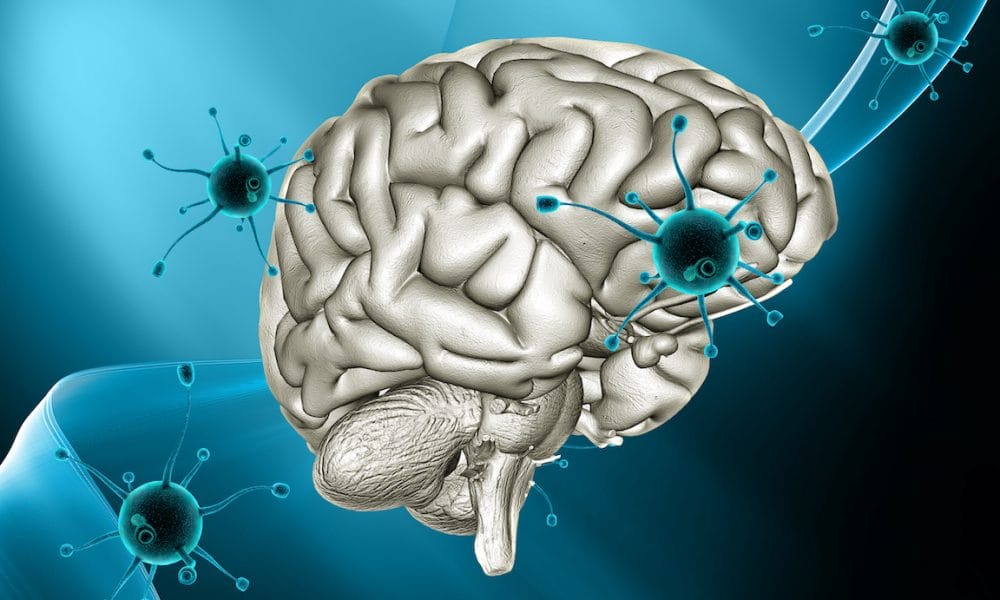
Closer examination of the COVID-19 virus revealed that it can infect both the neurons in the brain and the astrocytes that support and protect these.
When it enters the respiratory system, SARS-CoV-2 begins to infect cells by grabbing hold of the proteins on its surface, which are known as angiotensin-converting enzyme-2 (ACE2).
It was previously unclear whether neurons and astrocytes had the ACE2 protein, but by exposing them to a safely modified version of the virus researchers were able to determine this was the case.
This helps better understand why some patients show neurological symptoms when they contract COVID-19 as these astrocytes are the main pathway to the brain.
Scientists from Louisiana State University have now predicted that stopping these cells from getting infected could prevent any further damage to neurons.
Both types of cells were able to carry the virus but researchers noted astrocytes had a much greater resistance to it.
The study’s first author Ricardo Costa said: “Our findings suggest that astrocytes are a pathway through which COVID-19 causes neurological damage.
“This could explain many of the neurologic symptoms we see in COVID-19 patients, which include loss of sense of smell and taste, disorientation, psychosis and stroke.”
A growing number of research bodies are now looking into the effects coronavirus has on the brain.
One example NR Times recently reported on was a University of Liverpool study which received £2.3 million in funding to monitor 800 COVID patients.
The links between the two have been known for some time now as one paper from last year highlighted, saying those who contract the virus can experience similar symptoms to brain injury survivors such as brain fog, fatigue and headaches.
Other more serious conditions could also develop from coronavirus, as a University of Oxford study revealed, saying the likelihood of a patient enduring dementia, depression or a stroke were all increased in COVID patients.
Keeping SARS-CoV-2 out of astrocytes could be key to preventing symptoms like this as once they are infected they can easily pass the virus on to other neurons.
“While astrocytes display a higher resistance to infection, neurons seem to be more susceptible,” said Costa. “This suggests that only a few astrocytes getting infected could be sufficient for the infection to quickly spread to neurons and multiply quickly.
“These observations could explain why while some patients do not have any neurological symptoms, others seem to have severe ones.”
The research developed by Costa and his team is set to be presented at the American Physiological Society annual meeting which is being held virtually between April 27th-30th.