Andrew Mernin heads to Birmingham to meet the experts, inventors and pioneers seeking to advance neuro-rehab this year.
A health journalism cliché to emerge from the pandemic is that medical organisations – whether tech, care, pharma, research, private or public – are more collaborative now.
Contributing to this idea was the relative swiftness with which vaccines were developed, thanks to various vast health and life science agents working together more closely than ever before.
Also a uniting power were the challenges of social distancing and the new ways of working they forced.
Any visitor to the Neuro Convention, in Birmingham, UK, could see plenty of examples to back up the case for this post-pandemic spirit of collaboration.
It is a fact, however, that the neuro-rehab sector has always been more collaborative than many other healthcare fields even before the pandemic.
Managing catastrophic injuries, brain and spinal conditions and complex disabilities requires a cast of professionals and innovators. They coalesce for the common good in many ways, including in multi-disciplinary teams and through the assembling call of the case manager.
Here at the mammoth National Exhibition Centre (NEC), the Neuro Convention is taking place alongside Naidex, the UK’s national accessibility, inclusion and disability expo.
While a whistlestop tour through the latter is dominated by slickly presented mobility tech and accessibility vehicles, it is exoskeletons and robotics that catch the eye on first entering the NC23.
Organisers have created an area dedicated to these technologies – less a market square of product makers peddling their wares and more a futuristic zone with a helpful cast of rehab robotics innovators and tech-savvy neuro physios.
Here cross-company collaboration is alive and well. Where exhibition stand boundaries may be fiercely defended at the big health and med tech conferences, in this corner of NC23 some of the world’s leading rehab tech pioneers are intermingling and discussing ideas and approaches.
While a few share the same distributors so are understandably amiable, everyone we speak to also seems to share a recognition of the collective need to help more people access exos and rehab robotics in the years ahead.
ExoAtlet
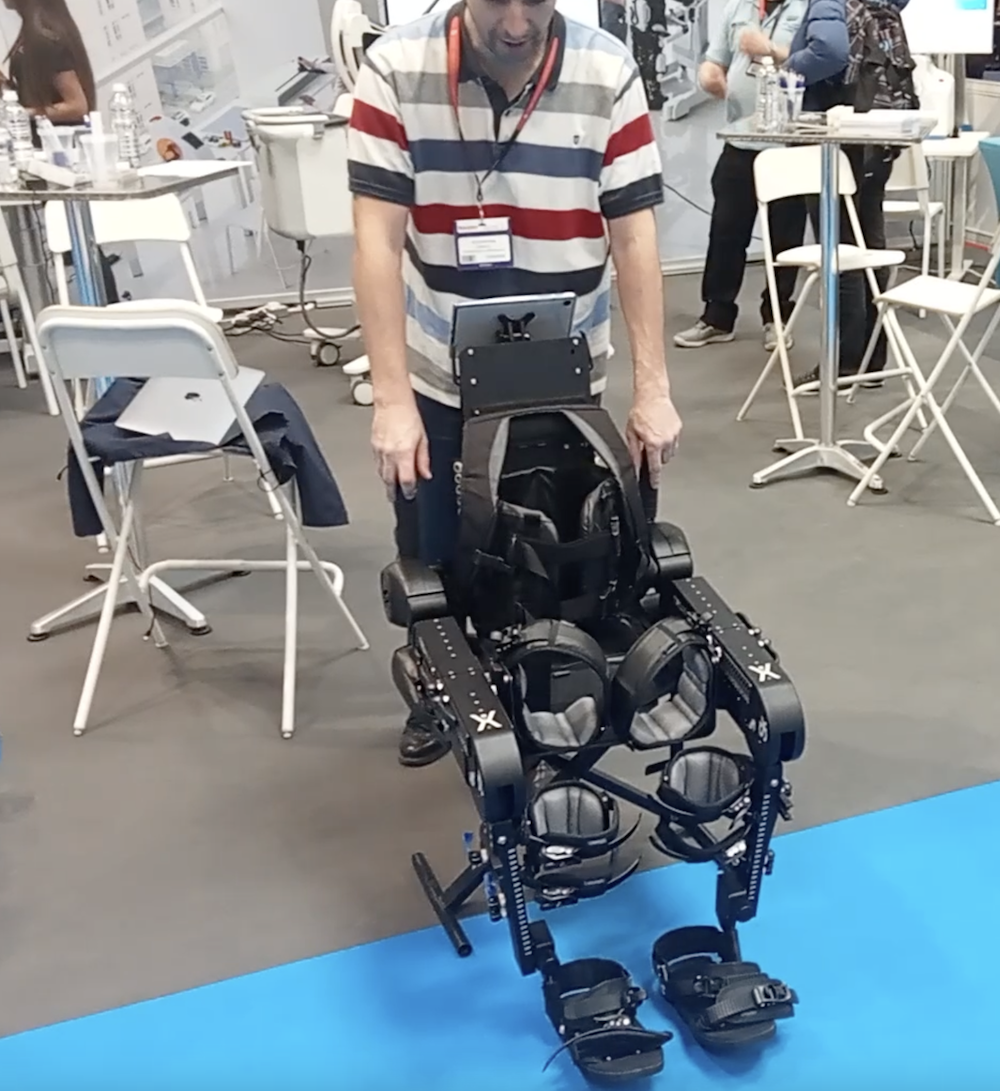
Peter Kreynin, research development executive at ExoAtlet, aims to achieve this, in part, by continuing to work towards the holy grail of lighter, smaller and more affordable exoskeletons.
He is also gearing up for the commercial launch of one of the only exoskeletons in the world which is purposely designed for children.
The Exoatlet Bambini is expected to achieve the CE marking needed to reach patient usage before the end of this year.
It is the result of years of development, says Peter, citing the balance between strength and lightness as one of its major engineering feats.
An interesting feature is its ability to move sideways, an important requirement for child mobility development not needed in adult models, says Peter.
From Russian roots, ExoAtlet formed a new HQ in an old steel works in Luxembourg a few years ago. It also now has operations in China, Japan, South Korea and the US.
Among various devices on show from the stable of global rehab firm Fourier Intelligence, meanwhile, is the Arm Motus.
The device plays a vital role within neuro-rehab journeys at clinics across the globe. I’m encouraged to try its in-built table tennis and cooking games with my left hand. Peeling a virtual potato is particularly challenging.
Specialist physio Deborah, of Neural Pathways in the North East of England, has first-hand experience of using the device with her clients and, she tells me, it has supported many successful outcomes.
VR headsets may not have the same head-turning effect as rehab robots in conference world. But their potential to change neuro-rehab trajectories is huge; and becoming ever-more apparent to rehab clinicians.
I find an enclave of VR pioneers from Europe – representing businesses in Holland, Spain and Norway.
Among them is Floris van der Breggen, CEO of SyncVR, which is on a mission to become the Netflix of health XR (the catch-all term for virtual, augmented and mixed reality).
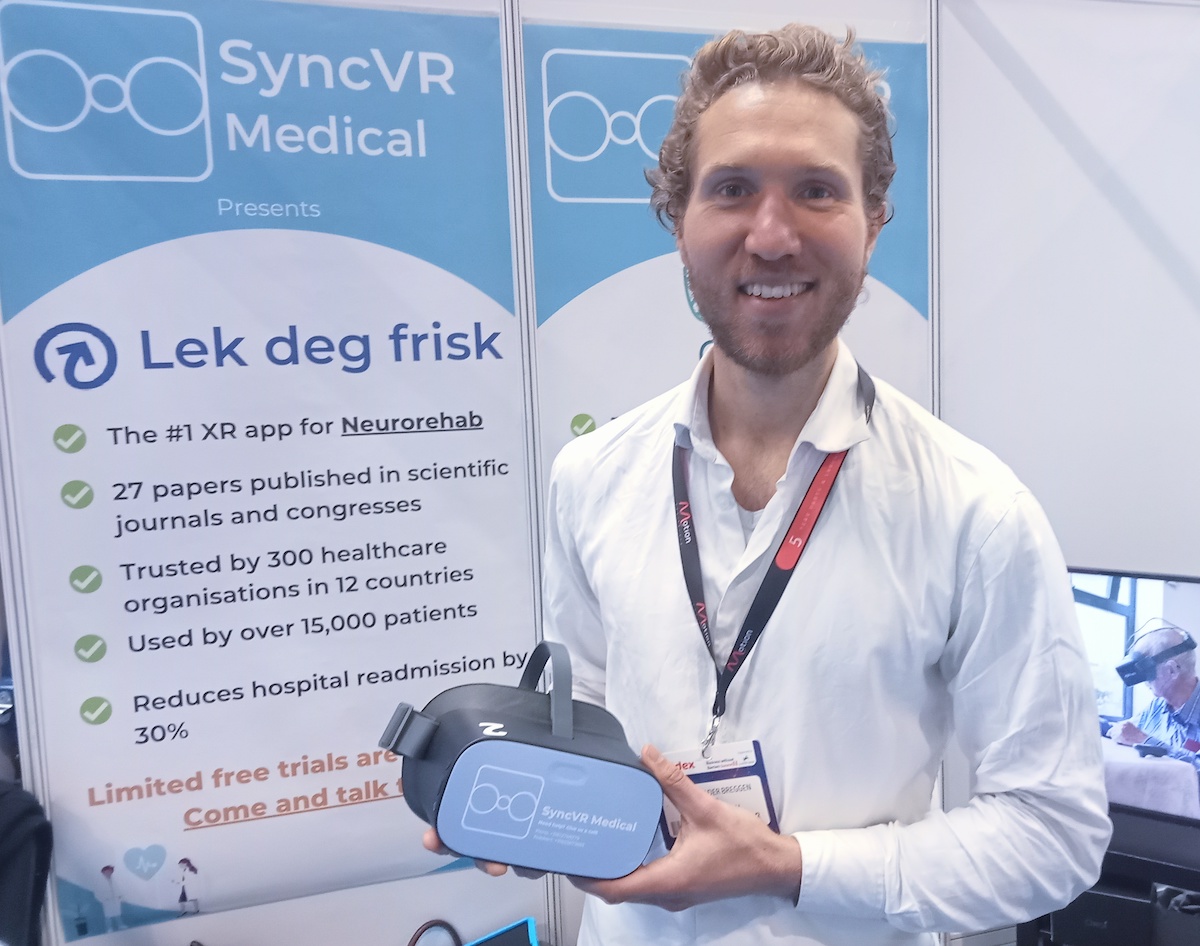
Floris van der Breggen, CEO of SyncVR
The company was borne out of a hackathon in the Netherlands four years ago, where Floris and fellow tech enthusiasts worked to find a solution to help lonely people in old age. It is now the world’s largest health VR platform.
Its model is as a conduit for all other XR app developers that can meet its strict medical and data-based regulatory parameters. Apps can support a range of outcomes including pain-relief, education – for medical trainees and patients – and rehabilitation.
Floris says: “As a company in healthcare, we see being the all-in-one provider as super useful. We don’t want to get come into a hospital and say ‘we built this application, but you still need to purchase this hardware here, and you need to get that training there’.
“We need to solve it all and for us to be the one trusted partner.”
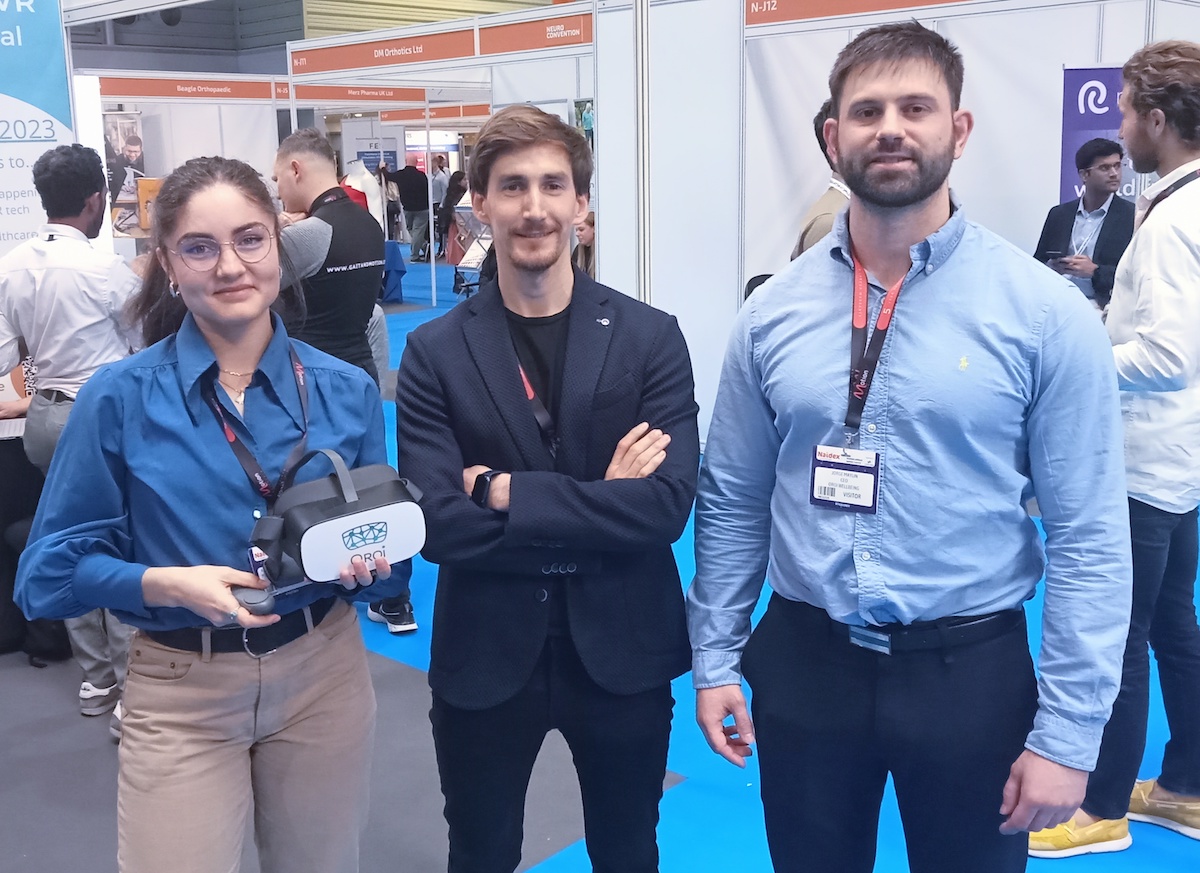
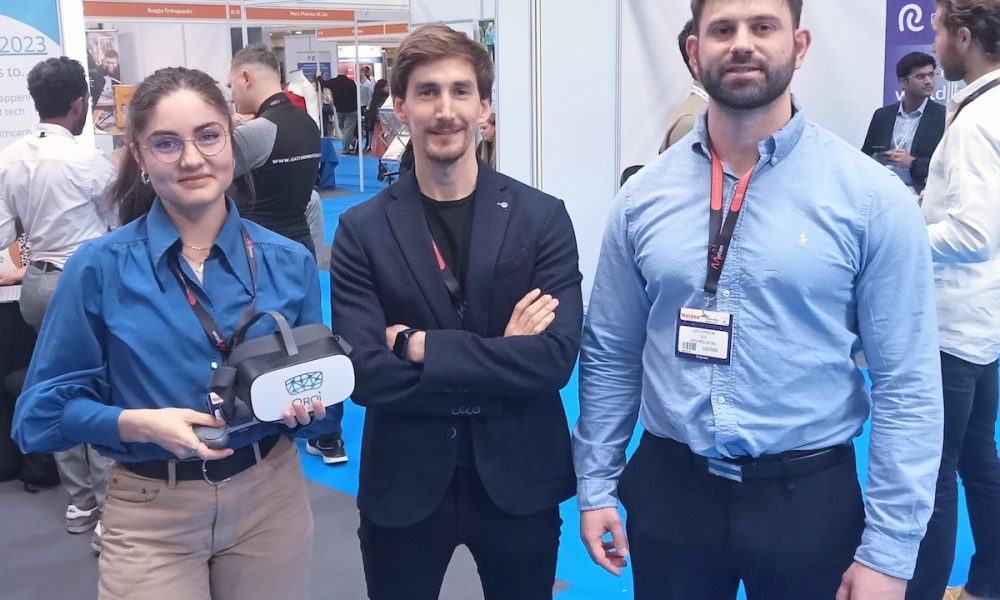
LtoR: Oroi’s Amaia Rodriguez Rementeria (psychologist and VR specialist), Inaku Aramburu (COO) and Jorge Mayin (CEO and founder)
Another VR company which has made the trip from mainland Europe to Birmingham is Oroi – translated as “memory” in its basque homeland.
Oroi, which works with SyncVR, is a virtual reality channel designed to support emotional wellbeing and train cognitive functions in elderly people.
“A huge misconception”, says CEO and founder Jorge Mayin, is that older people will be reluctant to use the technology. In a care setting, for example, “the problem is not who will use the technology but who will use it first”, such is the clamour to access its benefits.
I also meet the head of a Norwegian mixed reality firm that has developed rehab interventions which do not require a VR headset; just a laptop with a standard camera. Also in attendance is Reducept – a Dutch VR firm specialising in pain education and management. Its mission is to “free the world from chronic pain”.
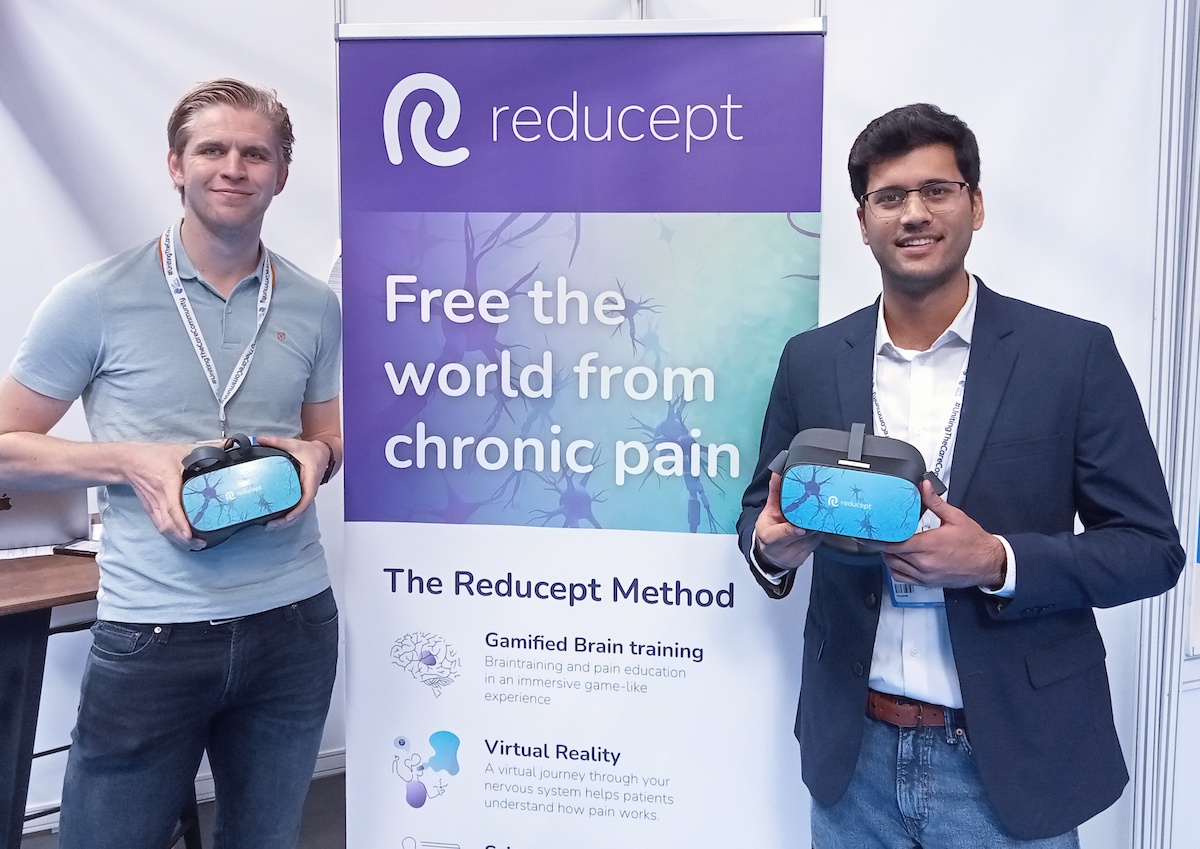
LtoR: Martin Schwarte and Rachit Paliwal of Reducept
Sales executive Martijn Schwarte says: “One of our founders is a psychologist and what he came across in his practice was there were a lot of people with chronic pain but too few psychiatrists to treat them.
“So what he designed together with the other founder is a VR application that people can train in and learn about what pain is, and how pain works. Therefore, with a better understanding of pain, they can manage their own pain better.”
Moving on from pixelated but amazingly immersive XR worlds, other tech on show includes Gait and Motion Technology.
We often hear how technology designed for the space race has filtered down into medical and consumer usage.
A similar, if much less travelled, journey is one that sees devices used by elite sportspeople also proving useful in the lives of neuro-rehab patients.
Post-performance recovery devices, fitness trackers-turned-falls management tools and goal-setting methodologies are among many innovations spanning neuro-rehab and elite sports.
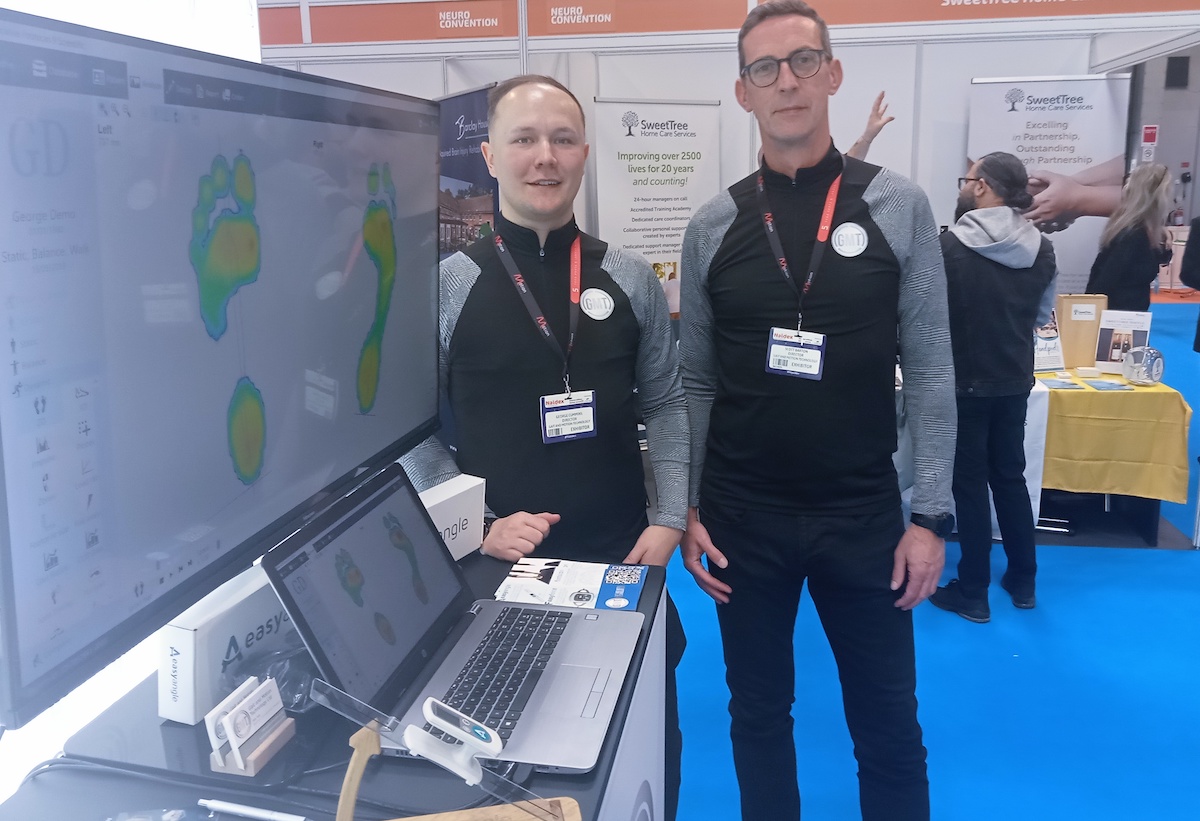
One of several Gait and Motion Technology products on show at NC23 that fits this description is Footscan, used for clinical gait management and in enabling the company to 3D print orthotics perfectly tuned to the user.
It is used both by clients with a wide range of conditions such as Cerebral Palsy, as well as elite sports people, for example in footballers’ medicals and in producing the optimal insole for the likes of Manchester City striker Erling Haaland and golfer Rory Mcllroy.
Managing director Scott Barton says: “We started this in February 2018 [when] we had an opportunity to disrupt the market within the orthotic world by being the first company to bring in 3D printed bespoke orthotics.
“Traditionally it was done by static scanning. What we bring to the table is that everything is done by dynamic analysis. We are the only company that creates 3D printed orthotics using dynamic analysis.”
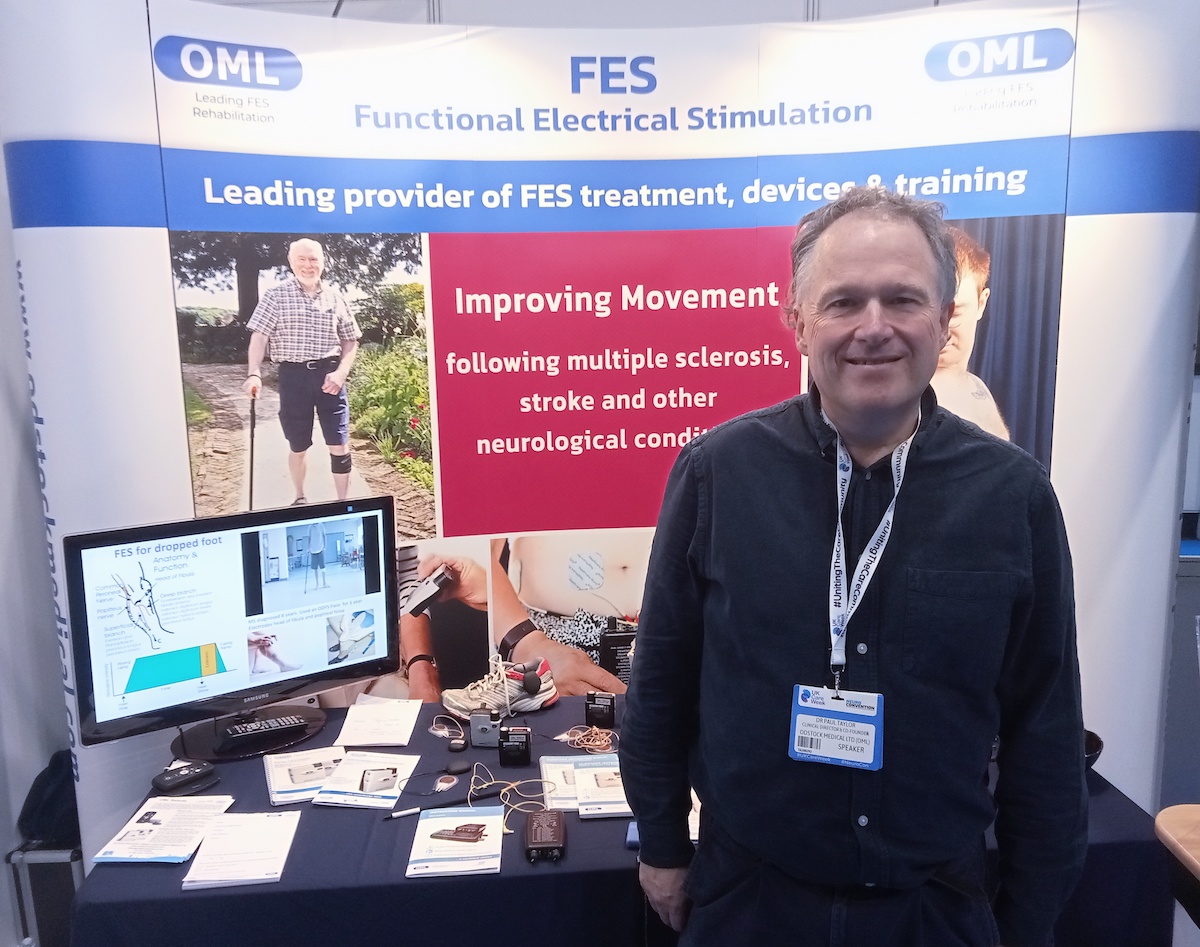
Dr Paul Taylor, clinical director and co-founder of Odstock Medical Ltd (OML).
Another disruptor of rehab tech at the NEC is Dr Paul Taylor, clinical director and co-founder of Odstock Medical Ltd (OML). Paul is one of the pioneers of the Functional Electronic Stimulation (FES) systems we see used widely in neuro-rehab today, working on the technology from the mid-80s.
The biomedical engineer developed the original range of OML FES devices at Salisbury District Hospital, and assessed their use in a series of clinical trials for people with stroke, MS, Spinal Cord Injury and Parkinson’s disease.
OML remains NHS-owned, by Salisbury NHS Foundation Trust, sharing accommodation and common interests in research and development projects and in training.
This model, of NHS-owned and supported internal innovation with a commercial outcome, seems unusual today. And Paul admits that there isn’t as much of it around as there was in the 1980s and 90s.
“I think it was more common back then. I think it’s got harder. The regulatory requirements on how many devices are produced have been tightened up tremendously in the last decade or so.
“In the past it was possible for a qualified engineer to make a device, try it on a patient, make modifications and improve it as they went on. Now, there’s a lot more requirement to ensure a safety which may have slowed down innovation.”
Within OML, however, innovation continues at pace, with work underway on a new device which will “be a more advanced walking stimulator with multi channels, better Bluetooth connectivity, smaller and smarter”.
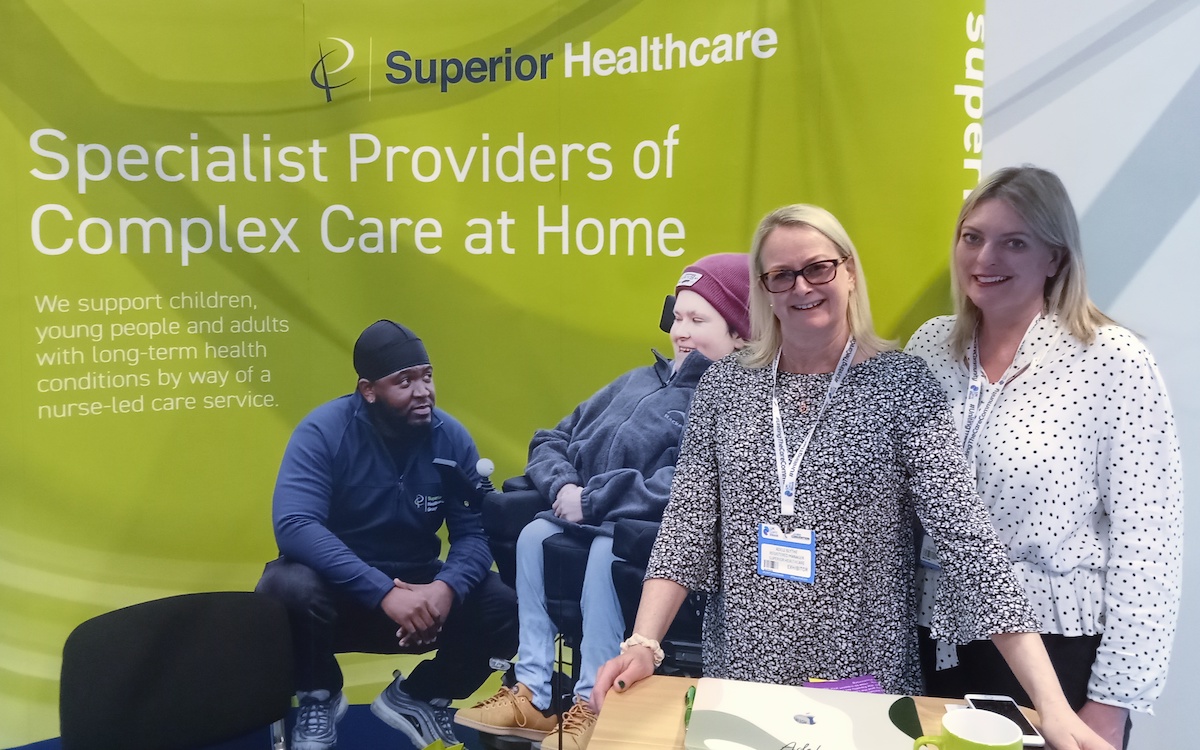
Private sector care providers are well represented at NC23, meanwhile, including Superior Healthcare, SweetTree Home Care Services and Voyage Care.
A quick poll of common challenges being faced right now finds a range of issues and concerns; including skills shortages among nursing staff, a lack of work experience opportunities for younger brain injured clients and clerical pressures caused by CQC process changes.
An interesting solution to the challenges of achieving group-wide buy-in from rehab teams came in the form of mantras – as explained by the Disabilities Trust.
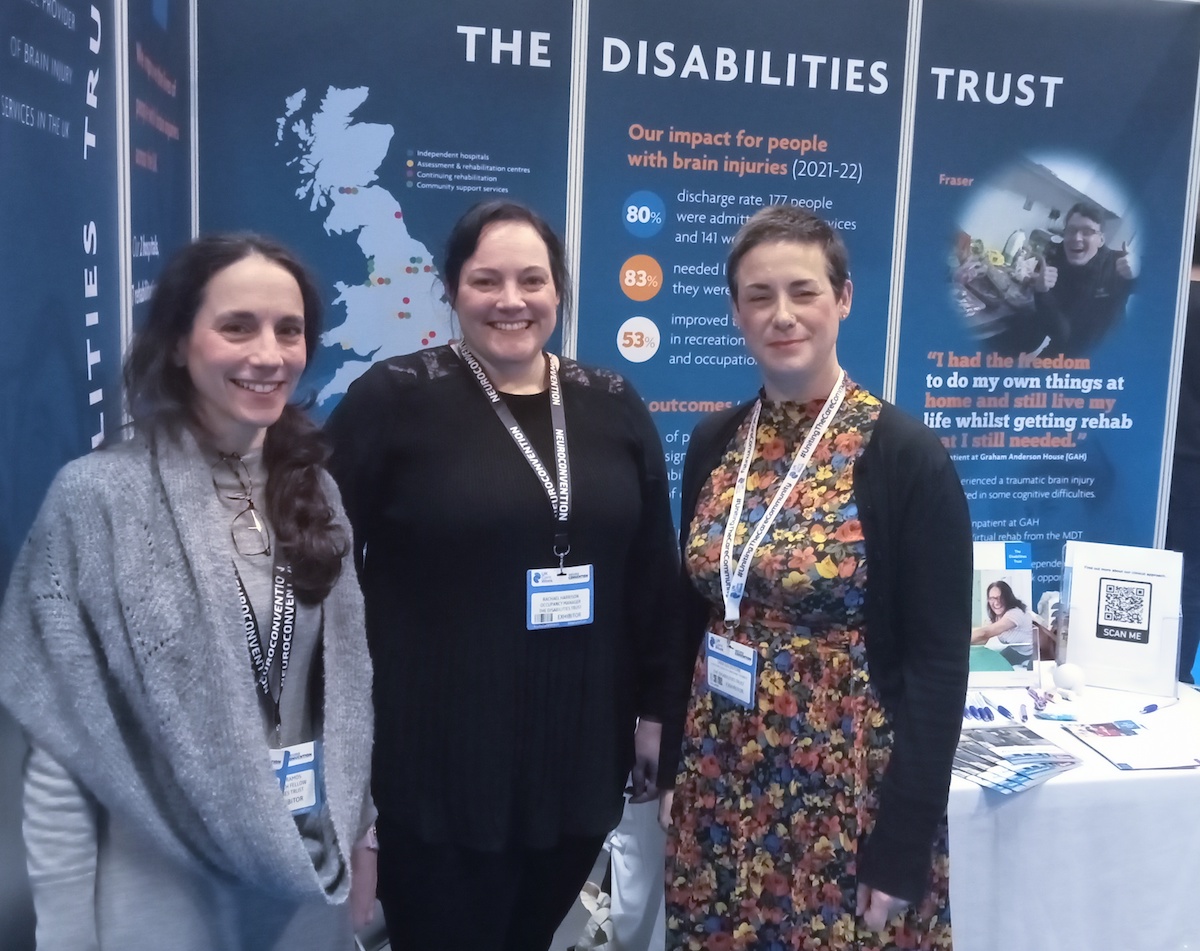
LtoR: Dr Sara da Silva Ramos (senior research fellow), Rachael Harrison (occupancy manager) and Sara Goldstone (senior specialist occupational therapist) of the Disabilities Trust.
The trust, which provides community and residential-based support for brain injured adults, has been working on instilling 12 key mantras to support its neurobehavioural approach to rehab.
These are taught, shared and reinforced among all team members, from marketing and PR, to admin, therapists, clinicians, researchers and everyone in between.
Examples include ‘every interaction is rehab’, behaviour communicates needs’ and ‘it’s never too late to rehab’. You can read an in-depth report on the project on NR Times later this year.
Another interesting – and all-too overlooked approach to managing neurological conditions – is the harnessing of lifestyle medicine, as championed by the Lifestyle Health Foundation and Person Centred Neuroscience Society (PCNS).
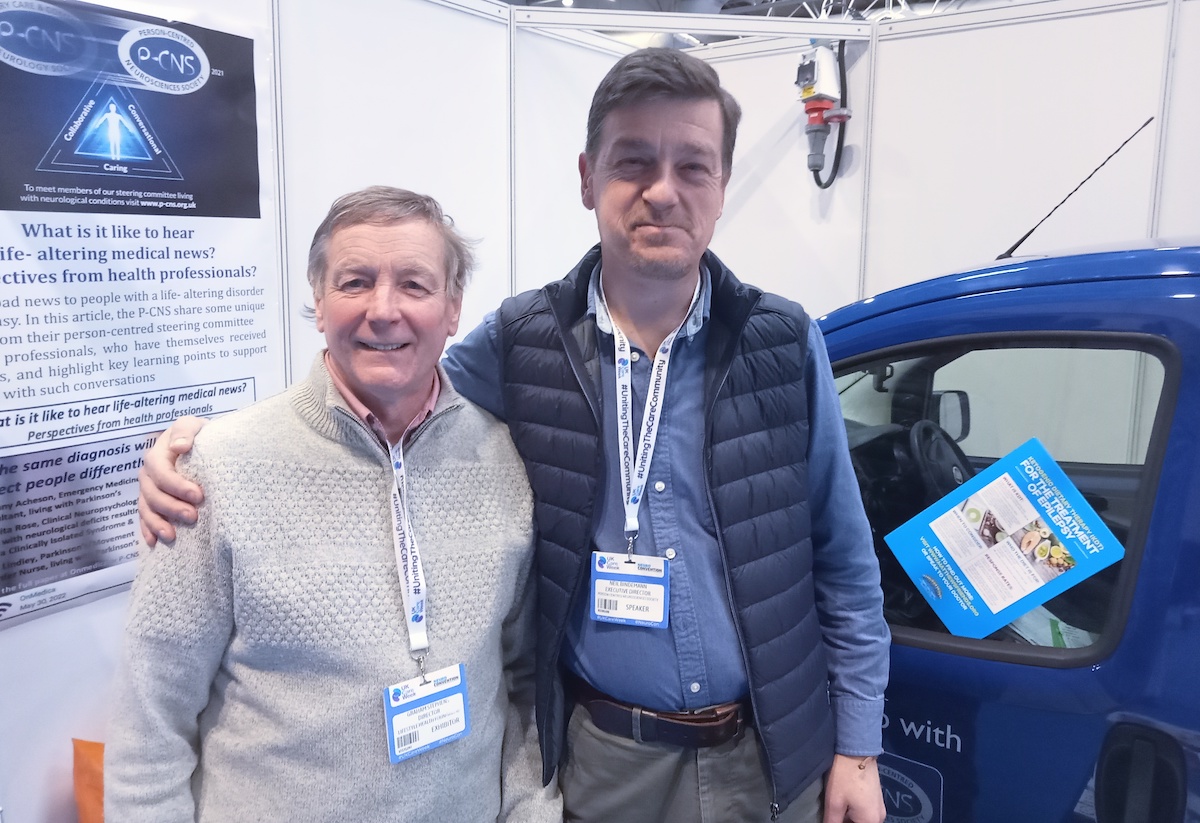
LtoR: Graham Stephens, Lifestyle Health Foundation and Dr Neil Bindemann, Person Centred Neuroscience Society.
As defined by the Lifestyle Medicine Global Alliance, lifestyle medicine is the use of a “whole food, plant-predominant dietary lifestyle, regular physical activity, restorative sleep, stress management, avoidance of risky substances, and positive social connection as a primary therapeutic modality for treatment and reversal of non-communicable disease”.
Graham Stephens, director of the Lifestyle Health Foundation, is here at the NEC to help challenge misconceptions about the role of lifestyle medicine in neuro-rehab. He also works closely with the PCNS to ensure being ‘person-centred’ is elevated far beyond the “tick box exercise” it can become in public health.
He says: “There is now a British Society of Lifestyle Medicine and this is not alternative, it’s mainstream medicine [without] going down the route of using pharmaceuticals and actually looking at lifestyle health issues, commonly known as pillars of health. There are two main levels of lifestyle medicine – physicians, and other lifestyle medicine practitioners, which is a board-certified role.”
Graham runs a number of programmes which “think outside the box” and achieve positive outcomes through lifestyle medicine, including a woodwork shop. He is also focused on building more evidence for lifestyle medicine and some of the approaches pioneered in his programmes via various research projects.
Watch out on Nrtimes.co.uk in the coming weeks to read in-depth interviews with some of the companies mentioned in this piece.