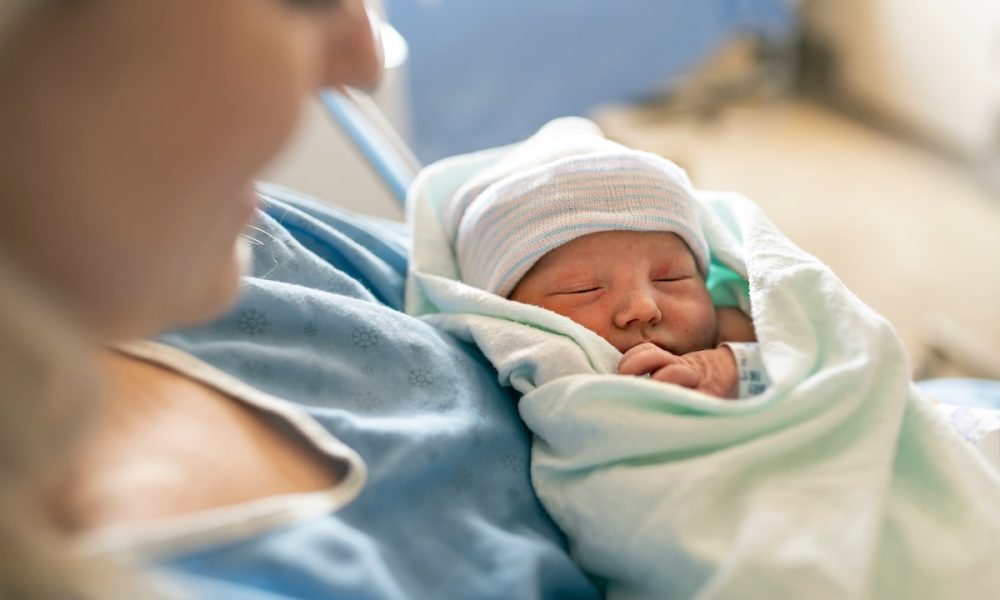
A new stem cell therapy administered via nasal drops is showing promising results in treating babies deprived of oxygen around birth.
In a safety study conducted at UMC Utrecht, called PASSIoN, ten newborns received this ‘intranasal stem cell therapy’ shortly after birth.
Most of the children showed remarkably positive development: they started walking earlier on average than untreated children with comparable brain damage, had no motor impairments, and none developed epilepsy or visual problems.
All ten babies in the study had a perinatal stroke: a type of brain injury that occurs just before, during, or shortly after birth, damaging the developing brain.
This kind of injury can lead to long-term neurological problems such as cerebral palsy (CP), a condition that affects movement due to early brain damage.
Neuroscientist and professor Cora Nijboer said: “We’ve spent years conducting fundamental research in the lab, where we saw that stem cells have enormous potential for brain repair.
“And we continue to develop and optimise the treatment in close collaboration with researchers in Maastricht.
“But these results, in such vulnerable babies, are exactly what we’ve been working toward.
“We’re incredibly proud and excited about the start of the iSTOP-CP study. Hopefully these promising outcomes will hold up – or even improve – in the coming years.”
In the study, the ten babies received a single dose of mesenchymal stem cells, administered as nasal drops within a week of birth.
Two years after treatment, none of the children experienced side effects.
There were two hospital admissions, but these were unrelated to the therapy. None of the children required medication after being discharged from the hospital.
The amount of brain tissue loss was also smaller than expected, given the severity of the strokes.
Most children developed well. One child had a mild cognitive delay, two had language delays, and one suffered from severe sleep problems.
Motor development also proved surprisingly positive, with only two children developing mild cerebral palsy – a rate of 20 per cent of the treated group, compared to 50 per cent in a historical control group of children with a similar type of stroke.
Interestingly, all children in this study initially showed damage to the brain’s motor pathways – something that typically brings a CP risk of over 80 per cent, depending on the size and exact location of the infarct.
None of the children developed epilepsy or vision problems.
Paediatrician and professor Manon Benders.”Seeing such positive development in a high-risk group like this is truly extraordinary.
“It gives not only the parents but also us as a medical team real hope.”
The PASSIoN study was not designed to prove the effectiveness of the stem cell treatment, but to assess its safety.
To definitively determine whether stem cell therapy works, a new study — the iSTOP-CP study — is expected to launch in early 2026.
Prof Benders: “The coming years will be very exciting, but we are confident that this study will mark an important step forward for children with brain injury.”