‘No more fiendish punishment could be devised than that one should be turned loose in society and remain absolutely unnoticed by all its members’ – William James.
When William James, the philosopher, made this statement, he probably was not referring to someone with a brain injury. His words nevertheless describe vividly the struggle many brain-injured individuals and people with learning disabilities experience in trying to gain access to the right kind and level of support so that they can regain a meaningful life.
Too often placements are not suitable and the problem of ‘revolving door’ experiences in care has unfortunately, become common. All too frequently, in the 30 years that Richardson Care has been operating, someone needing specialist care will be referred to us after multiple failed placements, which can have severely negative consequences for them.
It has been noted that, at least in the case of General Practice, revolving door patients in psychiatric care have an increased rate of mortality1.
Short term costs versus long term value
An individual may be placed in inadequate care for several reasons. It is often the case that resources and cost are an issue but it is also true that inappropriate placement will very probably mean that, in the long run, more resources are required and the cost of care increases.
An over-emphasis on pharmacological intervention and ‘containment’ rather than rehabilitation can be factors contributing to an increase in difficult and challenging behaviours. These can then eventually make the current placement impossible and the job of care and rehabilitation in the next placement much harder.
For vulnerable individuals in need of care, this ‘revolving door’ can mean repeated unhappy and unsettling experiences. Their diagnoses have often not been addressed or have been exacerbated as they are only properly attended to once a crisis has been allowed to develop. This can make the difficult and painstaking road to rehabilitation an even longer and costlier one.
In addition, if all of the information about an individual’s diagnosis, risk behaviours and history is not available at the initial assessment, this is another reason why the placement can fail.
Effects of inappropriate and failed placements
A failed placement will not only impact negatively on the individual and their family, but will also impact the current population within the home. It can be disruptive or distressing when someone moves in whose behaviour cannot be managed effectively.
According to Headway, in 2019-2020, 24 per cent of all people who sustained an acquired brain injury were under 40 years of age and 37 per cent were of working age. These figures rise to 36 per cent and 39 per cent respectively when looking at the figures for head injuries alone. Elderly/nursing care is simply not appropriate or effective for younger people and can have seriously demoralising effects.
It is worth noting too, that for well-meaning and hard-working staff, trying to care for someone who is placed in the wrong setting can be a frustrating and dispiriting experience.
When the specialist care and ongoing assessment service users need to progress towards a new and meaningful life is just not available and for all the best efforts of the staff looking after them, their challenging behaviours and negative feelings are often likely to get worse.
John’s story
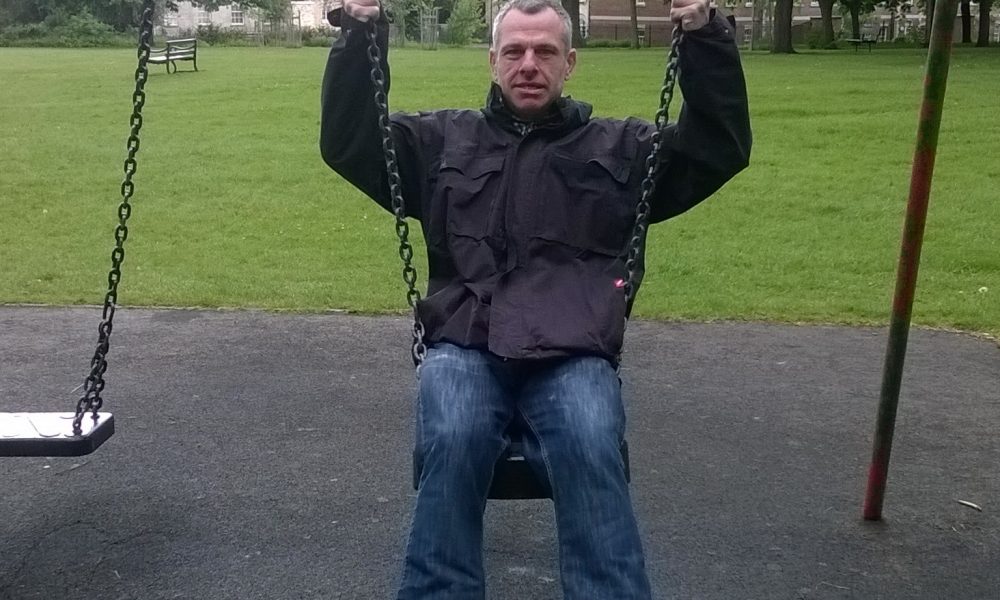
John, who was diagnosed with moderate learning disability and Asperger’s Syndrome at an early age, is a clear example of someone who has suffered this ‘revolving door’ type of experience. John was admitted to fourteen different settings, including five psychiatric hospital admissions between the ages of seven and 20, before coming to Richardson Care in 1998. John’s aggressive behaviour towards others was given as the cause of most of the placement breakdowns.
He was on numerous medications and presented a multitude of risks including self-isolation, mood fluctuation, inflexible behaviour and anxiety when presented with changes to his routine. John would also become verbally and physically aggressive as well as sexually inappropriate towards others. John had little insight of the effects of his behaviours on others.

One of the key factors in stopping the revolving door is an ongoing assessment and review process for all the factors in a service user like John’s presentation and care. With this in mind, a holistic approach was devised by the Multi-Disciplinary Team (MDT) at Richardson Care, which continues to support John. Some interventions include:
- Social, procedural and environmental factors offered at the placement, like consistent structure, meaningful activity, therapeutic rapport with staff and opportunities to socialise and build positive relationships with other residents
- MDT interventions (particularly neuropsychiatric and neuropsychological input, including regular medication review)
- Positive Behaviour Support (PBS) Approach/Plans, care plans, risk assessments and intervention guidance
- Psychology input – group and individual sessions that aim to allow John to express his feelings and aspirations, socialise with other residents, share experiences and learn positive ways of dealing with his emotions. The sessions also aim to reduce anxiety, provide reassurance and feedback regarding his behaviour.
- Psycho-education – e.g. teaching John social norms
John now benefits from a consistent approach from staff and has demonstrated progress regarding integration and his abilities to create positive relationships with other service users and staff. When John experiences difficulties in regulating his aggression, he is able to ask staff for help.
Current behavioural interventions support him effectively, thus there has been a decline in his physical aggression towards others. John’s risk behaviour is currently well managed within the home. He has been able to improve his communication and his tolerance to others. He has developed new interests such as baking and going on day trips.
John has contact with his family, particularly with his aunt and uncle, who visit him regularly.
They had this to say about John’s life in a Richardson Care home:
“Your plans for him over the years to withdraw drug therapy and support John through specialist behaviour plans have meant he is becoming more socially skilled and a joy to be with. Going on holiday [for the first time] has meant John’s confidence has moved to another level… John is a much healthier man because of your imaginative and professional strategies you use to manage his behaviour and we thank you for this.”
Because of the progress the multi-disciplinary, holistic, person-centred approach has shown so far, it is anticipated John will improve further here and we do not anticipate any breakdown in our ability to care for him or his desire to stay here. He now shows us that to stop the revolving door spinning can be its own reward.
- Richardson Care is an independent and family-run care provider specialising in residential care and rehabilitation for adults with learning disabilities, acquired brain injury and complex needs. Located in Northampton, it has a portfolio of six homes offering short-term intensive rehabilitation, long-term rehabilitation and a home for life. More information is available at www.richardsoncares.co.uk or by calling 01604 791266.
1. Understanding “revolving door” patients in general practice: a qualitative study – Williamson, Mullen and Wilson (2014) https://bmcprimcare.biomedcentral.com/articles/10.1186/1471-2296-15-33