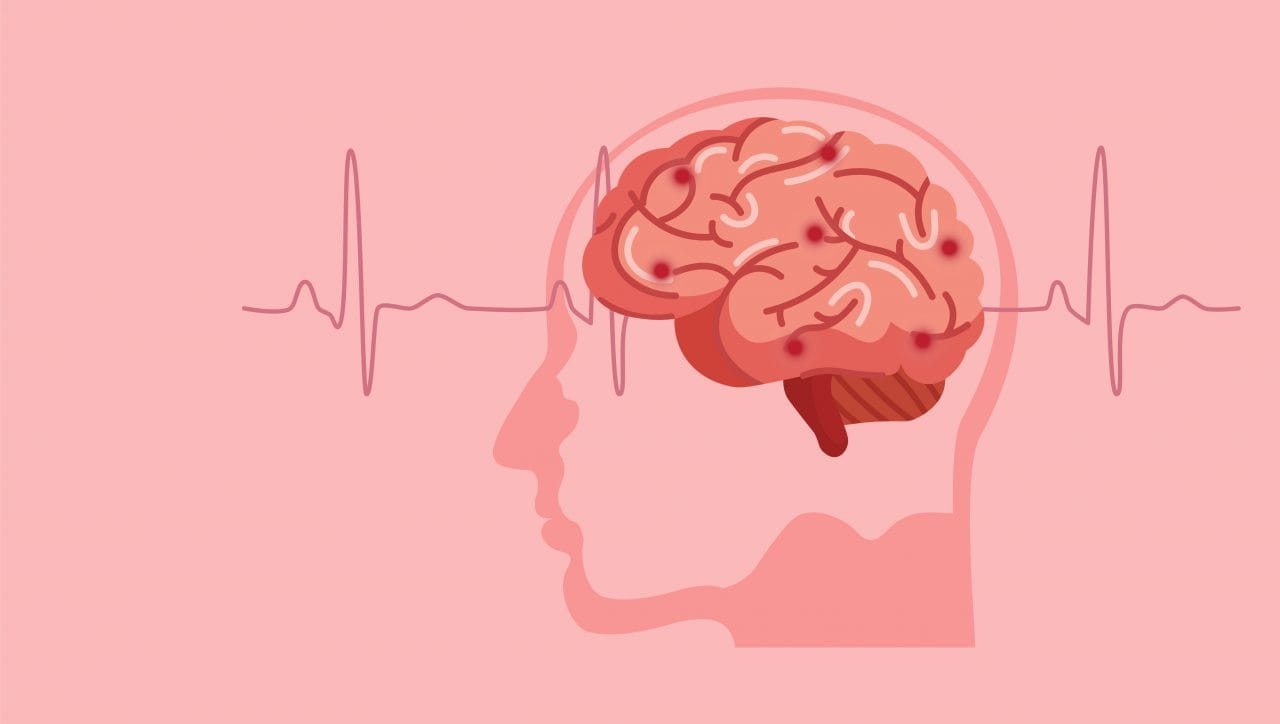
Method for detecting traumatic brain injury at the point of care developed

Using chemical biomarkers released by the brain immediately after a head injury occurs, researchers are able to pinpoint when patients need urgent medical attention. This saves time in delivering vital treatment and avoids patients undergoing unnecessary tests where no injury has occurred.

The technique was developed by multi-disciplinary team of researchers in the group of Advanced Nanomaterials, Structures and Applications (ANMSA) led by Dr Pola Goldberg Oppenheimer at the University of Birmingham.

Following a proof-of-concept study, the group has now completed Innovate UK’s commercialisation programme, iCURE, to identify commercialisation routes for the revolutionary technique, identifying potential partners across eight countries. 

By |2024-07-04T17:46:02+01:0010 November 2020|Brain injury, News|

MS patient produces book to help people with similar conditions

Having felt so let down by the lack of support and guidance available to people with Multiple Sclerosis (MS), podcaster and campaigner Jessie Ace has now produced a book - My Enabled Warrior Tracker - in the latest step on her crusade to empower those with chronic conditions. NR Times learns more.

Diagnosed with MS aged only 22, having just graduated from university and - with a book deal already secured - about to embark on a career as an illustrator, Jessie Ace knows only too well how devastating and scary the outlook can seem.

“I thought my world had ended, but the worst part of it all was not knowing where to turn, or who to turn to. There was a total absence of information about what I should do from that point onwards,” she recalls.

By |2024-07-04T17:46:02+01:0010 November 2020|News, Multiple sclerosis, Patient stories|

Delivering at-home physio during lockdown – the challenges and opportunities

For those providing rehab services, lockdown has presented many challenges in how to continue treatment in light of ongoing restrictions. Here, Ben Ruby, owner of Ben Ruby Neuro Physio, discusses how he has adapted his way of working to ensure his clients continue to benefit and how telerehab can help people discover new possibilities.

“Provision of therapy services since March 2020 has shifted due to COVID-19 and the restrictions put in place by the government. Working within the private sector and providing specialist neurological physiotherapy input, I often spend prolonged periods of time within my clientshome.

Providing rehabilitation within peoples homes can generate fantastic results as its possible to make treatments specific to the individual’s needs and is more relevant to their day to day lives. This is something that cant always be replicated within a rehabilitation unit, for example.

By |2024-07-04T17:46:03+01:009 November 2020|News|

Study finds single brain region linking depression and anxiety, heart disease, and treatment sensitivity

Over-activity in a single brain region called the subgenual anterior cingulate cortex (sgACC) underlies several key symptoms of mood and anxiety disorders, but an antidepressant only successfully treats some of the symptoms. A new study suggests that sgACC is a crucial region in depression and anxiety, and targeted treatment based on a patient’s symptoms could lead to better outcomes.

Depression is a debilitating disorder affecting hundreds of millions of people worldwide, but people experience it differently. Some mainly have symptoms of elevated negative emotion like guilt and anxiety; some have a loss of ability to experience pleasure (called anhedonia); and others a mix of the two.
By |2024-07-04T17:46:03+01:008 November 2020|News|

Hands on to hands off

Five brain injury professionals spanning dietetics, case management, physiotherapy and speech and language therapy share what they've learnt from to shift to virtual therapy. 

At the start of the pandemic, many statutory rehab services were redeployed, and some independent therapy teams closed or therapists moved back into frontline work within the NHS and community. A group of private therapists in the North West of England started keeping in touch on social media and in weekly group support sessions to share their fears and concerns, and identify the strengths that helped them survive in such challenging times.
By |2024-07-04T17:54:59+01:006 November 2020|Therapy, Opinion, Insight|

A week in the life of a cognitive rehab assistant

It’s early in the morning, I get ready, put the kettle on and…start brainstorming the plan of action for the day ahead! This routine will sound familiar to many rehabilitation assistants, as they prepare for a fulfilling and rewarding therapy session with clients.  Why is a structured routine so important in cognitive rehabilitation?

One of the main duties for a rehab assistant (RA) is to help people retrieve or maintain their independence skills by practising daily activities such as making a two-ingredient meal, doing the laundry or assist a client to wash up after having lunch. Another part of the RA role is to ensure clients are safe in their home environment. This is done by partaking in OT assessments and visiting clients’ homes to see how the settings can be adapted to help them feel secure (e.g. walk-in shower, hand rails, fire alarms etc).
By |2024-07-04T17:46:03+01:006 November 2020|News|

‘A middle-aged man with MS on the job scrap heap’

Michael was a high-flying company director when he was diagnosed with Multiple Sclerosis earlier this year. Only shortly afterwards, amidst the economic impact of the pandemic, he lost his job. Here, he describes the devastating reality of such a double blow, and why he is determined to find the confidence to get him through.

“I was diagnosed with Multiple Sclerosis just before lockdown. Five months later, I was made redundant. The two events weren’t linked, but both have been central to the real uphill battle I feel I’m fighting at present.
By |2024-07-04T17:46:04+01:005 November 2020|News, Multiple sclerosis, Patient stories|

COVID causes delay in outpatient services

Rehabilitation services for stroke and other neurological diseases have seen a slower recovery in outpatient clinics than those in inpatient settings as a result of the impact of the COVID-19 pandemic, a new report has found.

Outpatient services were largely stopped or significantly scaled back when the pandemic hit, the study said, and continue to take longer to recover post-lockdown, which could have long-term implications for patients into the future.

Decreases of around 36 per cent compared to 2019 were seen in the ability of outpatient units to interact with patients, with many appointments being delayed for between 3 and 6 months.

In an inpatient setting, the decrease was around 27 per cent at the peak COVID-19 period, although the recovery in rates of seeing patients came much quicker.

By |2026-02-11T11:43:50+00:004 November 2020|Inpatient neuro rehab, Care & services, Therapy, News|

COVID and brain injury survivors experiencing similar symptoms

Brain fog and other neurological symptoms seen in those recovering from COVID-19 may be due to post traumatic stress disorder (PTSD), new research has revealed.

Growing numbers of people recovering from the virus are reporting factors including lapses in concentration, headaches, extreme fatigue and sleep disruptions - all of which can be exacerbated among brain injury survivors, many of whom experience such factors in their everyday lives without the effect of COVID-19.

Specific rehabilitation and resources are being identified for those with brain injuries, whose symptoms have worsened, often significantly, in the aftermath of contracting the virus and the rise in ‘Long Covid’ making recovery increasingly difficult, particularly among those with existing conditions.

By |2024-07-04T17:46:04+01:003 November 2020|News, Brain injury|

New team of physios specialise in bladder and bowel issues

Patients with brain injury and other neuro conditions are being supported with pelvic, obstetric and gynaecological matters through a link-up between a clinic and specialist physiotherapist, believed to be the first of its kind.

Kirsten Barrett is part of the team at Neuro Physio Wales and supports its clients with issues including bladder and bowel issues and sexual dysfunction.

Access to such specialism is usually available via separate referral, but through Kirsten’s partnership with the clinic, patients are able to access the specialist support directly.

Kirsten, who has worked in pelvic, obstetric and gynaecological physiotherapy (POGP) for 15 years, is seeing a growing number of patients with neurological conditions, or who are living with a brain injury, spinal cord injury or stroke as part of her case load.

By |2024-07-04T17:46:04+01:003 November 2020|Brain injury, News|
Go to Top