When Matthew Hayden and Aidan Lees sustained traumatic brain injuries, their lives – and those of their families – changed beyond recognition. Yet with an absence of support after their return home, their battle to rebuild their lives was made more difficult.
Here, their mothers Maxine Hayden and Louise Bird reveal the reality of the situation they faced, how peer support was vital, and why the creation of After Matters – a specialist charity to support 16-to-25 year old brain injury survivors and their families – will help others escape the loneliness and helplessness felt by so many after brain injury
“The care we had in hospital was absolutely fantastic. But then we were discharged home to nothing. And that’s when the reality of brain injury really hit.”
The story is all too familiar to survivors of brain injury and their families, and the impact of the lack of support in the community is profound.
Too often, families reveal their struggles to cope, the cascades of emotion, the loneliness and isolation – but in the absence of any tailored support post-discharge from hospital, these problems can escalate into a huge additional burden for survivors and their loved ones to carry, as they try to move on with their lives.
For Maxine Hayden and Louise Bird, their experience was the same as that of countless others – but by discovering the reality that confronts so many families came their inspiration to make change.
Life-changing traumatic injury
Maxine and Louise met in 2018 when their sons – 17-year-old Matthew Hayden and Aidan Lees, 18 – experienced separate assaults and were in neighbouring beds in Salford Royal Hospital’s intensive care as they battled for survival after brain injury.
Matthew and a friend had been viciously assaulted in an unprovoked attack by a gang of youths, leaving Matthew needing emergency life-saving surgery and with a significant traumatic brain injury.
In an incident involving a then-friend, Aidan – who had only recently become old enough to visit the pub – had his skull shattered by a pool cue while enjoying a night out, which was embedded two centimetres inside his brain. He was left paralysed down his left side.
While happily – and miraculously – both Matthew and Aidan survived, their stay in hospital and hugely positive experience of the support of medics sadly was not a pre-cursor of things to come.
“The hospital were brilliant, absolutely amazing. They saved our boys’ lives. The team at Salford Royal were first class. But then we went home to nothing. Absolutely nothing,” reveals Maxine.
“We were probably a bit naive because we thought we’d get our boys back, we’d go back to our lives. But you quickly realise that isn’t going to be the case.”
“We were given a hospital discharge pack with some information in, but that was it,” continues Louise.
“Nobody came. Nobody checked to see how we were getting on. Nobody said ‘Do this, do that’. And it’s at that point you realise you’re all on your own.”
Brain injury – the ongoing impact
As young men in the prime of their lives, the impact on both Matthew and Aidan has been seismic.
Matthew, who turned 18 shortly after being discharged from hospital, had a commercial apprenticeship at a local engineering company but earlier in the day that he was attacked, he had just been awarded a scholarship to play rugby in America. Rugby was his passion and he was so excited to get the good news and then suddenly his life was changed forever.
As a result of brain injury, he now lives with ongoing fatigue, insomnia, cognitive issues, as well as PTSD from the horror of what happened to him.
Aidan, who had also secured an apprenticeship, was left with left-side paralysis from his attack and needed extensive physiotherapy to regain the ability to walk.
Their injury at such a formative point in their lives added further to the impact of brain injury.
“For Matthew and Aidan, they’d not long left school, they’d just started on the journey of starting their new work, career paths, college, learning to drive. It’s such an important time in young people’s lives, starting the next chapter and getting their independence, and then suddenly it was taken away from both of them,” says Maxine.
“As well as the physical and cognitive effects, their mental health suffers a lot because of this.”
Lack of awareness of brain injury from wider society adds further to the challenges they face.
“Matthew and Aidan are both what you would class as higher functioning brain injury survivors, because to look at them, you probably wouldn’t realise they had a brain injury,” says Maxine.

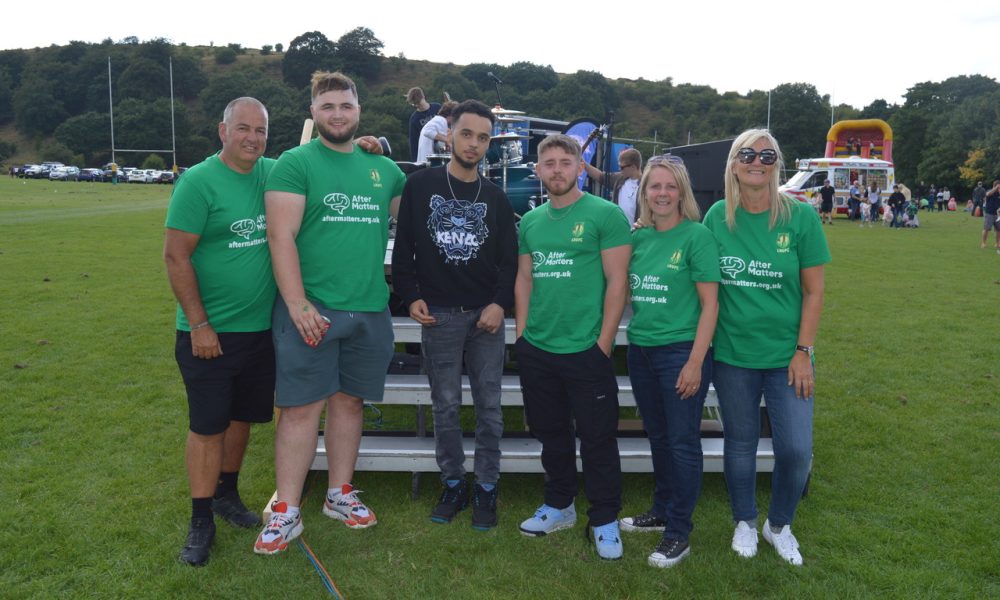
Matthew (2nd left) and Aidan (right) meet fellow survivors
Louise added: “Aidan’s scars are more visible than Matthew’s, but other than that, you wouldn’t know and that’s when you have to deal with the questions. Why are you so tired? What’s wrong with you? You look fine, why can’t you do this? Why is this taking you so long?”
Trying to return to the working lives they hoped for has also posed significant challenges.
Maxine says: “We saw that with Matthew trying to go back to work, when he retrurned to his apprenticeship, he did struggle. He had problems with his memory, concentration, he was very fatigued and taking too long and getting things wrong.”
“He never managed to keep all the jobs he tried afterwards because he couldn’t keep up with the workload and was making mistakes under the pressure. It’s been so disappointing how few employers seem to be disability friendly.
“He tried so hard and got up everyday to go into work but then I’d often get phone calls from him during the day where he was breaking down in tears as he was struggling to cope. He felt isolated and that nobody understood why he was struggling and I would have to collect him to bring him home. He also developed anxiety attacks at this point and although we tried to encourage him to keep going and keep trying, we came to realise, being under that pressure to keep up and ‘get back to normality’ was actually making him worse.
“He has tried quite a few jobs since then but now he’s found something that really suits him. The employer is very understanding and carries out extra risk assessments and let Matthew have rest breaks and things like that. They even let him stay overnight in a hotel nearby if he’s very tired. So they’ve been brilliant, but it has been a long journey to get here.”
Aidan had similar struggles in trying to go back to the electrical engineering apprenticeship he had previously started.
“He went back to work part-time and I had meetings with the HR team, saying it’s going to take him a while, and they were understanding. But because he looked fine, I think a lot of people expected more from him than he was able to give,” says Louise.
“He had terrible OCD after his injury, which was a struggle for him in the workplace and he kept getting into trouble. He ended up quitting and went into some other jobs, but didn’t want to tell them the extent of his injury. Through him being paralysed on his left side, the nerve damage in his brain which works his fine motor skills in his left arm has been badly affected, so he does struggle.
“But now, Aidan has started doing bricklaying with a view to doing construction management. He’s having to start at rock bottom and work his way up, and has had to adapt his bricklaying technique to take into account his left arm. He does it his own way but has just passed his level one with a distinction.”
While Matthew and Aidan have both made progress in their lives and careers – probably exceeding that which their mothers hoped for or expected in the very early days – the lack of any forum for support meant they have had to enter the unknown alone.
Although some support groups did exist, sadly they were not suitable for their needs, says Louise.
“There was one group, which was at 7pm and an hour’s drive there and an hour home, which is a long journey and late meeting for people living with brain injury who struggle with fatigue anyway,” she says.
“And we found that these groups were often mainly older people – our sons were 18 and 17 when they were attacked with their whole lives ahead of them, and were now having to deal with the fact that had been ripped away from them. There was absolutely nothing for that age group.”
Without the provision of any formal support, Matthew and Aidan were able to find some support in each other.
“It has been important, they have spoken to each other about some of their struggles, they’ve got that connection where they understand in ways others don’t,” says Maxine.
“I think if they hadn’t met, they wouldn’t have come across another young brain injury survivor, I don’t think. But so many young people will be in that position, where they don’t have anyone.”
The absence of support for the family
Having swapped numbers while in hospital, Maxine and Louise quickly realised that in each other they had found some support.
“We had no idea how valuable it would be when we swapped numbers. We were so focused on Aidan and Matthew in hospital rather than making any sort of friendship or even speaking that much, it just wasn’t on our minds at the time,” says Maxine.
“It didn’t really evolve until probably about three or four weeks after Matthew came home, because once family and friends have visited to welcome you back, that dwindles away and you’re on your own. That’s when it’s the most lonely time as a parent, and also for Aidan and Matthew as survivors. That’s when you realise that this is your life now.
“It’s like a bereavement as you try to come to terms with what’s happened. It is so hard to come to terms with, we didn’t know where to start.”
“It’s only as the weeks start going by and they start presenting with new challenges you realise the reality is very different from what you’d hoped, that it would be back to normal soon. You think ‘Why are you behaving like that? Why can’t you remember what you were told two minutes ago?’ You aren’t told to expect anything like this, you just don’t know, and you don’t know who to turn to.”
“But in Louise, I had someone who understood exactly what we were going through. The trauma we’d been through. The impact on Matthew and the change that had made to us as a family. The everyday challenges we faced and the fact we didn’t fully understand the impact of brain injury.”
Louise continues: “No-one tells you what’s normal, what is going to happen, what to expect, you’re just expected to get on with it. Without having Maxine to speak to about these kinds of things, just the little concerns you have, it would have been an even bigger struggle.”
“At first it would just be the odd text, such as to wish Matthew a happy 18th not long after his discharge. But once the reality set in, we started texting each other saying Aidan is struggling with this, and Matthew would be too, and we started helping each other with bits of information we’d found ourselves.
“That was so valuable, especially because there was no-one else who understood exactly what we were going through.”
The significant mental health impact on Maxine and Louise – whose daughters were aged 11 and 12 at that time – also grew over time, again without any support or signposting for help.
“We were struggling mentally with it and accepting what had happened,” says Maxine.
“Our daughters were seeing what had happened to their brothers, and that’s very hard for them to cope with, and again there is no support there to help with that.
“First of all, I think you get shock, then you get anger. There’s so many questions about why it happened, it shouldn’t have happened. And I think that’s when the depression sets in. And that can be hard to get out of.”
“This massive change to your lives, and the lives of Matthew and Aidan and what they should have been looking forward to and achieving, is very hard to take. And I think the fact it was a deliberate, violent act that had caused this impacted very deeply. It was senseless, we struggled to make any sense of what had happened.”
After Matters – turning trauma into a positive legacy
Having seen first-hand the absence of support for the 16 to 25-year-old age group, as well as for their families, Maxine and Louise decided to take action themselves.
“It was just through chance really that Louise and I met the way we did and kept in touch. But through the experience we both shared, we realised that other families must be going through this as well,” says Maxine.
“We wanted to do something to help other people, something constructive, something positive to come out of such a traumatic situation.” 
After Matters was created to help address the lack of support for young people and families, with Matthew and Aidan both actively involved as trustees.
Targeted specifically at young people, the charity provides a forum for survivors and their families from across Greater Manchester to meet and share experiences, and its website offers advice and signposting for families unsure where to turn.
Its fundraising will also enable young people to access cutting-edge therapies at BASIC in Salford, which many are sadly excluded from financing themselves due to the cost.
“When you’re at that age, 16 to 25, you want to mix with people in your own age groups and circles – but for young people with brain injury, there was nothing for that transitional age group,” says Louise.
“You’re going from childhood to adulthood and something like that happens to you, You do feel that the only person in the world that that’s happened to. But when you have the chance to meet other people your age, who are in the same position as you and actually understand what you’re going through, that’s a massive moment.”
Maxine adds: “We’d never exclude anyone based on age, we know how isolated people can feel at any age, but it’s that age group with their unique challenges we are really focused on. I think that’s where support is very badly needed, this age group is vulnerable enough at such a time of change in their lives, even without brain injury being part of the equation.
“I would love them to see Matthew and Aidan and feel a connection and inspiration. Obviously nothing is guaranteed with a brain injury, you don’t know what the outcome is going to be, but I hope it can give young people hope and something to work towards.”
Louise adds: “I think it also shows parents, because our boys are involved in it, how far they’ve come. And it gives them hope as well. It shows that brain injury isn’t the end. It’s certainly a rollercoaster of a journey – sometimes it’s going right, but sometimes you hit rock bottom – but it shows why you should never give up and never lose hope.”
As After Matters continues to grow, with sessions held at BASIC and growing interaction on social media and through the website, Maxine and Louise are delighted with the response to something their own experience revealed was so badly needed.
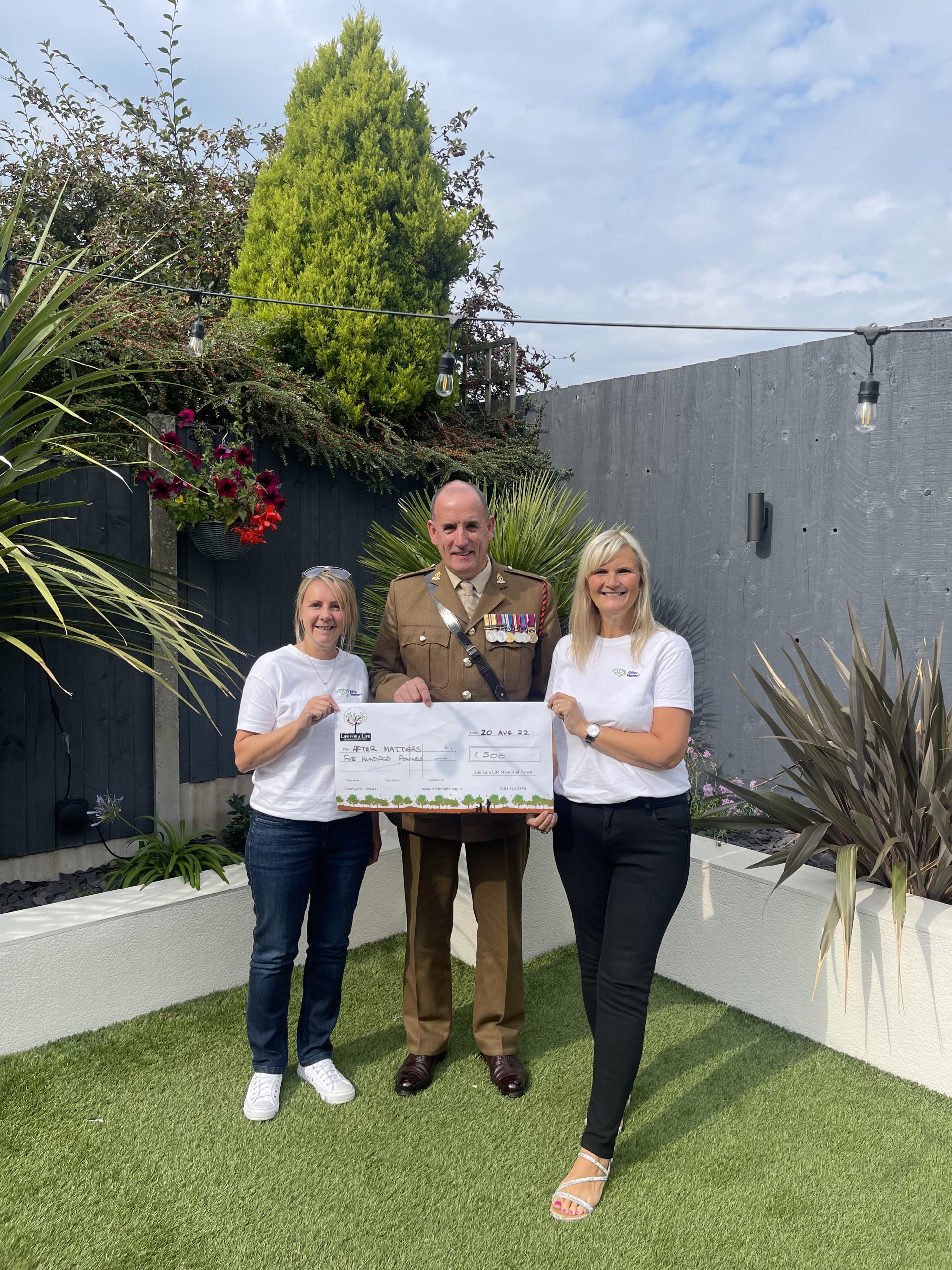 “Because of the kind of parents that Louise and I are, we would have done anything to find the help we needed, because we’re determined as mums to get the best for our sons,” says Maxine.
“I’m not sure we ever imagined we’d have to create something ourselves because there was nothing suitable, but I’m really pleased we have. We don’t want other families to feel alone in the way that we did.”
“We did this to help other people, but by creating After Matters, it has actually ended up helping us to feel better ourselves,” says Louise.
“Both Aidan and Matthew are involved, and I know that helps them, and they are really pleased that the work we are doing is helping other young people and their families.”
Maxine adds: “We want to show people that there is still chance to have a good life after brain injury. It’s just going to be a different life, but you learn to follow a different path, but it can still be a good one and that’s what we want to let our young brain injury survivors know, and hopefully they will see that when they see how far Matthew and Aidan have come.”
“Both Matthew and Aidan have had their best year in terms of how far they’ve come and how they have overcome their struggles. Seeing their confidence grow and their acceptance of their new life has been massive for us as parents too.”
“It has been more than four years since they sustained their brain injuries but this last 12 months seems to have been their best year in terms of their mental health and we have both seen improvements in the boys generally, long after the ‘two year’ window that you often get told will be the best they will get to.
“They do still have their struggles, but we really want other survivors and parents to be aware of that, to let them know there is always hope and improvements and gains can be continued to be achieved, no matter how small, it’s so important people are aware of that.
“It has taken four years to get to this stage. We hear from other families how they have reached the two year mark and think this is as good as it’s going to get – but our boys show that there is always hope. And that’s what we want to help bring to families.”