This case study follows Kelly’s* recovery journey after a stroke, and the unique impact that Neurologic Music Therapy (NMT) had on her rehabilitation at the Regional Neurological Rehabilitation Unit (RNRU) at Homerton Hospital
As approximately a quarter of patient admissions to RNRU come from Royal London, launching a service at the next stage along in a patient’s rehab offered an exciting opportunity to offer support across this phase of the care pathway and contribute to the growing evidence base of the benefits of NMT in the context of UK hospital care.
Neurologic Music Therapy is an evidence-based, neuroscientific model of music therapy. It is made up of 20 standardised clinical techniques that can be used to support rehabilitation of speech & language, movement, and cognitive skills. Supporting emotional wellbeing and adaptation to life after injury also forms an important part of this work. Each technique has its own research base and clinical protocol and the focus is on supporting non-musical goals.
Advances in neuroimaging mean we now understand more about the way in which music is processed in the brain. Research shows that to date, nothing else stimulates so many different areas of the brain simultaneously. Due to the distinctive way in which it is processed, music can be used to build new neural pathways around areas of the brain that have been damaged by disease or injury. This makes it an especially unique tool in neurorehabilitation which is invaluable for giving someone with a brain injury the best possible opportunity to respond and engage in their rehabilitation.
The RNRU is a 27-bed rehabilitation unit and offers multi-disciplinary inpatient rehabilitation treatment for adult patients affected by neurological injury and stroke, including traumatic brain injury. Neurologic Music Therapy was first integrated within the existing therapy provision offered by the RNRU’s multidisciplinary team in March 2021. A six-month NMT service was launched thanks to a combination of lottery funding and sponsorship support from Irwin Mitchell.
Kelly is in her mid-50s and had a stroke in early 2021. Following time on an acute ward, Kelly was admitted to the Regional Neurological Rehabilitation Unit (RNRU) at Homerton Hospital to continue her recovery and rehabilitation.
On admission to the RNRU, she presented with dense right-sided weakness, expressive aphasia, and apraxia of speech. Kelly was principally referred to NMT to support her expressive speech. The referral was made by her speech and language therapist who worked closely on goal-setting and Kelly’s general treatment plan alongside NMT.
A range of relevant NMT speech & language techniques were identified to support Kelly’s communication, including Oral Motor & Respiratory Exercises (OMREX), Musical Speech Stimulation (MUSTIM), Melodic Intonation Therapy (MIT) and Therapeutic Singing (TS).
OMREX involves the use of using of vocal exercises to work on areas such as articulatory control and respiratory strength; blown instruments are also used to target these. When we speak, we engage the left hemisphere of our brains, but when we sing, we actually engage the right hemisphere. Using vocal responses therefore provides an alternative ‘in’ to then begin working to rebuild speech.
Singing can often be slower than speech too, providing some patients a more accessible opportunity to practice the necessary mouth shapes/sounds needed for functional speech.
With Kelly, target words she wanted to be able to say were broken down into separate sounds, and then practiced within OMREX. This was then followed up with MUSTIM activities designed to stimulate automatic speech through activities such as structured phrase-completion using material familiar that is motivating to the patient and which features the target words.
Therapeutic Singing serves to synthesise a range of communication areas into one integrated experience and often features as a follow-up activity to more targeted NMT speech work.
For Kelly, MUSTIM and TS activities included music from a whole range of her favourite singers, including Phil Colins and Madonna.
Melodic Intonation Therapy (MIT) is a technique that uses the melodic and rhythmic elements of singing phrases to assist in speech recovery for patients with aphasia (Thaut 2005). This 6-step technique works by using patients’ unimpaired ability to sing – right hemisphere – to facilitate spontaneous and voluntary speech through sung and chanted melodies which resemble natural speech intonation patterns. We worked with Kelly and the MDT to identify key phrases to explore using MIT that she could use every day, including functional ones such as ‘help me’ and ‘my arm hurts’, as well as social phrases like ‘How are you?’ and important things she wanted to share about herself with others, including ‘I’m a good cook’.

Over the 16 NMT sessions she attended, significant improvements to communication were observed, with Kelly utilising MIT strategies to interact with patients and staff on the unit and initiating more words and phrases independently.
“Three separate nurses now have said to me how much more she is communicating around the unit”
– Head of Speech & Language Therapy, RNRU
Other techniques that were explored during Kelly’s NMT treatment included Musical Mnemonics Training (MMT).
This technique uses music as a mnemonic device to sequence and organise information and add meaning, pleasure, emotion, and motivation to enhance the patients’ ability to learn and recall the information involved (Thaut 2005). As music is processed and stored differently in our brains to verbal information, this means it is also retrieved differently in our brains.
Kelly’s OT shared that she was having difficulty with her rehab goal of independent upper body dressing as she was struggling to consistently recall the sequence of steps this involved. Using the 6-step sequence the OT identified, this was put into a simple song format using MMT and then taught to Kelly during her session.
After several repetitions to support Kelly to learn the song, she was able to apply the technique internally to dress herself using this strategy at the end of just one session. What was most encouraging is that she was also able to successfully carry this strategy over to dress herself independently the following day and every day thereafter.
“I saw her today and the nursing staff reported that she dressed her upper body independently this morning! Thank you for your input – it’s worked brilliantly!”
– Occupational Therapist
On discharge, Kelly only required minimal assistance of one for basic care. She was able to dress her upper body independently and utilise total communication strategies to express herself and her needs.
She achieved 100 per cent of her SMART goals in NMT and in her patient discharge questionnaire, Kelly selected ‘strongly agree’ that NMT had made her speech and cognitive skills much better in addition to a host of other positive benefits including reducing anxiety, increasing 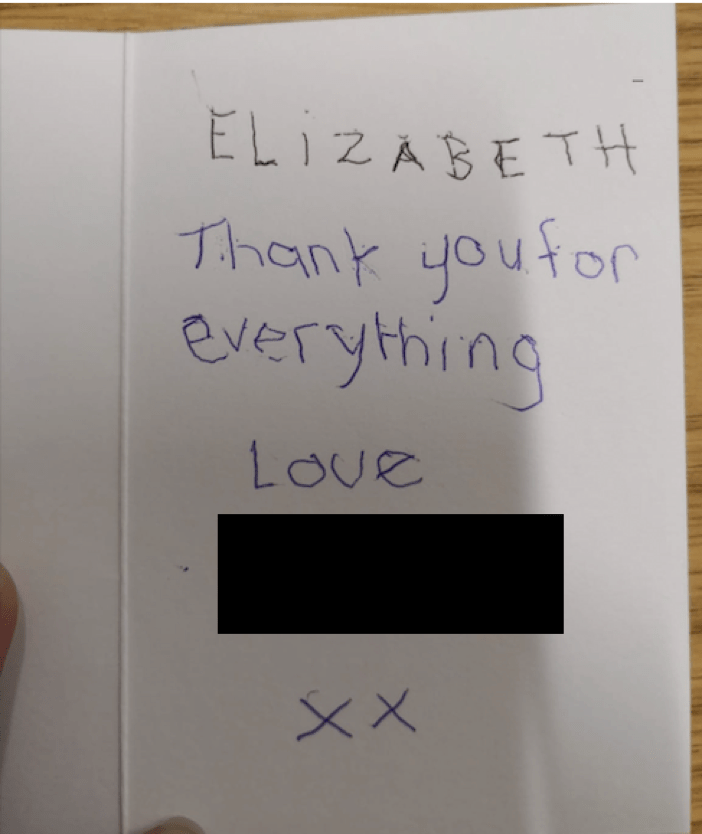 engagement in rehab and supporting her to express her feelings.
It’s important to acknowledge that Kelly’s rehabilitation was a credit to the whole MDT and to Kelly’s determination. However, music’s ability to rewire the brain makes it an invaluable tool in neurorehabilitation and NMT did form a significant part of Kelly’s recovery story.
Facilities that want to pioneer true innovation in neurorehabilitation must move away from the pattern of viewing music therapy as a non-essential adjunct to traditional rehab therapies, and towards the research and results, keeping the voices of patients and their lived experiences at the centre.
“It has made a considerable difference to goal achievement and allowed a different perspective and approach in cases where other therapies have become stuck. It has extended a playful and creative aspect to MDT work which is not always easy to access”
– Head of Speech & Language Therapy, RNRU
The UK’s first NMT focused conference is taking place in London on 24th March 2022 – ‘Where Innovation Meets Evidence: the cutting edge of Neurologic Music Therapy and evidence-based practice in clinical settings’. To download the flyer or book onto the event, visit this link
You can find out more about digital and face-to-face Neurologic Music Therapy on Chiltern Music Therapy’s website
*Name has been changed
Thaut M H (2005). Rhythm, Music and the Brain: scientific foundations and clinical applications. New York: Routledge.