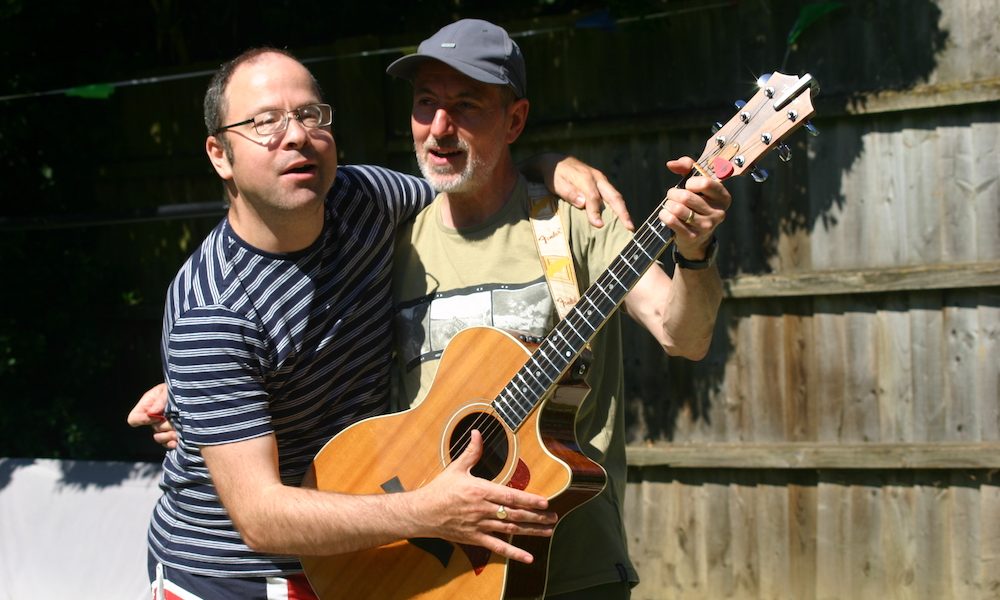
Richardson Care’s holistic approach includes activities involving music to enrich the lives of its service users with acquired brain injury or learning disabilities
For thousands of years, people have been intimately aware of the effects of music on human beings. The ancient Greek philosopher, Pythagoras, is reputedly the first to suggest an explicitly medicinal role for music: He thought the soul had its own resonance and could be healed with exposure to the right harmonic sequence of sounds.
Since then our understanding has progressed, and with the regular, mass consumption of music, the idea that music has a profound and many-faceted impact on us, as both listeners and players, is not controversial.
Many neurological studies can now be found that attest to the widespread activation of the brain when listening to and performing music.
Brain activity is certainly not limited to just auditory processing when we engage with music, even when simply listening to it and when physically at rest. Regions of the brain associated with memory, motor-control, cognition and emotion, to name but a few, are involved in listening to and playing music; scientific confirmation of the well-known reality that music moves us physically and emotionally in many ways. It transports us to different times, places and the memory of people in our lives.
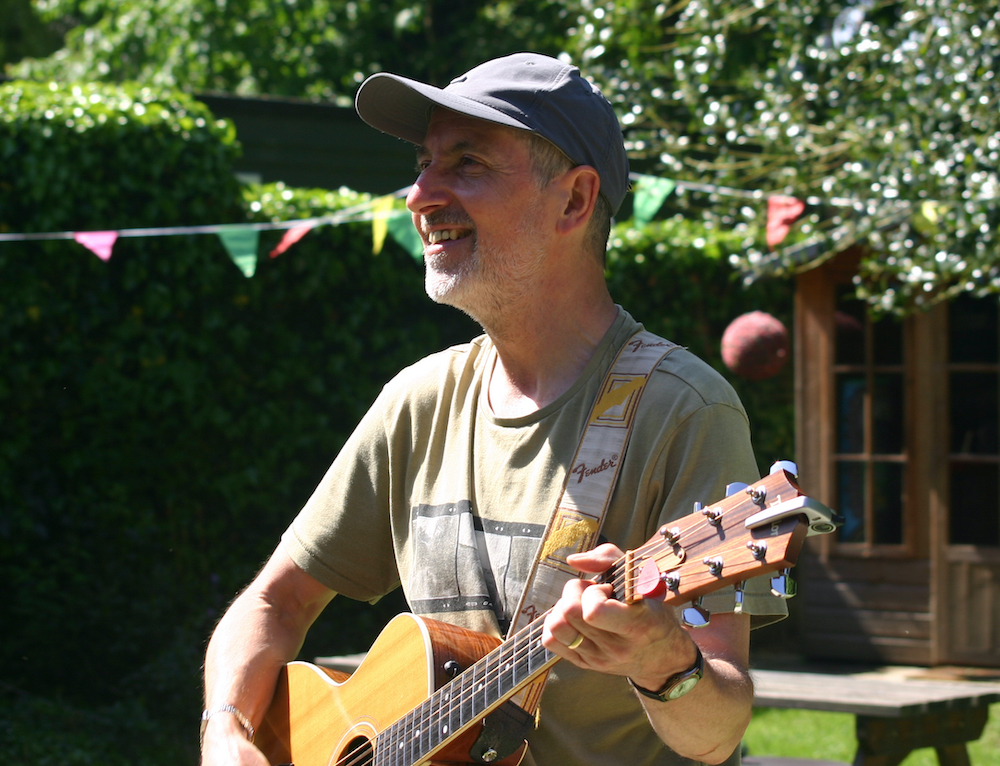
Music enrichment activity in brain injury rehabilitation
Brain injury rehabilitation provider, Richardson Care, has developed a framework of music enrichment activity that is offered to all service users.
Music enrichment at Richardson Care is delivered by professional musicians and singers, who have a passion for music and the transformative effects it can have. It involves service users in a wide range of activities:
Weekly visits from ‘Martin the music man’, karaoke sessions, regular discos in the homes, guitar and singing lessons are all provided. This all goes towards making music a normal and valuable part of life for the service users at Richardson Care.
Whether they are passively listening, dancing, chair dancing, learning an instrument, playing along on percussion or another instrument or just singing along, service users enjoy a non-pressurised engagement with music, always in the presence of care and support workers.
These activities have been observed to:
- Stir positive emotions – happiness, joy, calmness
- Encourage participation and engagement
- Improve social interaction
- Increase confidence and self-esteem
- Help develop concentration skills
- Depending on the specific song or tune, they can trigger memories and support reminiscing
- Dancing is a physical activity that brings the benefits of cardiovascular exercise and improved muscle tone
- Singing uses different pathways in the brain from speech, so service users who have speech difficulties following a brain injury may find that singing helps them to communicate.
Greg Richardson-Cheater, director at Richardson Care, says: “Brain injury rehabilitation requires a multi-faceted approach and music enrichment is an important part of that. We instinctively know that music can have a positive effect on our emotions and wellbeing.
“But in addition to that, it offers a sense of joy and normality to people who have spent many years in a clinical or institutional setting. This is the case for our service users who have acquired brain injury or learning disabilities and complex needs.
“It is central to our ethos of providing a sense of community, inclusion and fulfilment in our residential care homes.”
The benefits of music for people with lost or impaired brain function
The scientific study of the healing and restorative effects of music has, in modern times, given rise to the professional practice of music therapy. Along with this, great strides have been made scientifically, to specify and prove some perhaps less predictable and genuinely therapeutic effects of music for people with lost or impaired brain function.
Music listening, to give just one example from the literature, has been proven to ameliorate cognitive symptoms—including attention and verbal memory.
Music enrichment leader at Richardson Care, Martin Reeves, believes there is an abundance of anecdotal evidence for the therapeutic effects of music in his work. Having returned after a long absence due to the pandemic, he noticed recently how service users with learning difficulties could remember all the words to the songs they requested from him.
“Music embeds itself into your psyche,” he says. “Singing is a different cognitive process to talking, and sometimes, people who sing don’t always talk.
“This is particularly important for people who have an acquired brain injury and may struggle with memory issues or speech. The words and melodies are entrenched. It’s as though the brain has a separate shelf that it keeps all the music on.”
A music therapist will investigate the science of these effects through careful application and monitoring of the methods of professional music therapy. There is growing evidence from this field that engagement with music can even induce general neurological plasticity – the brain’s ability to remake connections and to change its organisation.
Music enrichment activity at Richardson Care often confirms the discoveries of music therapists. The aim is to apply these lessons sensitively and appropriately, on an everyday basis to assist in the recovery of service users and to increase the quality of their lives now.
As musician Billy Joel once said: “I think music itself is healing. It’s an explosive expression of humanity. It’s something we are all touched by. No matter what culture we are from, everyone loves music.”
- Richardson Care is an independent and family-run care provider specialising in residential care and rehabilitation for adults with learning disabilities, acquired brain injury and complex needs. Located in Northampton, it has a portfolio of six homes offering short-term intensive rehabilitation, long-term rehabilitation and a home for life. More information is available at www.richardsoncares.co.uk or by calling 01604 791266.