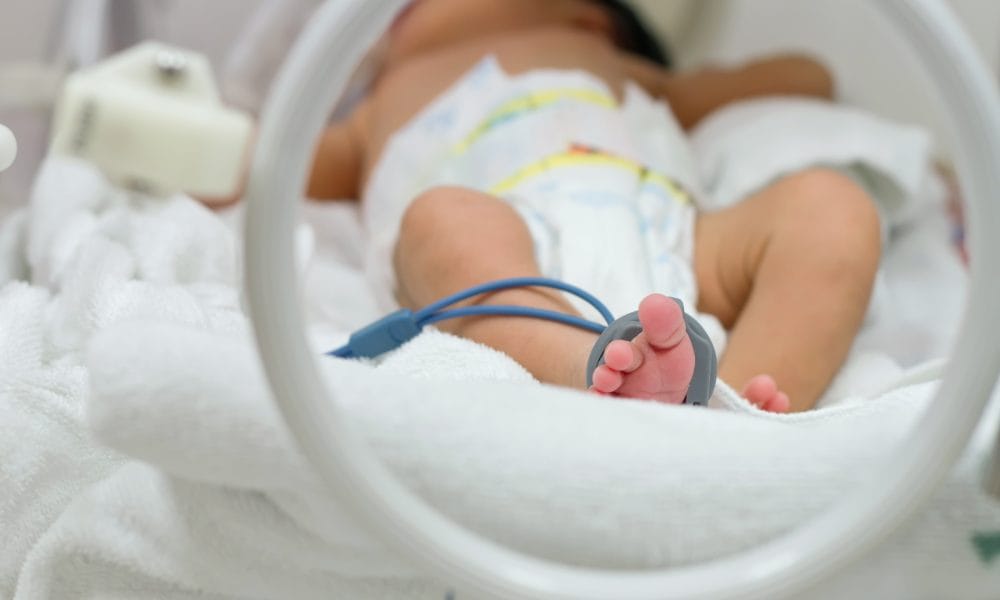
The occurrence of baby brain injury during pregnancy or at birth may lead to differing impacts on motor and language outcomes, a new study has revealed.
New research has mapped the neural connections of newborns with two different kinds of brain injuries, and found the maps looked very different – and were linked to significantly different developmental outcomes years later.
The study, led by UCSF paediatrics, neurology and radiology researchers, used diffusion MRI to visualise the brain wiring of two sets of newborns: one set with congenital heart defects (CHD) and the other with hypoxic-ischemic encephalopathy (HIE), or birth asphyxia.
HIE babies experience brain injury and oxygen deprivation within days to hours of being born, while CHD babies are steadily deprived of oxygen for longer – often months – in utero.
Both groups are known to be at high risk for neurodevelopmental disabilities as they grow older, in areas ranging from motor skills to attention to behavioural issues.
“You have two sets of kids who, before or during birth, have a brain injury and then end up having some delayed or altered development and problems at school age,” said Dr Patrick McQuillen, UCSF professor of paediatrics and neurology, and the study’s corresponding author.
“We wondered if the newborn brain, when faced with something challenging at different times, responds in the same way. What we found was the brains of these two sets of babies looked very, very different.”

The researchers found that the distinct differences in brain wiring between the groups correlated with motor and language outcomes later.
Specifically, they found the CHD newborns had worse language function at 12 to 18 months and worse cognitive, language and motor function at 30 months than the infants born with HIE, whose outcomes at both time points were in the normal range.
While about 20 per cent of CHD babies scored below the normal language range at 12 to 18 months, the number grew to 50 per cent below normal by 30 months. In addition, 37 per cent of CHD children scored below normal in the cognitive domain and 25 per cent scored below normal in the motor domain at 30 months.
Language delays appeared to be driven by expressive, not receptive, language deficiencies, the study authors noted.
The main difference between the CHD and HIE brains that showed up in imaging was in an area called “global efficiency,” which measures how easy it is for a connection to be made from one area of the brain to the other.
An efficient brain resembles a traffic system with an ideal balance of highways and local roads that take a driver where she needs to go quickly, Dr McQuillen explained.
The researchers will continue to follow the babies in the study and were recently awarded a grant from The Children’s Heart Foundation to conduct additional brain imaging and testing of the subjects at school age.
Their hope is that by understanding how the brain connections work and match to developmental outcomes, researchers will be able to link children with brain injuries to early intervention more quickly. Eventually, children may even have treatments tailored to their type of brain injury.
“We’re not quite there yet,” Dr McQuillen said. “We are still in the stage of describing what’s different, and using those patterns to make predictions about outcomes. But I am hopeful about where this is headed.”