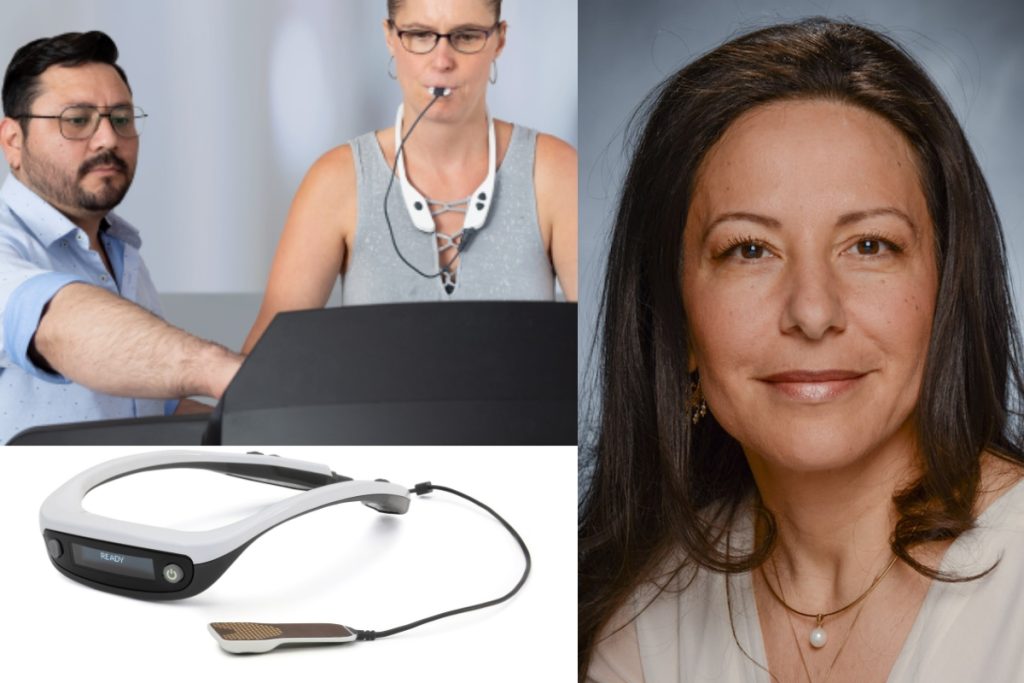
As medical director of Holy Name’s renowned MS Center in New Jersey, Dr Mary Ann Picone is a hugely influential figure in the movement to advance MS treatments. NR Times speaks to her about challenges, opportunities and new developments in the MS field.
Not so long ago, being diagnosed with MS meant an end to life as you knew it.
So bleak was the outlook, recalls Dr Mary Ann Picone, that America’s MS community came up with a phrase soaked in gallows humour – “diagnose and adios”.
Although as recently as the 1980s there were virtually no treatment options for clinicians to turn to, however, there are now numerous; and Dr Picone, who has been on the frontline of MS drug development in the decades since, has played an important role in helping to drive this.
“We’re in a completely different phase of MS now,” says the medical director of the MS Center at Holy Name Medical Center in New Jersey – which has been a catalyst for new treatment development since the mid 80s.
“When I first started, most of the patients I would see in our waiting room were wheelchair bound. They needed assistive devices and were frequently admitted to the hospital for treatment with IV steroids because of flare ups and relapses. There was no effective therapy to slow down disease progression.”
Fortunately, MS research has progressed at pace since then and the general picture is much brighter.
Dr Picone says: “Things have changed. There is still no cure for the disease, and it can be still be devastating for patients. It is a chronic illness.
“But most patients nowadays are ambulatory. They’re able to work, have families, go to school and carry on their activities of life. Often, in many cases, you wouldn’t know that they have an underlying problem.
“So that that’s been one of the major changes in that we’ve been able to help patients to be more functional nowadays. They’re able to go to work, to carry on their lives.
“Perhaps some adaptations at times have to be made, and people need to remain on their disease modifying therapies to keep things in check. But they’re able to function.
“Years ago many women of childbearing age with MS were told that they shouldn’t have children because of the risk of flare up after delivery.
“But that’s not at all the case and patient pregnancy does not affect the long-term course of the disease.
“We can work with them in terms of the timing of their treatments, when they need to start and stop in order to try to achieve a better outcome overall.”
In 1985 when the MS Center at Holy Name first opened its doors, people newly diagnosed with MS faced a treatment vacuum.
“When we started there were no approved, effective disease modifying therapies for multiple sclerosis. We now have close to 25 approved therapies for the treatment of MS.
“We’ve been involved in pretty much all of the novel drug development studies that have come to market for treatment, from the early interferon therapies and oral therapies, to the IV monoclonal antibody therapy of which the new therapy Briumvi is one.”
Briumvi, which was approved by the FDA in December, is for patients with relapsing forms of MS.
Following a starting dose, the medication can be administered in a one-hour infusion biannually – versus existing bi-annual treatments that take around six hours each time. Holy Name participated in clinical trials of the drug between 2017 and April 2022.
The work of MS Center extends far beyond just supporting drug development, however.
Dr Picone says: “We provide the evaluation and management of the patients involved in clinical research, new drug development, psychosocial studies, exercise intervention studies and we also have neuropsychology and cognitive rehabilitation services for patients. [Also] social work counselling and case management for patients to help with disability employment issues.”
The outlook for MS patients may well have improved exponentially in recent decades, but Dr Picone believes there is much more ground to cover in coming years.
“The two main issues are what we can do to prevent the disease, and what we can do to reverse damage it has already caused.
“What can we do to repair myelin, that fatty coating that surrounds the nerve fibres? How can we help to repair nerve axons that have already been damaged, that have caused permanent deficits for patients?
“These are the two main areas where most of the research is being focused going forward.”
While MS prevention and the reversal of the impact of the disease may be the ultimate research goals, Dr Picone also sees treatments for people with secondary progressive MS as another urgent, unmet need.
Individuals at this stage – which comes after relapsing remitting MS – see their disabilities get steadily worse.
Dr Picone says: “None of our current therapies make an impact on this form of the disease. For secondary progressive patients who aren’t having relapses, or for those progressive patients who already have deficits, the goal is to repair damage that is already there, to improve function for these patients.”
Another area of increased focus among researchers surrounds causes of MS.
For example, “there was a large study published last year by Dr. Ashario from Harvard, which looked at close to 10 million military recruits and showed that there was a strong association between the Epstein-Barr Virus and later development of MS.
“Research now is also looking at whether the development of an Epstein-Barr Virus vaccine could help in preventing MS.
“Could viral therapies that attack Epstein Barr Virus affected B cells in the immune system help in repairing some damage that has already occurred?
“That’s one area that that’s being investigated which is very exciting, because we know that these Epstein Barr Virus infected V cells lie dormant within the nervous system and can trigger MS disease activity.”
Earlier diagnosis remains a constant pursuit in research circles, says Dr Picone, while the identification of risk factors is becoming increasingly sophisticated via genetic studies.
“We’re recognising the disease earlier. Patients are getting diagnosed and sent to us earlier.
“We do still see this to a certain degree, but years ago, patients would often go years misdiagnosed or MS was not thought of as the cause of their problems and so they worsened before they had an official diagnosis.
“MRI has made a huge impact on early diagnosis for patients, with better and stronger strength magnets.
“Some of the triggers [of MS] we recognise are smoking, low vitamin D levels and obesity – particularly in children, because it is a pro-inflammatory state.
“These can increase the risk of development of the disease in someone who is genetically susceptible.
“We are learning more about the genetics of the disease and inheritance in families. That’s something that we’ll utilise more for the future, [identifying] possible biomarkers that can help us recognise how patients are responding to their particular therapies.
“Are there certain blood tests that we can do to help evaluate if somebody is having a good response to the treatment that they’re on, or should they be changed to a more effective therapy?
“There’s still a lot of work being done in this area, particularly in regard to patients who are of African American descent, who tend to have more aggressive forms of the disease.
“There are genetic studies going to see if there is anything in this patient population that does put them more at risk. Or is it more a factor of disparities in healthcare access that may make the patients of colour or Hispanic patients more at risk for more aggressive disease?
“We do know that in families, it isn’t a disease that gets directly transmitted from parent to child, but rather there is a slight increased risk of about three to four per cent of developing MS.
“So if a mother or father has the disease, there is about a three per cent higher risk that their child will develop MS. There are a lot of variables that come into play with that too.
“For example, if a parent has MS, we try to make sure their children receive a supplement with vitamin D to maintain high vitamin D levels, because that plays a role in the gene expression.”
Although much progress has been made in recent years in the search for better treatments of MS, the logistical challenges presented by the pandemic undoubtedly slowed some areas of innovation down.
Conversely, lessons learned during this dark chapter of medical history have also helped to speed things up post-pandemic.
Dr Picone says: “Drug development studies unfortunately still take a long time, and you have to go through phases one, two and three of testing.
“It can still take 10 to 15 years before a new drug receives FDA approval. Unfortunately if studies don’t work well than you have to go back to the drawing board.
“In many cases it is hard to recruit patients for clinical studies; and this was particularly challenging in the pandemic, with people unable to leave their homes. And so research around the world slowed during that period, but it’s ramping back up now.
“Being able to see and examine patients who are in clinical studies through Zooms or tele-visits has provided a bridge to help speed up some of the research that slowed.
“We’re trying to make up for lost time now, and to get patients interested in participating in the clinical trials, which is also a challenge.”
Read more about the work of the MS Center at Holy Name Medical Centre here.