Why patients struggle to sustain home rehabilitation and what we can do about it
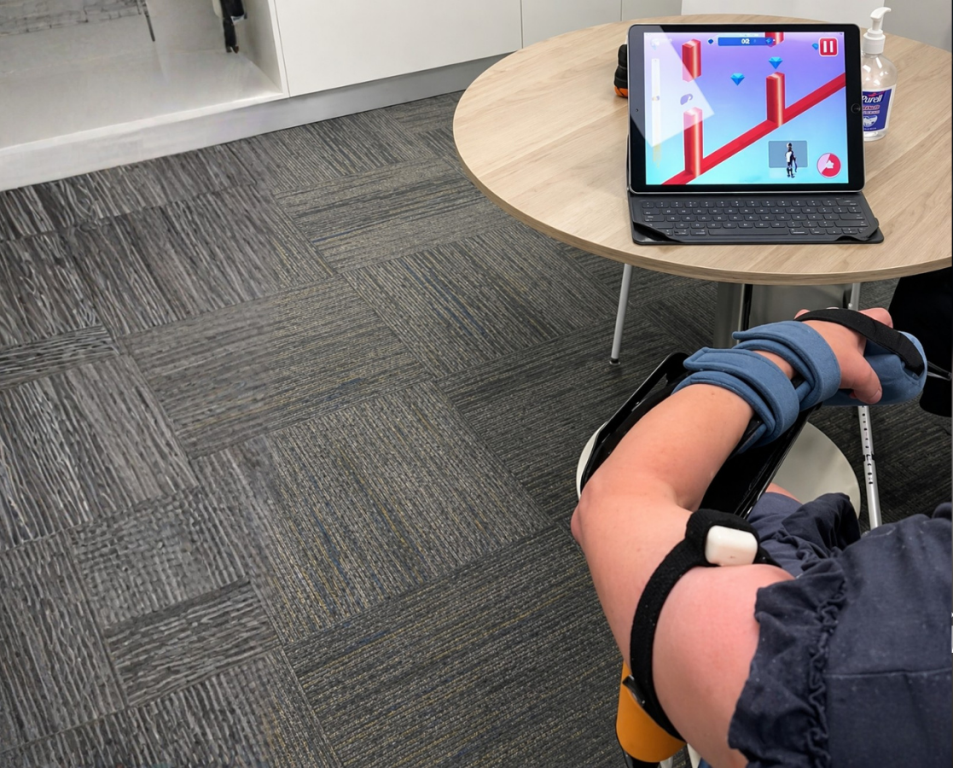
By Lusio Rehab
Home rehabilitation is where therapy either continues to deliver results or loses momentum.
In neurological rehabilitation, clinicians understand this well.
What happens between appointments can determine outcomes just as much as what happens within them. Yet translating that understanding into consistent, sustained engagement at home remains one of the most persistent challenges in practice.
The difficulty is rarely about effort or intent. More often, it reflects the complex reality patients are navigating outside the clinic.
Research into rehabilitation adherence has consistently highlighted the same patterns.
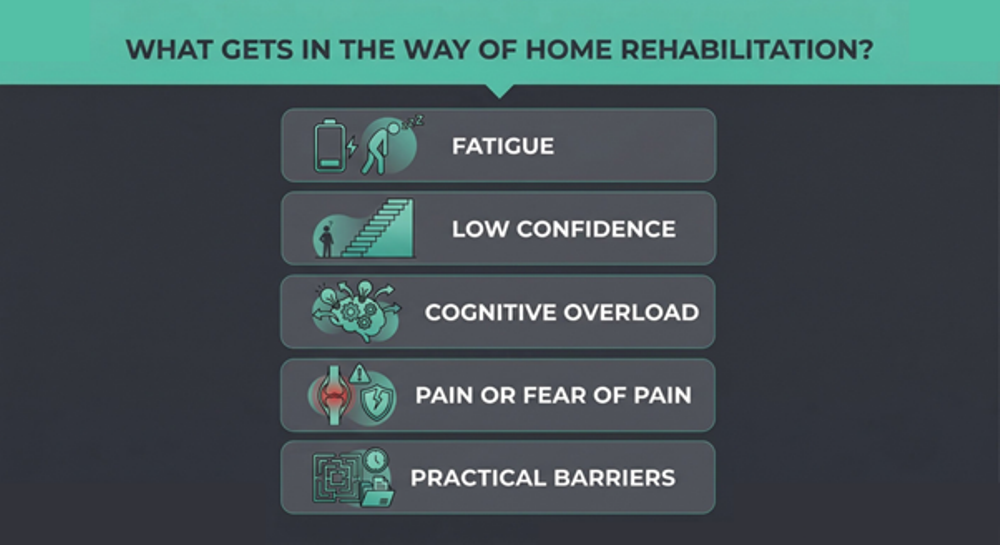
Patients are less likely to maintain rehabilitation when confidence is low, mood is affected, social support is limited, pain increases during activity, or when practical barriers begin to accumulate. These factors do not exist in isolation; rather they interact, often compounding one another.
In neurological populations, that complexity is amplified.
A person recovering from stroke, living with Parkinson’s disease, managing multiple sclerosis, or adapting after a neurological injury is not simply completing a list of exercises.
They may be managing fatigue, cognitive load, uncertainty, and changes in identity alongside their physical recovery.
They are asked to repeat effort in the context of variability; where some days are manageable and others are not.
Adherence, in this sense, becomes less about compliance and more about capacity.
Why adherence breaks down and what the evidence says
In neurological rehabilitation, the barriers to sustained home practice are well documented and rarely operate in isolation.
Fatigue, often unpredictable and disproportionate in conditions such as stroke, Parkinson’s disease, and multiple sclerosis, limits the available window for effort on any given day.
Cognitive challenges including impaired initiation, attention, and memory can further prevent independent follow-through, even when motivation is present.
Motivation itself is not fixed. Research on self-management and behaviour change consistently shows that it fluctuates with mood, perceived success, and whether activity feels meaningful and achievable.
Rehabilitation also frequently intersects with identity and emotional recovery; patients may carry grief, frustration, or a sense of disconnection from their body, all of which shape whether a programme is sustained.
The evidence is equally clear on what supports adherence.
Programmes built collaboratively around patient goals, accompanied by clear clinical communication and reinforced through positive feedback and social support, are substantially more likely to hold.
Neuroplastic recovery depends on consistent repetition, yet repetition is precisely what monotony, fatigue, and competing demands erode.
Adherence is therefore not a compliance problem; it is a design problem, one that must account for the patient’s environment, cognitive load, energy levels, and emotional context if consistent practice is to be sustained.
Designing for real-world adherence
Improving adherence is less about adding complexity and more about reducing friction.
Simplifying programmes can reduce cognitive load and increase the likelihood of follow-through.
Making the purpose of each activity visible can help connect rehabilitation to the patient’s own goals.
Designing programmes that allow for fluctuation recognises that neurological conditions are not static, and that energy and capacity can vary from day to day.
Feedback is another key component. Progress in neurological rehabilitation can be slow and difficult to perceive. Without clear feedback, patients may underestimate their progress or disengage prematurely. Visible reinforcement helps sustain engagement over time.
Support structures also matter. Family members, carers, and clinicians all contribute to whether rehabilitation feels achievable or isolating.
When that support is present and aligned, adherence is more likely to hold.
Ultimately, the goal is not to create the most ambitious programme, but one that can be consistently maintained within the patient’s real-world context.
Extending rehabilitation beyond the clinic
For many clinicians, the challenge lies in bridging the gap between what is prescribed and what is sustained.
This is where tools that support engagement, feedback, and visibility can play a practical role; helping extend rehabilitation into the home without increasing complexity.
Low-cost, accessible technologies such as LusioMATE are designed with this in mind.
By providing immediate feedback and making progress more visible, they can help reinforce effort and support motivation between clinical sessions.
This can be particularly valuable in neurological rehabilitation, where gains are often gradual and not always immediately apparent.
As one stroke survivor and LusioMATE user, Kate Kirsop, described, the shift was not only functional but also experiential.
Rehabilitation became something she could return to more consistently, supported by increased motivation and clearer signs of progress.
Her therapist also observed measurable improvements, including changes in posture and movement.
This reflects a broader principle seen in adherence research: patients are more likely to continue when they can see progress, when the process feels achievable, and when their efforts are reinforced over time.
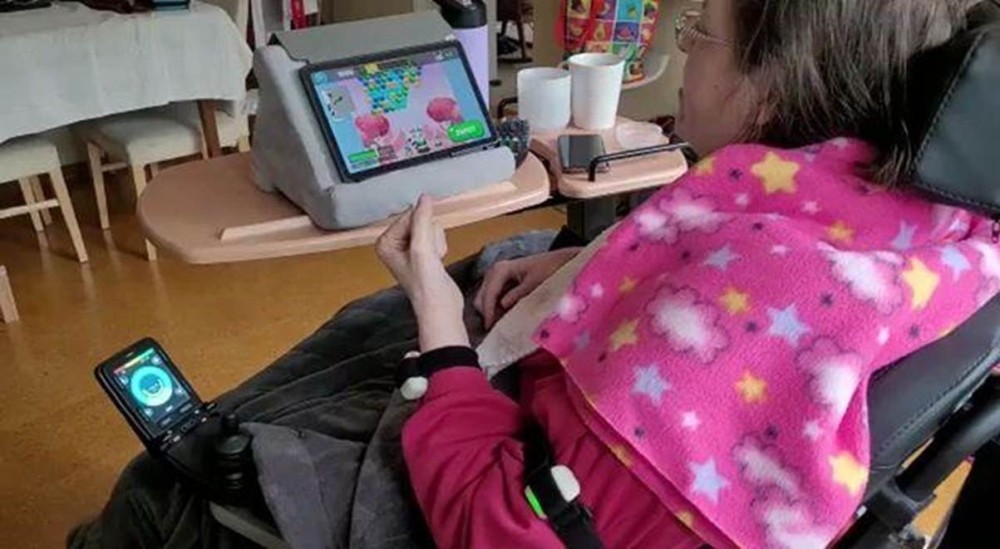
Making rehab easier to return to.
Sustained rehabilitation is a system, not a prescription
There is a growing recognition across rehabilitation that outcomes at home are not determined by clinical knowledge alone.
They are shaped by how well programmes account for behaviour, confidence, context, and emotional load.
This is particularly true in neurological rehabilitation, where the gap between what a patient can do in the clinic and what they can sustain independently can be significant.
If more patients are to continue with rehabilitation, the focus must move beyond exercise prescription alone. It must include an understanding of the full picture: fatigue, cognition, mood, identity, support, and environment.
Because patients rarely stop for a single reason.
They stop when the demands of the programme exceed the support available to sustain it.
And that is a challenge, and an opportunity, that the sector can address directly.
Evidence base
This article draws on published research relating to rehabilitation adherence, self-management, and behaviour change, including:
- Barriers to Treatment Adherence in Physiotherapy Outpatient Clinics: A Systematic Review – Kirsten Jack, Sionnadh Mairi McLean, Jennifer Klaber Moffett and Eric Gardiner – 2010
- Sticking to It: A Scoping Review of Exercise Therapy Adherence in Children and Adolescents With Musculoskeletal Conditions – Christopher J. Holt, Carly D. McKay, Linda K. Truong, Christina Y. Le, Douglas P. Gross and Jackie L. Whittaker – 2020
- Providers’ Roles in Enhancing Patients’ Adherence to Pain Self Management – Linda Dorflinger, Robert D. Kerns and Stephen M. Auerbach – 2013