Having experienced a brain haemorrhage five years ago, 52-year-old Jane Hallard from Gloucester has had to rebuild her life. Here, she details her struggle and how she has learned to look to the future with positivity.
In the five years since my brain injury, I’ve had to come to know a whole new me.
While I look the same as I did, I’m far from being the same person.
On that day, back in 2015, when I was helping my son to clean his car, little could I have imagined what lay ahead.

There was nothing unusual about that day, I felt fine, nothing was amiss at all.
Then, without warning, I can only describe the pain as if my head was being hit by a sledge hammer. I had experienced, I later learned, a subarachnoid haemorrhage.
I was rushed to hospital, where I underwent life-saving surgery and then spent the next eight weeks recovering from the ordeal which came out of nowhere, but was to change my life more than I could ever have predicted.
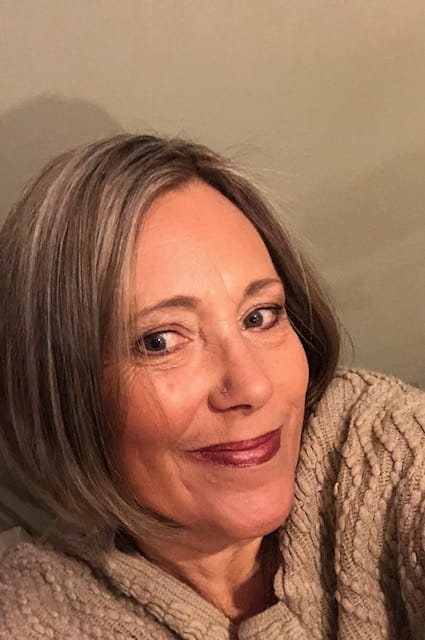
Jane Hallard
The main issues I experienced, and continue to have to overcome on a daily basis, are the impact on my mental health and the brain fatigue.
Both completely unseen by others, they are hugely difficult for me and impact on my life in so many ways.
They are very hard to explain to people – I couldn’t understand what was happening to myself at first, so couldn’t really expect family and friends to.
My children, then aged 22, 21 and 15, were fantastic, and my mum was hugely supportive too – although my husband, who I had only married six weeks before my haemorrhage, decided he couldn’t cope and left.
The emotional impact of that was another big barrier to overcome.
My mental health is up and down and finding ways to manage that has been hard, particularly over the past few weeks during the COVID-19 pandemic.
That did set me back greatly, but I feel like I have picked myself up again now.
Emotions are very difficult to deal with, and I often react to things very differently to how I used to. Furthermore, the brain fatigue has a huge effect.
Often I describe this to people, and they’ll say ‘I get really tired too’, which I appreciate is them trying to understand, but they really don’t.
Whereas a person without a brain injury will go to bed and sleep, during which time their brain recovers, for me, my brain will only recover to perhaps 70 per cent of what it used to.
I often feel I’m starting a day six steps behind everyone else. I generally go to bed at 8pm, as I only have a certain amount of energy to use to get through the day, and while that gives me the best chance of feeling able to face the following day, having such an early bedtime means I have no social life.
I returned to work around eight months after my brain injury, and because I looked fine, people presumed I was back to ‘normal’, little realising I was far from the person they used to work with.
People just don’t understand. I used to print off leaflets about brain injury and its impact and leave them around the office, hoping colleagues would read them and learn a bit more about what I was living with on a daily basis, but people just don’t find time for things like that in their busy lives.
One of the most distressing parts about my whole ordeal was finding out upon discharge from hospital how little support and guidance there is out there.
When I was discharged, I was given a follow-up appointment a few weeks down the line, a couple of leaflets, and that was it.
I was left with a life-changing injury and just released back into my old life and expected to get on with it.
I had no idea what to do or where to go. My children looked online to find information, online forums and local groups for me to attend, so I could find somewhere where people genuinely understood.
My Headway branch in Gloucester was a lifeline for me. In fact, if it wasn’t for them, I don’t know where I’d be. I don’t know whether I’d be here at all.
I still upsets me thinking of people who are in the position now that I was five years ago, not being directed towards Headway or any other kind of support.
I’ve been there and now how that feels, and I strongly believe that needs to change.
Now, generally, I feel in a much better place. I’m all set to start a new job, which is a new challenge for me doing something totally different, and I can’t wait to get started.
I’ve found that you can’t wait for things to get better, and it might not get easier, but you can find ways to deal with it. I do a lot of volunteering work at a local food bank, and that puts things into perspective for me.
You can choose the way you go in life – you can sit around wallowing, or you can get on and make the best of it. That’s the attitude I have learnt to adopt and the one I’m going to live my life by from now on.