



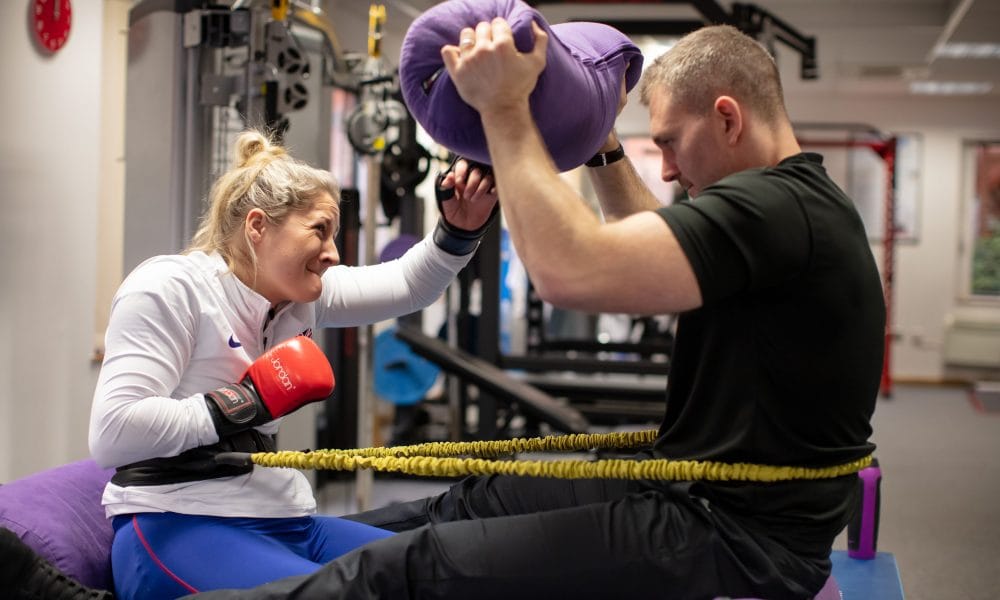
Strength and conditioning is a field of exercise science specialising in the optimisation of human performance.
Along with other closely related disciplines – such as physiotherapy, biomechanics and physiology – strength and conditioning is an established support service in sport but rarely applied within neurorehabilitation, despite holding evident value.
Within sports, a strength and conditioning specialist works collaboratively with a multidisciplinary team that has been collectively tasked with optimising the physical resilience, development and performance of athletes. An integral part of their specific role within such a team is to maximise the technical training opportunities of athletes by ensuring they can withstand the unique physical demands placed upon them by their respective sport, training environment and competition format.
This role is fulfilled by methodically appraising and addressing the physical abilities and limitations of athletes in alignment with specific outcomes associated with sporting success. In doing so, distinct movement patterns (eg running), physiological systems (eg cardiovascular) and architectural properties of muscles (eg cross sectional area), can be effectively and repeatedly targeted for adaptation and maintenance as required.
Contributor to success
Strength and conditioning is recognised as a key contributor to the sporting success of athletes and teams competing at the highest level, with a reported 93 per cent of Great Britain’s Olympic and Paralympic medal winners receiving this support service in the lead up to the last Olympic games in Rio 2016.
Despite the undeniable success of such an approach, the field of neurorehabilitation has yet to recognise the value that this specialism can bring to the long-term recovery from and ongoing management of neurological conditions and associated issues. This is a missed opportunity – especially within a community-based setting, where access to services supporting this population in completing a recommended level of exercise and exploring potential for functional recovery is limited.
In part, this can be attributed to a level of ambiguity regarding the exacting role that such a specialist can fulfil within the existing team of professionals who work together to support this population’s exercise needs and ongoing recovery. Typically, these teams comprise consultants, occupational therapists, physiotherapists and case managers who are likely to associate strength and conditioning with fitness instructing and personal training.
While both of these disciplines have a place within neurorehabilitation, professionals qualified to deliver such sessions are only required to complete relatively short courses which don’t cover the range and depth of knowledge regarding how their skills can be applied in support of those with neurological conditions. This is compounded by the apparent ambiguity surrounding the skills possessed by strength and conditioning specialists.
Specialist knowledge
In contrast, a Bachelor of Science degree course will cover an array of relevant topics and necessitates the completion of several vocational placements, as well as an undergraduate research project, before aspiring strength and conditioning specialists are eligible to acquire and maintain accreditation with a well-governed professional body. This means that such specialists are equipped with a more pertinent foundation of knowledge and greater level of professional practice than a fitness instructor or personal trainer.
 This combination of attributes is perhaps most advantageous to individuals living with neurological conditions during the later stages of their recovery journey. Once a level of clinical stability and functional recovery have been reached following engagement in an initial period of intensive rehabilitation, many people struggle to meet their exercise needs after returning home thus unfulfilling their potential for further recovery of function.
A strength and conditioning specialist could safely apply an array of training methods underpinned by evidence-based principles and research to explore and maximise people’s functional capabilities. In addition, they can creatively overcome any barriers inhibiting them from reaching specific exercise intensities required to maintain health and evoke adaptations.
Integrating strength and conditioning into rehab
Here at Neurokinex, we hold strength and conditioning in high regard and integrate specialists into our team of multidisciplinary professionals providing a range of established and cutting-edge neurorehabilitation services.
The effective transfer and safe application of their skills is guided by the collective expertise of team members from more clinical backgrounds including physiotherapists, occupational therapists, exercise physiologists and sports therapists. It is not so unlike the process used when supporting the return-to-play strategies of athletes or managing any underlying health issues whilst they are training and competing in sport under the guidance of medical professionals.
Strength and conditioning specialists are required to learn the physical abilities of individual athletes and the unique sporting demands placed upon them before designing a programme to support them in optimising performance.
In the same way, our specialists also assess the goals and needs of clients whilst abiding to stringent medical guidelines. They first learn the functional capabilities of individuals living with a neurological condition and the specific movement patterns they are required to complete when performing daily livings tasks. Then they design programmes to help them become more independent through optimising performance of such tasks whilst understanding the limitations imposed by their condition.
By integrating such specialists within the Neurokinex team, we provide a significant additional dimension to the services we provide to the community we serve. Our hope is that the wider field of neurorehabilitation will also soon appreciate the difference this approach can make and look to apply strength and conditioning techniques to support those living with neurological conditions.


