NR Times talks to leading neuroscientist and MS expert Deborah Backus about the boundary-pushing research taking place at the Shepherd Centre in Atlanta.
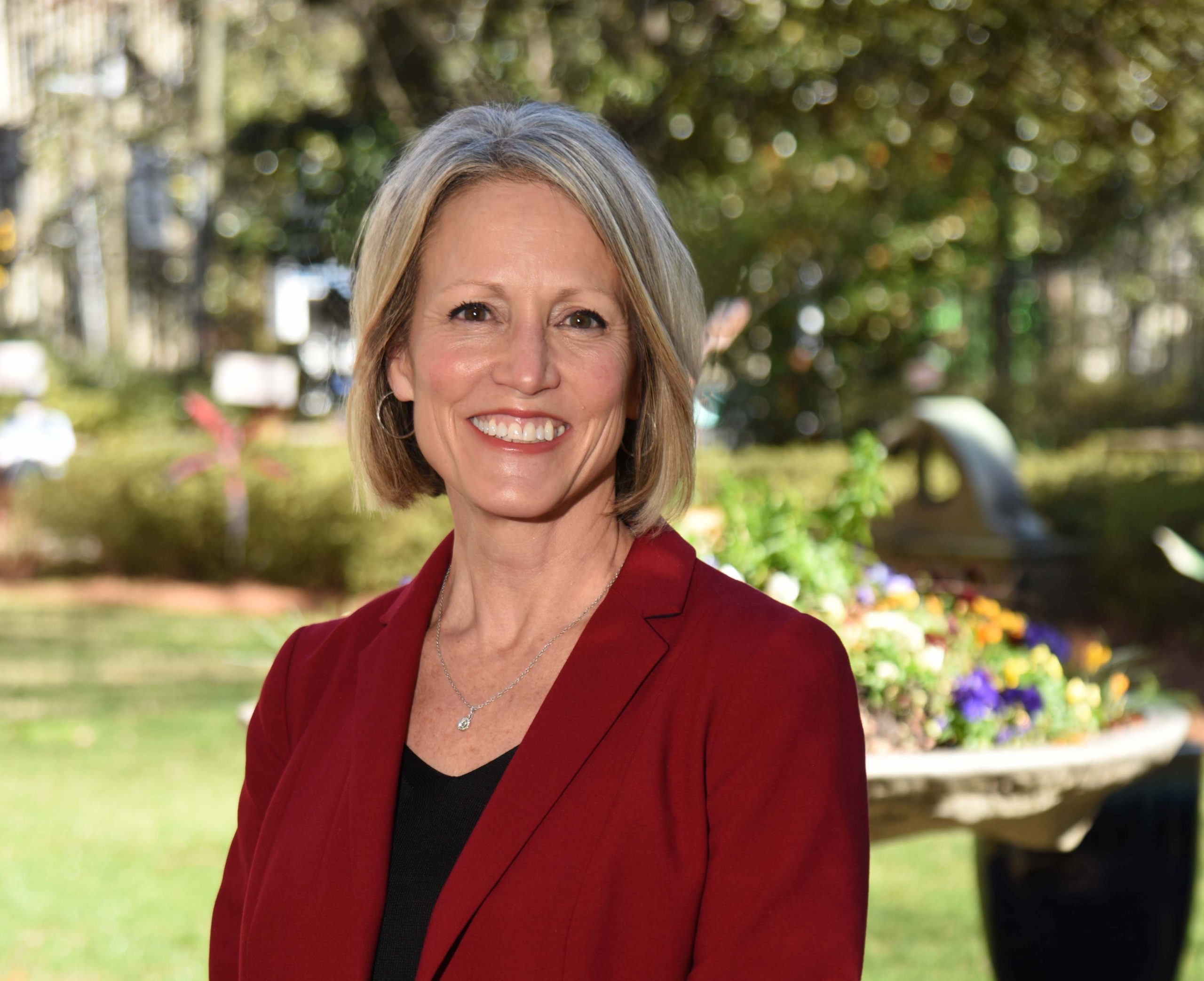
Deborah Backus, vice president, research and innovation, at the Shepherd Centre, Atlanta, has dedicated her career to researching MS and spinal cord injury.
She initially began studying motor control in monkeys, but after a “lightbulb moment” during her PhD in neuroscience, she realised she needed to do more to “help clinicians understand the scientific evidence and how it can inform their practice”.
As director of MS research at the world-leading hospital, Dr Backus is putting this passion into practice.
The Shepherd Centre treats people across the entire continuum of care, covering spinal cord injury, acquired and traumatic brain injury, MS and chronic pain. Alongside its clinical work, the centre also contains corresponding research departments which carry out clinical trials that seek to directly improve clinical knowledge and patients’ quality of life.
Dr Backus speaks to NR Times about the importance of translating research into clinical research and how her career has been shaped by a passion for making research actionable.
What new research is taking place at the Shepherd Centre right now?
Our director of spinal cord injury research is [working] on cutting-edge technologies to combine sensory augmentation. This might be stimulation of the brain, the spinal cord or the periphery, or other types of sensory augmentation with intense activity.
Right now most of that is focused on upper limb function and people with spinal cord injury, but there’s also a line of work in helping people regain mobility. In MS, we have a couple of different lines of work.
My research was related to rehab and exercise interventions for people with MS who require a wheelchair. They are a very underserved population. We have another investigator – an exercise physiologist – who is interested in interventions to improve health and limb function for people with MS.
He’s incorporating some novel approaches using remote monitoring. Not remote monitoring as people typically think of it in terms of medical interventions, but more about how people are moving, when they’re moving and their activity.
The idea isn’t just that it’s to know what they’re doing, it is to use that information at the point of care. So, one of the ways he’s doing this is by combining it with a tele-rehab approach to delivering an exercise intervention.
The goal is to get this information, in this case from a Fitbit, and use that to inform clinical care. We’re aiming for precision rehab that is personalised, just like personalised medicine.
You have spoken before about your passion for translating research into clinical practice. Why is this so important to you as a researcher?
Everything I do and all of my research has to be actionable. It’s not for academic’s sake. It’s not for the academic pursuit of knowledge.
I don’t fault people that are doing that, but for me, it was clear that our field needed to be able to take evidence and have a way to turn it into something meaningful for our patients.
That’s such a big piece of what I do. My publications that are related to that come from that desire to help clinicians. When the evidence is meaningful, it’s about being able to use it in a way that helps our patients get better.
What does this knowledge translation look like in a real-world setting?
Basically, we need to engage patients and we need to be asking the most meaningful question.
When we have findings, we need to disseminate them. Putting them into a journal article is not adequate because most clinicians don’t have time in their day to go and read all these different articles.
The field has made an attempt to turn to meta-analyses and systematic reviews that summarise, but still, that’s not really telling the clinicians what they need to do with the information.
It’s going beyond the journal articles and putting together other documents that might help inform.
We have the ACRM (American Congress of Rehab Medicine) and we have education pages that act as a vehicle for this information.
It could be geared towards a clinician saying, ‘if you have patients that look like this, you need to consider these elements’.
The other thing which we really embraced here is doing pragmatic trials. That is putting a programme into practice and continuing to collect the data to show what works.
For example, we participated in clinical trials in spinal cord injury looking at locomotor body weight-supported treadmill training.
We learned a lot from that trial and we turned it into a clinical programme. We now have a very strong locomotor training program that was based on that evidence.
Your research projects focus on improving quality of life for patients now. Is this a common thread in the Shepherd Centre’s research projects?
Spinal cord injury that results in any impairments in strength, sensation, mobility or use of the hands; that’s a chronic condition.
We don’t have a cure yet for spinal cord injury. Multiple sclerosis is a progressive condition.
We don’t have a cure, though we have really come a long way with disease-modifying therapies (DMTs).
We can slow the rate of relapses and maybe even decrease the severity of relapses, but people often have continuing problems.
The same is true if somebody had a stroke or somebody had a head injury; they are chronic conditions that remain. Patients need to learn how to use their bodies again and they need to know how to get their bodies to be healthier. Being disabled doesn’t mean you can’t be healthy.
We want to find ways that we can restore function as much as possible, then we can help restore health and we can help patients sustain a healthy lifestyle so they can be functional and do the things they love to do, participate in society and have meaningful lives. Let’s help them have the best life possible.
Even in our data science work, the questions we are asking are, ‘How can we do better with the care that we’re delivering? Who gets better with one intervention and how can we do better?’ That’s what we want to know.
What potential role will data science and analytics play in MS care and research?
There’s so much potential. We’re not looking for ways to collect more data, we’re trying to see what data is missing that will help us inform what we do so that whatever we do with that data is actionable.
Shepherd Centre just recently did a project with a consulting firm where we looked at the last few years of our electronic medical records and brain injury data to get a better idea of which patients were responding best around certain interventions.
In one case, we realised we were missing a critical piece of data. In another case, we found out there were differences between the physician teams. Those physician teams now are having discussions about their ways of working. In another case, we saw the incredible value of family training and family engagement.
This is being used now in our clinical programmes in different ways. One of our researchers is using remote monitoring devices. He’s using instrumented socks to see how people are walking, and working on streaming Fitbit data to inform point of care.
It’s not data for data’s sake; it’s very purposeful. We’ll be working with the clinicians to see if they are actually going to use the data or if they want to use it.
How has the landscape for MS care developed over your career?
It has come so far. When I was a physical therapist in 1989, working at the Shepherd Centre, we didn’t have disease-modifying therapies, we didn’t have these opportunities for patients.
It was a very different deal when we were treating them as physical therapists.
Now, there are over 12 disease-modifying therapies for people with MS. We’ve come a long way and we’re starting to think about some of the right questions, like which one is the best one for which patient because not everything works for every person.
All of the early DMTs were developed for relapsing and remitting MS. We now have, I believe, two [treatments] for a secondary or progressive MS, which is really exciting.
Reducing the relapses, the severity of relapses and the number of relapses is really helpful, so now, with our interventions, we can really think about how we can help patients improve.
There’s more hope for being able to do that and now we’re able to look at whether there is neuroplasticity in people with MS and what we need to do to access it.
Over the last few decades, the clinical view on exercise and MS has changed. What does your research tell us about the importance of exercise for MS patients?
At the time in 1989, you didn’t tell somebody with MS to exercise because ‘they get hot, they get fatigued’.
For a very long time, that was the messaging; ‘decrease your activity, stay sedentary, don’t do anything, you’re just going to get tired, you’re going to have a relapse’.
Now, we know that’s not true. Exercise does not cause a relapse. It can cause fatigue, but it causes fatigue like somebody without MS would experience it.
People without MS should get muscle soreness but it goes away. Now we know that people can exercise with MS and they should exercise with MS. It’s just figuring out the right way for people to do that.
We have a very large trial funded by the Patient-Centred Outcomes Research Institute.
Instead of asking ‘Does exercise help people’, we’re comparing different exercise programmes in the home and in a fitness centre as there might be characteristics of a person that makes one better than the other.
That will give people with MS options […] and will open up different opportunities for people. We’re also working with a novel telehealth delivery system for wellness.
Through this platform, we’re delivering live and on-demand classes that are related to exercise and nutrition. We serve spinal cord injury, brain injury and MS, and we’re doing an initial trial on that now.