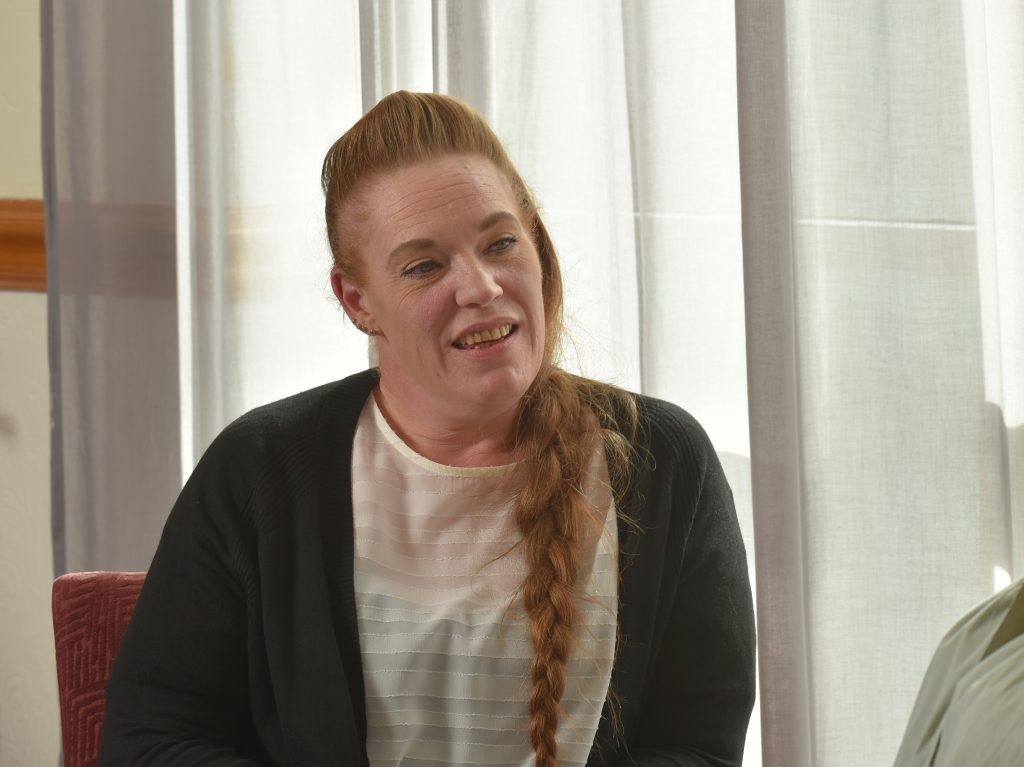
Anita Pascoe, clinical lead case manager with Westcountry Case Management, discusses the great privilege in her role – both in terms of supporting clients to life-changing outcomes beyond all expectations, and in professional development and accomplishment
How long have you been in case management and what is your background?
I am an occupational therapist by profession and have worked in a variety of settings, but specialised in working with individuals who have an acquired brain injury since 2000. This has included being an OT in a busy rehabilitation unit, setting up support teams around an individual, working in the community as an OT, case management, and expert witness work.
I love complex cases, which need both health and social care involvement, and I particularly enjoy being able to take a helicopter view of a case with our team, and take a look at alternative solutions, longer term implications of decisions being made, or bringing some fresh eyes to a complex situation.
What attracted you to become a case manager and why?
I was a bit in awe of some of the case managers I came across when working as an OT, such as Claire Booth, who set up Westcountry Case Management (WCM), and some of the expert witnesses, like Maggie Sargent. When I was approached by Claire to become a case manager for WCM back in 2004 I remember being pleasantly surprised that she thought I would make a good case manager, and I put my all into learning the role and developing my skill set.
I have a passion for working with complex situations, and in particular, people who have survived a brain injury, and especially those who have been marginalised, given up on or fallen through gaps in the system – they are my favourite people to work with. I genuinely enjoy meeting them, hearing their narrative and then making positive changes to their lives.
I also like the long view case management allows me as a professional. Change does not happen quickly for many people, but to look back at people I have worked with for years and see the journey they have been on and where they are is something I get a great deal of satisfaction from.
Sometimes I describe case management as being a bit like the aspirational occupational therapy interventions we would come up with as IOT students in a case study. Holistic, innovative, bespoke, but then in reality is rarely possible due to system and service constraints. Case management does not give access to endless funds, and certainly all recommendations need to be clearly justified and needed, but that holistic and aspirational intervention is much more possible.
What attracted you to Westcountry specifically?
I had been part of MDTs managed by case managers from WCM, and thought highly of them, and the ethos of WCM. They were professional and knowledgeable, but also very personable and kind. At the time, WCM was also quite unique as a service in the South West, and I was one of only six case managers when I joined, covering Devon and Cornwall, and sometimes as far as Bristol.
I was super proud to be a Westcountry case manager- and I still am!
How do you think the pandemic has changed case management practice, if at all?
I think the pandemic forced case managers into a rather relentless way of working. We were dealing with anxieties, queries and problems arising from all the uncertainty around COVID, and started to do most, if not all of our work, in a very isolated way at home. This led to case managers filling diaries with online and phone meetings – with no travel time in between to have a break from thinking and to digest a client contact. When we emerged from isolation and began undertaking visits again, many of us found we had filled our time and then struggled to shift back to a diary where travel time was also needed.
Over time, I think we have made the shift back again, but the pandemic definitely took its toll on health and social professionals across different sectors, including independent case management.
There has been a general shift towards using online platforms for some work – which has been positive for meetings where the geographic spread of the participants is wide. Virtual work was manageable for the situation we were forced into, but was not ideal for maintaining client engagement, picking up nuances of communication or for holding really reflective and engaging meetings with teams. I think there is a place for both now.
What makes Westcountry a stand-out name in the marketplace?
WCM has been a sector leader in many ways, and still is in terms of being a leading and innovative provider of case management, and we are often approached for advice in best practice by other professionals.
It is one of the first case management services to have been established, so has grown and developed, as has case management. It has been part of the broader development of standards through time spent contributing to the work undertaken by BABICM (British Association of Brain Injury Case Managers).
We have a highly experienced team backing our case managers – and there is nothing we cannot deal with together. We are able to provide a robust, safe and compassionate service to our clients.
Can you share an example of client work which demonstrates how you work and the outcomes you achieve.
We worked with a client who was quite challenging and highly complex. There were high levels of risk and safeguarding concerns with support not being especially robust, safe or underpinned by sound clinical practice. Funding was not sustainable and there were no statutory services in place. The staff team were anxious and the client was unhappy.
We pulled together an MDT of relevant professionals, and also applied for statutory involvement and funding. We co-ordinated various assessments and then came together to formulate a plan, which was put into action over a period of approximately two years. The client now has sufficient funding to meet their needs, has a robust and safe package around them, experiences events and activities which make them happy and are engaging, and the levels of risk have been significantly reduced. There will always be challenges due to the nature of their injury, but the support system can now manage these without risk of the entire support structure collapsing.
Case management cannot be credited for all of the changes being made, but it is the crucial factor in identifying needs, pulling together the right team of people, and then driving forward the whole team and holding each member to account for their role. It affords the ability to see the big picture and long-term goals, whilst focusing on ensuring the smaller steps are completed to get there.
This case drew on individual case manager skills, and also the wider team of HR support, CQC registered manager, clinical supervisor and our head office team of case manager assistants and administrators.
What does it take to be a case manager?
Clinical and system knowledge together with a proactive and tenacious approach. Also required is professionalism, an intrinsic motivation to work hard and make a situation better for an individual. An ability to work under pressure, stand up for one’s own recommendations, yet be flexible in light of new information and ideas are vital.
Being an excellent communicator and negotiator, with strong professional boundaries and, on occasion, having thick skin is a helpful attribute, as we are almost certain to be critically appraised while working alongside the litigation process.
Would you recommend a career in case management and why?
Absolutely – it is the best job in the world!
There are low points when it is very challenging, but these are far outweighed when you have seen a person survive – move on – achieve – do the unimaginable, and you have stood beside them and their family during their lows and highs. It is a true privilege to work as a case manager, and when you have a great support team as we do at WCM, it means that no challenge is insurmountable, and you are not working alone. That is crucial, given the complexity of some of the situations we manage and decisions we need to make.
Moving into case management has opened up a whole new career ladder for me. I started out a little overawed at even being asked, and now I get to lead our incredible team of case managers at WCM, and to be part of our broader support team too.
- For more information about Westcountry Case Management, visit the website here, email [email protected] or call 01626 770729