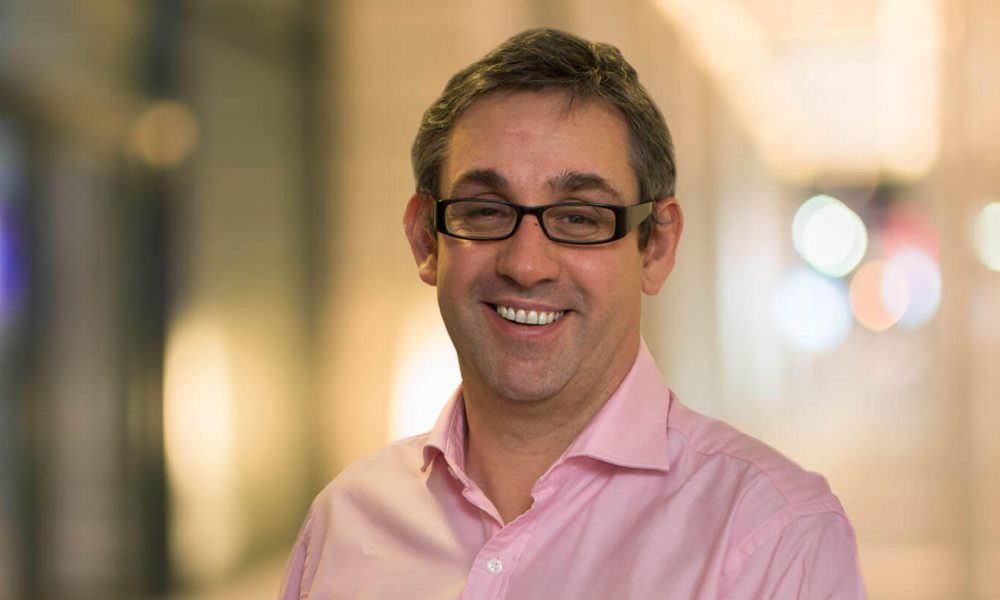
In the latest of our new Meet the Lawyer series, NR Times meets Richard Crabtree, principal lawyer at Slater and Gordon, and learns more about his career and commitment to clients and charities
Tell us about your career to date
I qualified in 1993 and have worked in personal injury since qualification. I have done a lot of catastrophic injury claims, particularly those involving brain and spinal injury injury, recovering in excess of £150million in compensation.
I am based in Manchester and lead a team at Slater and Gordon undertaking road traffic claims throughout England and Wales.
I have provided education and training in this field both to professionals and case managers. Up until 2022 was co-ordinator of APIL’s Brain Injury Special Interest Group. I was also on the organising committee for APIL’s Brain and Spinal injury Conference.
I work closely with charities, particularly Child Brain Injury Trust, and was secretary at the CBIT group at Royal Manchester Children’s Hospital for over ten years, before the charity changed the model to have paid staff visiting to provide help and support to individuals and families. I continue to fundraise for the charity and organise an annual curry night that has been going for 20 years.

What makes brain and spinal cord injury claims different to general personal injury claims?
Spinal injury claims have their own complexity. The needs of the individual in terms of aids, equipment and modifications to any property are unique as are their medical needs and the risks and complications associated with the injury.
They need specialist care and are at risk of pressure sores as well as problems with controlling body temperature, bowel management and issues such as autonomic dysreflexia.
There are also unique risks which require annual scans such as the possible development of a syrinx.
For all these reasons, spinal cord injury requires someone who is knowledgeable in this field when dealing with the claim.
How important is it to appoint a lawyer with specialism in brain and spinal injury claims?
It is essential to appoint someone who can address the issues and instruct the right experts.
Obtaining early rehabilitation and interim payments is a must.
Can you share an example of a particularly challenging case you have worked on, and how you overcame these challenges, to secure a positive outcome for the client?
I dealt with a case involving a young man with a brain injury who was in a wheelchair and dysphasic. He had been in a care home for several years with his care fully funded by the statutory services.
Following a trial on liability, we obtained a judgement of 75 per cent in his favour.
We then secured an interim payment to put in place a support worker and therapies that improved his quality of life and showed that he responded well.
We then had a best interest meeting with the staff, case manager and therapists, which concluded that his best interest would be served by living in his own property with support.
Following a contested hearing, we managed to secure substantial funding to allow us to rent and adapt a property and put in place a fully funded care regime on a private basis.
This had a real and significant impact on his quality of life.
Whereas before he was left for long periods in the care home, on his own in his room, with the care package that we initiated we were able to respond to his needs and wishes, taking him out on visits both in the locality and with family.
It was very rewarding to achieve this transformation, despite significant opposition by the defendant and their insurers who maintained throughout that his interests were served by remaining in a care home.
Can and should a client change their lawyer if they are not happy with how the case is progressing?
A client can always change their solicitor. If they are unhappy with the service or advice, I would always recommend this.
Getting proper legal representation is essential to ensure that the claim is progressed efficiently, and damages maximised.
What do you look for when appointing or working with members of a multidisciplinary team (MDT)?
I look for experience and teamwork. The aim should be to ensure that all needs are addressed.
In terms of case managers, I look for BABICM membership and confirmation that they are CQC registered.
The last of these is essential if a directly recruited care model is required and provides external validation of quality and processes.
How vital a role can the right MDT play in a client’s outcome?
It allows an individual to maximize rehabilitation and outcomes. A good MDT is essential to achieve this outcome.
Can you share some of your personal career highlights
There are so many. Being able to help injured people regain a quality of life and independence is extremely rewarding.
I enjoy both fighting liability and obtaining damages.
Some of the cases I have done include :-
Sedge v Prime (2011) Lawtel 31st January
Sedge v Prime (IP) (2012)EWHC 3460(QB)
Knight v White (IP) Westlaw (2019) 4 WLUK 367
Connor v Castle Cement and Ors (2016) EWHC 300 (QB)
Armstrong v Richardson (2014) EWHC 3306 (QC)
McCarthy v Grimes and MIB (2012)EWHC 1847
McDermott v Petit (2011) EWHC 3074
Mann v Shabir (IP) (2020)
Tell us a little about your life outside of work
Outside of work I am a MAMIL (Middle aged man in Lycra ). It’s a hobby I love and last year I did Lands End to John O’Groats.